Quick Take
- Narration: Virtual Voice AI narration handles the travel memoir register reasonably well, though it misses the warmth and spontaneous humor that this kind of material thrives on.
- Themes: Friendship on the road, Australia’s regional diversity, the comedy and discomfort of long-haul budget travel
- Mood: Light and anecdotal, occasionally exhaustive in its detail
- Verdict: A genuine, affectionate circumnavigation of Australia that appeals to armchair travelers and prospective visitors, though the AI narration and the authors’ very particular interests will test some listeners’ patience.
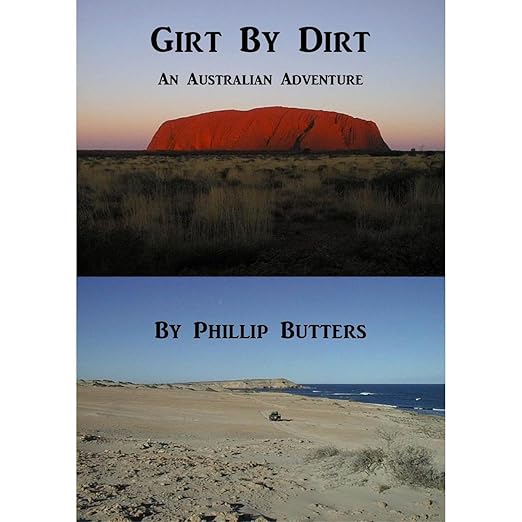
I came to Girt by Dirt because I had been planning a trip to Australia for years and was looking for something that would give me a ground-level sense of the country beyond Sydney, the Great Barrier Reef, and the obvious tourist circuit. Phillip Butters and his mate Glen spent five months driving 35,000 kilometres in a four-wheel-drive clockwise from Sydney, covering the country with what the author describes as a balance of personal experience, geographical and sociological interpretation, historical insights, and a few laughs on the way. That description is accurate, though the balance shifts noticeably depending on which stretch of the journey is being covered and what the two men happened to be enthusiastic about that particular day.
This is the kind of travel book that lives or dies on the author’s personality and willingness to let the experience accumulate rather than dramatize it. Butters has a personality. He and Glen are wine enthusiasts with strong opinions about wineries and what constitutes a worthwhile tasting room experience, and they pursue those opinions across the continent with considerable dedication. They are also genuinely interested in the history embedded in the landscape, and the colonial and pre-colonial context of the towns and regions they pass through receives real attention alongside the meat pies and roadhouse stops.
Our Take on Girt by Dirt
The reviews for this book reveal two distinct kinds of readers in almost perfect contrast, and knowing which kind you are before you start will save you considerable frustration. One reader finds the anecdotal specificity charming and the historical digressions illuminating; another finds the same elements exhausting and self-indulgent. A particularly pointed review describes the book as a painfully detailed account of every petrol stop, every McDonald’s meal, and every seedy caravan park. That criticism is not objectively wrong, but it is also not a flaw for the right reader. Traditional travel memoir has always been exactly this: the accumulation of specific, often unremarkable experience that adds up over time to a portrait of a place and the people moving through it. The question is whether you find that accumulation pleasurable or tedious.
Why Listen to Girt by Dirt
For listeners planning a trip to Australia or those who have visited and want to relive particular regions in their memory, the geographical comprehensiveness here is genuinely unusual. Butters covers remote stretches of inland and coastal Australia that most travel writing ignores entirely in favor of the marquee coastal destinations. The historical material embedded in the journey, the colonial settlements, the industrial history of mining towns, the strange particular character of Australian roadhouse culture, gives the book texture that pure adventure narrative would not provide. One reviewer praised exactly this dimension, describing the history of the regions traveled as fascinating insights that stuck in memory after the trip accounts themselves had faded.
What to Watch For in Girt by Dirt
The Virtual Voice narration is a significant consideration for this genre specifically. Travel memoir depends more than most nonfiction on the sense that a distinct human personality is speaking directly to you, sharing specific enthusiasms and prejudices that feel earned rather than performed. The warmth and comedic timing that make this kind of book work in audio form are precisely what AI narration cannot reliably supply. Butters’s writing has been described by one reviewer as funnier than you think it will be, but that humor depends on delivery that Virtual Voice cannot match. The wine tourism dimension of the journey is also worth knowing about in advance: if your interests do not overlap with detailed winery visits and assessments, a meaningful portion of the journey will feel like extended filler.
Who Should Listen to Girt by Dirt
Armchair travelers with an existing affection for Australia, or those actively planning a road trip through the country, will find the most practical value here. The geographical coverage is unusually comprehensive and the historical segments are genuinely informative for listeners who are not already deeply familiar with Australian regional history. Skip it if you need your travel writing to sustain a strong central narrative drive, or if AI narration consistently interrupts your connection to the material. For this particular book, the print or ebook version may deliver the experience more effectively than the audio edition.
Frequently Asked Questions
Does the book cover only the famous tourist destinations, or does it go into more remote territory?
The route is explicitly designed to be comprehensive rather than tourist-focused. Butters and Glen follow a clockwise circuit of the entire country, including stretches of inland and regional Australia that receive very little coverage in mainstream travel writing. The book is specifically useful for listeners interested in the less-documented regions.
How significant is the wine tourism focus, and will it be an issue for non-wine drinkers?
It is significant throughout the journey. One reviewer specifically noted that the winery visits, described in extensive detail across many sections, dominated portions of the book to the point of frustration for a reader who did not share that interest. The wine focus is a genuine preoccupation of the authors, not incidental background color.
Does the Virtual Voice narration make this audiobook significantly harder to enjoy than the print version?
For this genre specifically, yes. Travel memoir’s appeal depends heavily on the sense of a particular human personality telling you a story with its own rhythms and enthusiasms. The comedic and observational elements of Butters’s writing, praised in several reviews, require timing and warmth that AI narration cannot supply consistently.
Is this book useful as a practical travel planning resource, or is it purely for entertainment?
Both, with caveats. Butters covers specific roads, camping options, and regional attractions with the specificity of someone who was genuinely navigating on the fly. However, some practical details will have changed since the trip described. The historical and geographical content has considerably longer durability than the logistical specifics.