Quick Take
- Narration: Christopher P. Brown reads with a warm, conversational energy that suits the Culture Smart! series’ accessible tone.
- Themes: Ghanaian customs and social codes, traveler etiquette, postcolonial African identity
- Mood: Informative and friendly, pitched at the curious pre-departure listener
- Verdict: A compact and well-structured cultural primer for anyone heading to Ghana, with enough depth to be useful beyond the airport-lounge level.
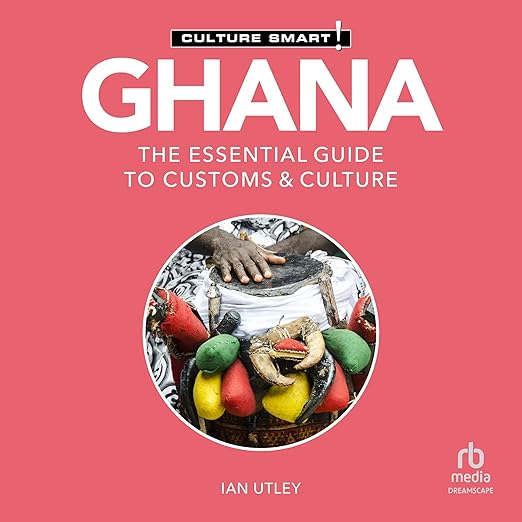
I have used Culture Smart! guides as pre-departure reading for a number of trips over the years, with results that range from genuinely illuminating to merely adequate depending on the destination and the author. Ghana, written by Ian Utley and narrated by Christopher P. Brown, lands firmly in the illuminating category. I listened to the majority of it on a quiet Sunday afternoon while preparing for a conversation with a colleague who had recently returned from Accra, and I found myself reaching for a notebook more than once.
At just under four hours, this is not a comprehensive academic treatment of Ghanaian history and society. What it is, and what the series does best, is a curated entry point: enough historical context to understand the present, enough practical social guidance to navigate daily interactions without inadvertently causing offense, and enough genuine cultural affection to communicate that the author is writing from real engagement rather than surface research.
Our Take on Ghana
Utley opens with Ghana’s positioning as one of the friendliest and safest countries in Africa, a claim that is broadly supported by travel data and the consistent testimony of visitors. What makes the book more than a tourism brochure is the nuance with which he addresses what that friendliness actually means and what it requires of visitors in return. Ghanaian hospitality has cultural conditions attached to it, and Utley is good at spelling out what those conditions are: the importance of greetings, the protocols around gift-giving and visiting, the way that public behavior reflects on more than just the individual.
One reviewer who had lived in Ghana for ten years said they still learned a great deal from the book, which is a meaningful endorsement for a volume pitched at newcomers. The sections on family structure and community obligations are particularly strong, providing context that helps explain social dynamics that first-time visitors often find puzzling. Why does the Ghanaian concept of time function differently than Western assumptions? Why is it important to greet everyone individually rather than addressing a group collectively? Utley answers these questions with clarity and without condescension.
Why Listen to Ghana
Christopher P. Brown’s narration is a good match for the material. The Culture Smart! series lives or dies on accessibility, and Brown reads with an unhurried warmth that invites rather than lectures. The conversational style that one reviewer praised in the writing comes through in the performance, and the shorter runtime makes this an ideal listen for a long commute or a transatlantic flight.
The Dos and Don’ts section, singled out by multiple reviewers as a highlight, is particularly effective in audio format because Brown’s delivery gives each point enough space to register without making the list feel perfunctory. This is the kind of practical guidance that tends to be read cursorily in print and listened to more attentively in audio, which is an advantage for the format.
What to Watch For in Ghana
The book has some limitations that are inherent to the series format. At under four hours, there is not room for deep dives into specific regions of Ghana, the diversity of ethnic and linguistic communities, or the complexities of contemporary Ghanaian politics. Listeners who want to understand the country’s recent political history or the role of diaspora communities in shaping modern Ghanaian identity will need to supplement this with more specialized reading.
One reviewer noted that the book would have benefited from a section on common phrases, and that omission is real. For a country where language and greeting carry significant social weight, even a brief phonetic guide to Twi or other common languages would have been valuable. The book acknowledges the importance of local language greetings without quite giving the listener the tools to attempt them.
Who Should Listen to Ghana
This is the right book for anyone planning a first trip to Ghana, whether for tourism, business, volunteer work, or family visits. It is particularly useful for listeners who want to go beyond what tourist guides typically offer, not just where to go but how to behave, what expectations to bring and leave behind, and how to build genuine rather than transactional relationships with the people they meet.
It is also a reasonable introduction to West African cultural dynamics more broadly, since some of the social frameworks Utley describes, the communal orientation, the significance of formality in greeting, the way public and private life intersect differently than in Western contexts, have parallels across the region. Readers with deep existing knowledge of Ghana will likely find the material familiar, though the testimony of the ten-year resident who still found value suggests the book has something to offer even beyond pure introduction.
Frequently Asked Questions
Is this guide based on current information, or has Ghana changed significantly since it was written?
The audiobook was released in January 2026, making it among the more current entries in the Culture Smart! series. The cultural frameworks it describes are fairly stable, though specific logistical information should always be verified closer to travel.
Does the book cover regional variation within Ghana, or does it treat the country as uniform?
The coverage is necessarily generalized given the format. It focuses on broadly shared Ghanaian customs and social norms rather than drilling into the regional distinctions between, say, the Ashanti and Ewe cultural traditions.
How does Christopher Brown’s narration compare to other Culture Smart! audiobooks in the series?
Brown brings consistent warmth and pacing that suit the series’ accessible register. His conversational delivery makes the Dos and Don’ts sections feel like friendly advice rather than rules, which is the right register for this kind of content.
Is this guide useful for business travelers, or is it pitched primarily at tourists?
Both. The sections on etiquette, communication styles, and the meaning of time in Ghanaian social contexts are directly relevant to business interactions. The book explicitly addresses professional situations alongside general travel scenarios.