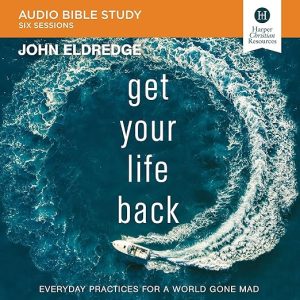
I approached Get Your Life Back with some wariness. The category of Christian self-help is not exactly undersupplied, and the promise in the subtitle, everyday practices for a world gone mad, can slide easily into the kind of vague spiritual reassurance that feels good in the moment and does nothing afterward. What John Eldredge offers here is something slightly different: specific, named, implementable practices rather than general encouragement toward a better disposition. The one-minute pause. Benevolent detachment. Getting outside. Stepping back from technology. Practicing kindness. These are simple enough that they require no life restructuring to attempt, and concrete enough that you could actually tell whether you were doing them.
The audiobook is structured as an audio Bible study, a format that is explained in the synopsis but that some purchasers have found confusing when they were expecting a straightforward memoir or motivational listen. A companion study guide exists separately. The audio version stands on its own, but listeners who want to work through the material more systematically will want to track down the print companion. Eldredge is transparent about this in the recording, which is the right call.
How Get Your Life Back Holds Up
Eldredge narrates with a warmth that avoids the studied earnestness of some Christian audio. He sounds like someone talking to a friend rather than delivering a message to an audience. That quality matters a great deal in a book about slowing down and paying attention, a narrator who sounds frantic or performative would undercut the content immediately. He is also honest about his own struggle with the practices he describes, which is more useful than false mastery would be. The stories he tells, of burnout, of the compulsive pull of the news cycle, of the difficulty of actually putting the phone down, are recognizable to anyone navigating contemporary life regardless of religious orientation.
At just under two hours, the audiobook is closer to an extended talk than a full-length book, and the brevity suits the argument. One reviewer described experiencing it as simultaneously a "fast and slow read", the stories move quickly but the content settles slowly, and that double quality is most accessible in audio. Listening to Eldredge describe the one-minute pause while commuting, or hearing the chapter on getting outside while actually walking, creates a feedback loop between the content and the listening context that is harder to achieve with print.
Why Get Your Life Back Works as an Audiobook
Eldredge's self-narration includes bonus material not available in the print edition, which is noted by at least one reviewer who specifically valued it. The audio version is the fuller version of the material. Beyond that practical consideration, the subject matter is inherently suited to audio delivery: practices designed to slow the pace of life are more memorable when heard in someone's voice than when skimmed on a page. The listening experience enacts, in a small way, what the book recommends.
Weak Spots in Get Your Life Back
The book is written explicitly from a Christian perspective, and the five practices are framed as pathways to experiencing God rather than as secular wellness techniques. Listeners who are not Christian will find some of the framing does not apply to them directly, though the underlying argument about the costs of overstimulation and the value of interior margin is not exclusively religious. The short runtime means the practices are introduced rather than thoroughly explored; this is a beginning, not a comprehensive guide. The companion study guide is the natural next step for listeners who want to go deeper.
The Right Listener for Get Your Life Back
This is most directly useful for Christian listeners who feel overwhelmed by the pace of contemporary life and want both permission and practical guidance to slow down. The five practices Eldredge outlines are genuinely practical rather than aspirational, which distinguishes this from a lot of the genre. Listeners outside the Christian tradition will find some sections require translation but the core impulse, recovering interior space in a culture designed to eliminate it, is broadly relevant. Those looking for a secular approach to the same territory might look to titles in the mindfulness space; the language here is specifically theological.
Is this the full book or just the study guide version?
This is the audio Bible study version, which is a condensed adaptation of Eldredge's longer book Get Your Life Back. A companion study guide exists separately and is designed to be used alongside this audio version for a more structured engagement with the material.
Does the book require familiarity with John Eldredge's earlier work?
No prior Eldredge is necessary. The five practices are explained clearly for new listeners, and the book stands on its own as an introduction to his approach to Christian spirituality and soul care.
Does Eldredge's self-narration include material not in the print edition?
Yes, at least one reviewer specifically noted that the audio version includes bonus material Eldredge recorded for the narration that is not in the print book. This makes the audio version the more complete edition for listeners who have access to both formats.