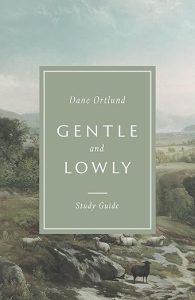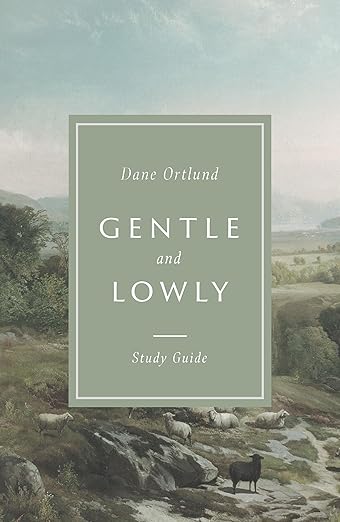
- Voice: Dane Ortlund narrating his own theological study creates an intimacy appropriate to material this personally focused, his voice carrying conviction from someone who wrote this for himself as much as for anyone else.
- Big ideas: The character of Christ as primarily comfort rather than judgment, grace for habitual sinners, what it means to believe in divine love rather than just acknowledge it intellectually
- Atmosphere: Devotional and unhurried, suited to quiet mornings or reflective evenings
- Worth it?: A companion study guide that works for both small groups and individual listeners, most useful when paired with the parent book but valuable even to those encountering Ortlund's approach for the first time.
I was introduced to Dane Ortlund's theological writing through someone who described Gentle and Lowly as the first Christian book that made them feel something other than guilty for not being better, and I noted that specifically because it named a failure mode in devotional literature that I'd observed repeatedly in years of reviewing religious and spiritual titles. The genre has a tendency toward aspiration in a form that quietly operates as indictment, and Ortlund's original book was understood by a significant portion of its readership as a genuine corrective to that pattern. This study guide companion continues that work in a format designed for sustained, structured reflection.
What we have here is described as a Study Guide Companion to the Bestselling Book Gentle and Lowly, organized into ten lessons covering two to three chapters from the main text each. The audio format, with Ortlund narrating his own material at five hours and seventeen minutes, presents discussion questions and the scaffolding for either small group use or individual reflection. The rating of 4.8 across over 900 listeners, combined with the pattern of reviews noting life-changing impact and personal growth, indicates an audience that found the original book valuable and came back to deepen that engagement.
The Review
Ortlund's central thesis in Gentle and Lowly, which this companion extends and supports, derives from Matthew 11:29 and Jesus's self-description as gentle and lowly in heart. The argument is that this phrase, which appears once in the Gospels, is the most direct statement Christ makes about his own nature and disposition toward human beings, and that Christian practice has frequently built itself around a different version of Christ than this description suggests. The study guide is designed to help readers sit with this claim long enough to internalize it rather than simply process it intellectually.
For listeners with theological training, this is familiar territory in some respects. Barth's critique of moralism, Luther's theology of the cross, the distinction between law and gospel in Reformed theology all point in related directions. Ortlund's contribution is not the originality of the insight but the pastoral warmth with which he delivers it and the specificity of his engagement with biblical texts rather than abstract theological categories. One reviewer called his style similar to the Heavenly Father's in humble and loving approach, which is the kind of description that tells you everything about how the original book's readership experienced it.
The Best Parts of Gentle and Lowly
Study guides are an interesting category for audio. The format works best when the questions are spaced to allow genuine reflection rather than simply queued up as a reading experience. At five hours and seventeen minutes, this guide doesn't rush. Ortlund's narration creates space around the questions, and the intimacy of hearing the author's own voice asking you to sit with particular passages adds a dimension that a print study guide can't replicate.
Multiple reviewers noted using this in small group contexts, and the discussion questions organized into ten lessons provide a natural meeting structure for a ten-week commitment. The audio version would work well as preparation for each session rather than as the session itself, giving participants a common frame of reference before coming together to discuss. One reviewer noted they planned to give it to their group leader at their church small group, which suggests the guide is readable as facilitation material rather than just participant reflection.
The Caveats
The guide is genuinely designed as a companion to the book rather than a standalone replacement. Listeners who come to this without having read Gentle and Lowly first will understand the argument well enough but will miss the full texture of what they're being invited to reflect on. Ortlund's original text is dense with close reading of biblical passages, and the study questions are designed to send you back into that text rather than to summarize it. The companion works best when it can assume the reader has that foundation.
That said, reviewers who had not previously encountered the main book still found value here, noting insights into understanding Christ's heart that landed independently. The devotional register is accessible enough that a reader new to Ortlund's work won't feel excluded, even if they're not getting the full benefit of the companion structure as intended. The ten-week format also gives structure to a listening practice that might otherwise drift without a framework to anchor it.
Who Should Listen to Gentle and Lowly
Readers of the original Gentle and Lowly who want to spend more time inside Ortlund's theological project, particularly those in small group contexts or spiritual direction settings, will find this an ideal continuation. The ten-lesson structure and audio format make it more accessible than a written study guide for listeners who engage more deeply with spoken material.
Those who have not read the main book should start there before coming to this companion. And listeners who prefer their religious audio in the form of sermons or straight theology lectures will find the study-guide structure, built around discussion questions and reflection prompts, a different kind of engagement than they may be expecting. This is designed to slow you down rather than to inform you efficiently, and the listeners for whom that is exactly what they need will find it well-suited to that purpose.
The reviewer who described this as having made an impact on their life and being insightful and applicable toward personal growth is describing a devotional experience rather than a purely intellectual one. That distinction matters when choosing whether to approach this as study material or as something closer to contemplative practice. Ortlund's work rewards the latter orientation.
How does the ten-lesson structure work for small group use?
Each lesson covers two to three chapters from the main book, making a ten-week small group series a natural fit. The audio guide works well as preparation material for each meeting, giving participants a common framework before discussion. The discussion questions are organized to generate conversation rather than to test comprehension.
What is the core theological argument Ortlund is making in Gentle and Lowly?
Ortlund builds his argument around Jesus's self-description in Matthew 11:29 as gentle and lowly in heart, which he presents as the most direct statement about Christ's disposition toward human beings in the Gospels. His thesis is that Christian practice has often emphasized Christ's demands over this revealed character, and that taking this self-description seriously changes what it means to live in relationship with Christ.
Is this study guide suitable for people outside the Reformed or evangelical tradition?
Ortlund writes from within Reformed evangelical Christianity and the biblical framework is taken as authoritative throughout. Readers from other Protestant traditions will find the theological material broadly accessible, while those from Catholic or Orthodox backgrounds may find some assumptions about scripture and doctrine unfamiliar but not insurmountable. The devotional register is personal and pastoral rather than combative.