The Short Version
- Narrator: Bernadette Dunne is credited with a first-person memoir whose central device is one woman assuming other people's voices, which gives a reader unusual room to work.
- Subjects: Anonymity as a working tool, disguise and identity, the power a critic once held, food as a way of describing people.
- Tone: Wry, appetite-forward, quietly subversive.
- Bottom line: A first-rate food memoir sitting on a badly built listing, and worth finding despite it.
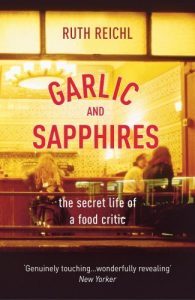
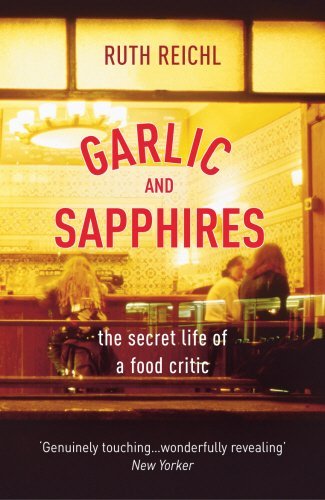
Eight ratings, every one of them five stars, and not a single written word underneath: that is the entire public reception of this audiobook, which runs just under eleven hours with Bernadette Dunne reading. An unbroken 5.0 needs all eight votes to be perfect, which is either a very small pocket of devotion or a sample too thin to mean anything. Since nobody has written a line about the recording, about Dunne, or about Ruth Reichl's book, the listing has to be judged on what it actually contains, and what it contains is a problem in itself.
Reichl's premise is one of the best in food writing, and the description states it in two sentences. To review restaurants honestly, you have to arrive as a stranger. Reichl takes the most powerful restaurant-criticism job in the country and discovers her photograph pinned up in every kitchen in town, four-star, low-star and no-star alike. The job requires anonymity and the appointment destroys it, which leaves her with one option: stop being Ruth Reichl before walking through the door.
That setup turns a memoir about food into a memoir about performance, and it is why the book has outlasted almost everything else on the shelf. A critic in disguise is not simply gathering better evidence. She is finding out how differently the world treats a person depending on who it thinks she is, and the restaurant is a controlled environment for that experiment: same room, same menu, same staff, different woman walking in. The food writing is the surface. The identity writing is the book. Every disguise is an experiment run with a control group of one.
It also makes an unusually good listen. First-person memoir with an assumed voice at its center is exactly the material a reader can do something with, since every disguise is a character and every character has a way of speaking. Nearly eleven hours is generous, and the structure of a critic's working life, one meal, one verdict, one deadline, breaks naturally into episodes that survive interruption. This is a book you can put down mid-service and pick up two days later without losing your place.
Why It Works in Audio
Restaurant criticism is a spoken form pretending to be a written one. The critic's job is to relay taste, atmosphere, and the exact temperature of the welcome to somebody who was not there, which is closer to storytelling than to reportage, and it gains from a voice. Reichl writes in the first person about her own appetite and her own nerve, and that register loses something on a page where the reader supplies the tone.
Structure supplies the second argument. Anonymity plots are inherently suspenseful in small doses: will she be recognized, will the meal be honest, will the disguise hold up through dessert. That tension repeats through the book in different rooms with different stakes, and repeated tension with variation is what keeps a long listen moving. The comedy is built in as well, since a woman pretending to be somebody else in a room full of professionals paid to notice everything is a farce waiting to happen. The stakes stay small and the tension stays real, which is a hard pairing to sustain across a whole book.
And the subject has aged into something more interesting than it was. A world in which a single critic's verdict could remake a restaurant now looks distant, which turns the memoir into a document of a vanished kind of power as well as a funny book about lunch. Listeners who have never known criticism to matter that much will hear something close to a historical account.
Things to Know Before Starting Garlic and Sapphires
Whoever assembled this page did a poor job of it, and you should know that before buying. The publisher shown is a print imprint, the release date reads as the first of January, which is what catalog records display when the real date is unknown, and the running time is written in an abbreviated style that does not match the rest of the catalog. Stray invisible characters sit inside the publisher and language values. None of that changes the recording, but it does mean the page around it was assembled from a print record. None of it is the fault of the reading.
Classification is worse. This memoir has been filed under home and garden, with food and wine as a subject tag. The tag is right and the shelf is not. A book about disguises, professional criticism and a career spent eating for a living is not a gardening subject, and anyone browsing for practical seasonal advice will be baffled by what they open. Listeners looking for it will search memoir, food writing, or the author's name.
Thin description is the third gap. Two sentences and a rhetorical question, with no indication of when the events take place, how the book is structured, or what happens after the first disguise. A description this thin gives a buyer nothing to weigh, which is doubly awkward on a title with no written responses to fall back on. You are asked to buy on the strength of a premise and a name.
Who Will Get the Most From It
Anyone who reads food writing for the writing rather than the recipes should start here. It suits listeners who like memoirs with a working life at the center, who enjoy watching a professional explain the mechanics of a job most people only see the output of, and who appreciate a narrator-protagonist willing to look ridiculous in service of a story. Fans of the restaurant world as a subject, rather than as a fantasy, will find plenty.
Cooks looking for instruction should pass, since nothing here is a recipe collection, and anyone wanting a survey of the industry should look elsewhere too, because this is one woman's account of one job. Approach with mild caution if you need the reassurance of reviews, since this title carries none: eight silent ratings, and not one listener has said a word about how Bernadette Dunne handles the disguises, which is the single element a performance could make or ruin.
Reichl built a career on being unrecognizable and then wrote the book that made her unmistakable. A long stretch in the company of that contradiction is a good use of a commute, whatever the catalog thinks the subject is. The joke underneath the whole book is that the disguises made her more visible, not less.
Is this audiobook about cooking or about restaurant criticism?
Criticism, and the life around it. The premise is that a critic must stay anonymous while holding the most visible job in food criticism, so the book follows what she does about that rather than teaching technique. Anyone hoping for recipes or kitchen instruction is on the wrong shelf.
Who narrates the audiobook, and how long is it?
Bernadette Dunne, across ten hours and fifty-seven minutes, which is generous for a memoir of this kind. The episodic shape makes it easy to pause and return without losing the thread, and the disguises give the reading a set of distinct registers to move between rather than one steady voice.