Quick Take
- Narration: Steven Menasche delivers professional, clear narration that makes dense technical content as accessible as it is likely to get in audio form.
- Themes: organizational risk identification and mapping, enterprise-wide risk frameworks, the strategic upside of managed risk
- Mood: Dense and methodical, structured for practitioners who need frameworks, not inspiration
- Verdict: A solid technical reference for risk management professionals and students, though the format works better in print than audio for the exercises and case studies.
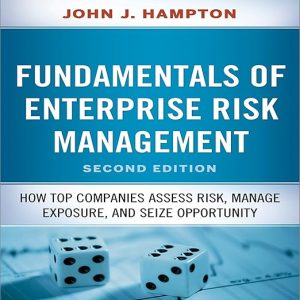
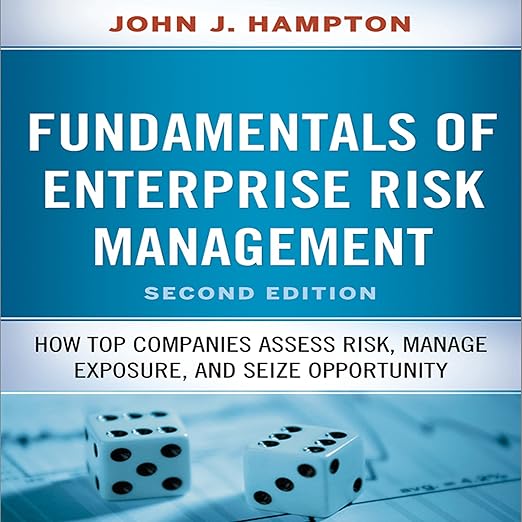
I want to be honest from the start about something particular to this title: enterprise risk management is fundamentally a visual, document-driven discipline. Risk maps, matrices, exposure charts, case study frameworks, the tools that Hampton builds his argument around, are almost universally easier to work with on a page than through your ears. I listened to significant portions of Fundamentals of Enterprise Risk Management, Second Edition during a morning commute, and while the conceptual material translated well, I kept wishing I had the book open in front of me whenever a framework or example arrived.
That said, the content itself is solid. John J. Hampton’s second edition, updated from the original to address post-2008 financial crisis thinking and incorporate newer technologies like Riskonnect and the High Tech Electronic Platform, covers the full scope of what enterprise risk management means at an organizational level. This is not a book about individual investment risk or personal finance. It is about how organizations identify, map, and manage the exposures they face across operations, technology, personnel, and strategy.
Our Take on Fundamentals of Enterprise Risk Management
The post-2008 framing is important context for understanding Hampton’s approach. The financial crisis exposed catastrophic failures in how large organizations identified and managed systemic risk, and the field of enterprise risk management changed substantially in response. Hampton’s second edition engages with those changes seriously, addressing both the new regulatory environment and the expanded concept of risk as something that also includes upside opportunity, not just threat mitigation.
The case studies drawn from IBM, Microsoft, Apple, JPMorgan Chase, and Sony are among the most useful sections, grounding the framework material in recognizable organizational contexts. The Sony case in particular illustrates the intersection of technology risk, reputational exposure, and crisis response that Hampton weaves through the book’s later sections. These are real scenarios that practicing risk managers have had to study, and Hampton handles them with appropriate analytical depth.
Why Listen to Fundamentals of Enterprise Risk Management
Steven Menasche’s narration is professional and measured, an appropriate match for technical content that benefits from clarity over expressiveness. He handles the terminology without stumbling, which matters in a field with a specific vocabulary. At just under nine and a half hours, the book covers a substantial amount of ground without becoming excessively detailed, which is the right calibration for an introductory to intermediate text.
The addition of the new role of risk owner to the second edition reflects an important structural shift in how organizations have begun treating risk management: less as a compliance function and more as an embedded organizational responsibility. That evolution is worth understanding for anyone working in or adjacent to risk management roles, and Hampton explains it clearly.
What to Watch For in Fundamentals of Enterprise Risk Management
With no listener reviews available at the time of writing, it is harder than usual to calibrate how this translates for different audiences. The 4.0 rating from 57 listeners suggests a competent but not exceptional reception, which tracks with what the content deserves: this is a sound textbook-style treatment, not a revelatory read. Some of the technology platform references, like Riskonnect, are already beginning to show their age relative to the current risk technology landscape.
The practical exercises, which the synopsis highlights as a key feature of the second edition, are among the sections most compromised by the audio format. These are designed for active engagement, and listening to them being read aloud is a diminished experience compared to working through them with pen and paper or on a screen. Listeners who need this as an ongoing professional reference should consider having the print edition alongside the audio.
Who Should Listen to Fundamentals of Enterprise Risk Management
Business students and early-career professionals entering risk management, compliance, or financial operations roles will find this a useful conceptual foundation. Managers in non-risk roles who need to understand enterprise risk frameworks for governance or board-level reporting purposes will get solid grounding here. Listeners looking for a general introduction to how large organizations think about risk will find it accessible. Specialists already practicing in enterprise risk management at a senior level may find the treatment too introductory; the second edition addresses the post-2008 landscape but is not a leading-edge reference for current practitioners.
Frequently Asked Questions
Is the audio format well-suited to enterprise risk management content, given the visual nature of risk frameworks?
Partly. The conceptual and narrative sections translate well to audio. The practical exercises, risk mapping examples, and framework diagrams are genuinely better engaged with in print. This works best as an audio introduction paired with print access for active reference.
How current is the second edition’s content, given the 2015 publication date?
Hampton addresses the post-2008 landscape and newer technologies like Riskonnect, but the field has continued to evolve. Cybersecurity risk, ESG risk integration, and current regulatory frameworks have developed further since 2015. The foundational frameworks remain valid; the specific technology and regulatory references are less current.
What distinguishes enterprise risk management from other types of risk management?
ERM takes an organization-wide view, addressing operational, strategic, financial, and reputational exposures across all functions simultaneously. It differs from more siloed approaches where individual departments manage their own risks in isolation, and from personal finance or investment risk contexts.
Who is the intended audience for this book?
Hampton writes for business students, early-to-mid career professionals in finance and operations, and managers who need to understand risk frameworks for governance purposes. It is an introductory to intermediate text rather than a specialist reference for senior practitioners.