Quick Take
- Narration: David Dodge narrates his own book with the unfiltered energy of someone who cannot wait to share what he has learned, enthusiastic and direct, occasionally breathless.
- Themes: Wholesaling fundamentals, finding motivated sellers, building a real estate investing system
- Mood: High-energy and instructional, built for action-takers
- Verdict: A genuinely useful entry point for beginners to real estate wholesaling, though the production polish is minimal and some sections feel like they belong in a course appendix rather than a book.
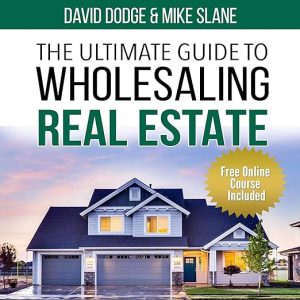
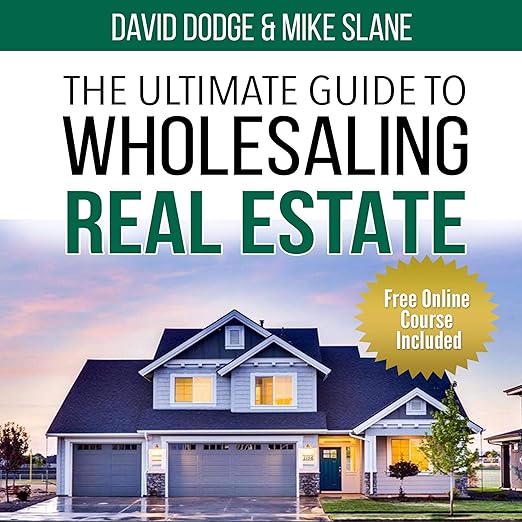
I came to this one out of curiosity rather than necessity, I do not wholesale real estate, and found myself genuinely engaged for more of it than I expected. David Dodge and Mike Slane are the kind of co-authors who write exactly as they speak: fast, practical, and with the evangelical enthusiasm of people who found something that worked and cannot understand why everyone is not doing it. The audiobook benefits from Dodge narrating his own work, which strips away any pretense of polish and gets straight to the content.
The premise is clear from the title and does not deviate: this is a step-by-step guide to wholesaling real estate with low risk and minimal upfront capital. Dodge and Slane claim to have flipped over 250 deals in three years. Whether or not you take that figure at face value, the advice in the book has the texture of experience rather than theory, which is exactly what beginners in this space need and rarely get from generic real estate titles.
Our Take on The Ultimate Guide to Wholesaling Real Estate
The book covers the core wholesaling process systematically: how to find properties selling at a discount, how to analyze deals, how to structure contracts, and how to move those contracts to investors without needing your own capital. The emphasis on low-to-no-money-down entry is a genuine feature of wholesaling as a strategy rather than a marketing trick, and Dodge does a reasonable job explaining why the mechanic actually works.
What distinguishes this from more generic real estate motivation books is its specificity. The authors write from the Midwest, and their examples, including discussions of BRRRR strategy, fixing and flipping alongside wholesaling, and building a rental portfolio, feel grounded in actual market conditions rather than hypothetical optimism. A reviewer who was new to real estate found it gave direct action on what to do without filling the content with hypothetical information, which is a meaningful differentiator in a crowded genre.
Why Listen to The Ultimate Guide to Wholesaling Real Estate
The companion online course mentioned in the book, available at Discount Property Investor University, means this audiobook functions as part of a larger ecosystem rather than a standalone resource. For listeners who want to go deep, the book is the starting point and the course fills in the practical details. That structure works well in audio: Dodge sets the conceptual framework and points you toward the tools, rather than trying to include everything in the book itself.
Dodge’s narration has the energy of a coaching call rather than a recorded lecture. He sounds like he would rather be talking to you directly, which actually suits the material. Real estate wholesaling is a people business, and the relational quality in his voice, slightly informal, occasionally impatient with abstraction, matches the work it is describing.
What to Watch For in The Ultimate Guide to Wholesaling Real Estate
The production is self-published, and it shows. Some reviewers of the print edition noted typos and binding issues; the audio equivalent is a lack of editorial tightening that a professional publisher would have applied. Some sections wander, and a few passages feel like they belong in a course module rather than a chapter of a book. This is a minor irritant for listeners who are primarily after the content, but it is worth knowing.
The book also positions itself at the beginner end of the spectrum, which means experienced investors will find limited new material. One longtime real estate professional noted it is still worth reading even if you are not planning to wholesale, because the fundamentals of finding undervalued properties transfer across strategies. That is a fair assessment: the principles generalize even when the tactics are wholesale-specific.
Who Should Listen to The Ultimate Guide to Wholesaling Real Estate
New or aspiring real estate investors who want a practical introduction to wholesaling written by practitioners. Works well as an orientation before going deeper with the companion course or other resources. Skip it if you already have real estate investing experience, the material will feel foundational rather than illuminating. Also worth noting: this pairs well with listening on the go; the chapter structure is practical enough that you can process and reflect without needing to take notes in real time.
Frequently Asked Questions
Does this book work as a standalone resource, or do you need the companion online course?
It works as a standalone introduction to wholesaling concepts and strategy. The companion course at Discount Property Investor University adds practical tools and deeper implementation resources, but the book itself gives you enough to understand the model and begin asking the right questions. Think of the book as the framework and the course as the execution layer.
Is David Dodge narrating his own book a good thing for the listening experience?
For this material, yes. Dodge’s self-narration has the energy of a direct coaching conversation rather than a polished production. He is enthusiastic and specific, occasionally informal, and clearly more interested in getting useful information across than in sounding authoritative. For beginners in wholesaling who want to feel like they are getting real talk, that quality is an asset.
The book mentions flipping 250 deals in three years, is that claim substantiated?
The book does not provide detailed documentation of those deals, and listeners should approach that figure as context rather than verified data. What the writing does demonstrate is genuine operational knowledge of the wholesaling process, the advice is specific and practical in ways that vague success-story books typically are not. The claim establishes credibility rather than functioning as a proof point.
How does this book compare to other real estate wholesaling resources on the market?
Reviewers consistently note its value relative to price and accessibility. It is more practical and less motivational than many competitors, which is a meaningful differentiator. The self-published production quality is lower than traditionally published alternatives, but the content specificity, particularly around the Midwest market and the BRRRR strategy, makes it genuinely useful for beginners who want operational knowledge rather than inspiration.