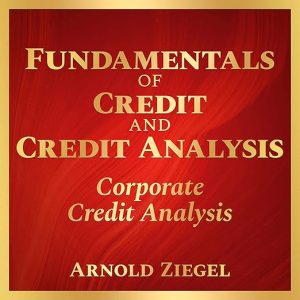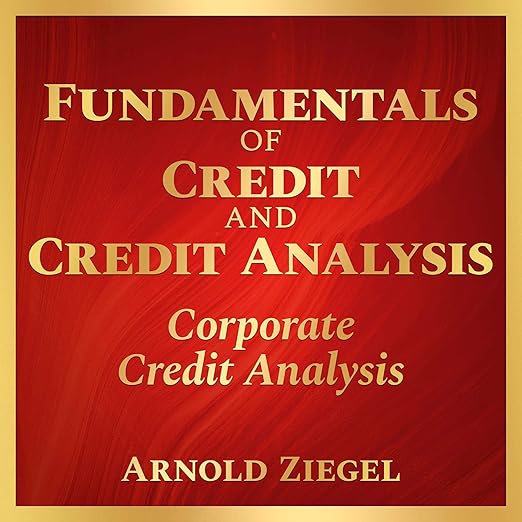
Arnold Ziegel spent more than thirty years at Citibank before forming Mountain Mentors Associates to deliver credit risk training to global financial institutions. The audiobook version of Fundamentals of Credit and Credit Analysis carries the particular authority of someone who watched the 2008 financial crisis unfold from inside the industry and has since spent years teaching its lessons to the next generation of corporate bankers. At four hours and five minutes, it is not trying to be a complete reference manual. It is trying to reset something that the industry keeps forgetting, and that modesty of scope is itself a form of disciplined thinking.
The quote Ziegel returns to throughout is simple: J.P. Morgan's observation that "lending is not based primarily on money or property. No sir, the first thing is character." That framing is not sentimental; it is the organizing principle of the entire audiobook. Ziegel uses the 2008 mortgage-backed securities disaster as his central case study, examining how sophisticated modeling replaced the fundamental judgment that should have been the first line of defense. The argument is as timely now as it was when the book was written, and the audiobook format makes it possible to absorb it on a commute rather than at a desk.
Credit Risk Is Never a Binary Decision
The book's thesis is stated clearly and returned to repeatedly: the goal of credit analysis is not a binary yes-or-no decision but an accurate assessment of the degree of risk associated with a particular obligor. Once that risk is characterized accurately, it can be priced and structured accordingly. This sounds obvious, but Ziegel spends the audiobook demonstrating how comprehensively the industry abandoned this principle in favor of models that produced the answers participants wanted to hear, with consequences that cost billions of dollars and damaged millions of lives.
One reviewer, writing after a significant career shift into credit risk management, described the book as exactly the resource they needed: "an excellent primer on credit and credit analysis, relatively concise and it covers the fundamentals." Another framed it as simultaneously useful for "novice analysts and as a refresher for seasoned lenders," which reflects the book's deliberate calibration. Ziegel is not writing for specialists with a decade of experience; he is writing for the person who needs to understand why the fundamentals matter before they can engage with the more advanced material that follows in a credit risk career.
The 2008 crisis treatment is analytical rather than narrative, which means Ziegel is interested in the structural conditions that made the collapse possible rather than in the personal drama of the institutions involved. He documents how "sophisticated models were used by investors, banks, and rating agencies to judge the credit worthiness of billions of dollars worth of residential mortgage loans" that turned out to be far riskier than modeled. The models indicated very low losses. The actual losses were enormous. Ziegel's explanation of why is the intellectual core of the book.
Robertson's Clean Reading Never Rushes the Ratios
The audiobook format works for this material because Ziegel writes with the clarity of someone accustomed to delivering this content verbally in training sessions. The prose has the accessible structure of a well-organized lecture rather than the dense referential style of an academic text. Eric Robertson's narration suits this delivery mode; his clean, professional reading maintains the pace of argument without rushing the ratio analysis and institutional examples that require active listener engagement to absorb properly.
At just over four hours, the audiobook is a practical investment. A reviewer noted that "free cash flow never goes out of style" and described finding "many hidden gems in this short, but powerful book," which captures the density of insight relative to runtime. Ziegel has packed career-level experience into a listening session that will not strain a commute schedule, which makes it accessible to working professionals who cannot commit to a longer and more exhaustive treatment of the same material.
Ziegel Favors Judgment Over Procedure and Formula
One reviewer noted explicitly that this is not "a nuts-and-bolts book for credit and financial analysis." Listeners expecting a detailed guide to financial spreading, ratio calculations, and the mechanics of building a credit model will find the scope limited. Ziegel is deliberately writing at the level of principles and judgment rather than procedure and formula. The audiobook complements deeper technical resources rather than replacing them, and listeners who approach it with that framing will find it considerably more useful than those who expect a procedural handbook.
The book's treatment of the 2008 crisis covers the fraud, the lax standards, and the willful ignorance of mortgage originators and securitizers in terms that are blunt without being polemical. Ziegel is making a professional argument, not a political one, and the restraint shows. Listeners who want a more narrative account of the crisis and its human casualties should look to other titles; this audiobook is primarily concerned with the analytical failures that made the collapse possible, not with the suffering it caused.
Early-Career Bankers Get the Foundational Concepts First
Early-career professionals entering credit risk, corporate banking, or financial analysis roles will find this audiobook a genuinely useful orientation to the field's foundational concepts before engaging with more technical training programs. Career changers moving into financial services who need to build a framework from first principles will benefit from the accessible but rigorous treatment Ziegel provides. The audiobook is also recommended as a refresher for experienced lenders who want to reconnect with first principles after years of working primarily within model-driven environments that have gradually obscured the human judgment underneath.
Listeners who are primarily interested in the history and drama of financial crisis rather than the analytical framework that failed will need a different title. But for the professional who needs to understand what credit analysis is actually for, why character is still the first thing, and how the industry's drift from that principle produced a catastrophe, this four-hour audiobook provides the clearest and most direct argument currently available in audio format.
Does the Fundamentals of Credit and Credit Analysis audiobook assume prior finance knowledge?
Not significantly. Ziegel writes to demystify credit analysis rather than to build on assumed expertise. Some basic familiarity with financial statements and accounting concepts will make the content more immediately applicable, but the book is designed as a primer and explains its key concepts from the ground up for listeners entering the field.
Is the Fundamentals of Credit and Credit Analysis audiobook useful for exam preparation in finance or banking?
It is a strong conceptual foundation but not a technical exam preparation guide. It covers the principles and judgment underlying credit analysis rather than the specific calculations, formats, and ratio definitions that appear on credentialing exams. It works best as a complement to more technical study materials rather than as a standalone exam resource.
How does this audiobook address the 2008 financial crisis, and is that coverage dated?
Ziegel uses the mortgage-backed securities crisis as a case study for what happens when modeling replaces fundamental credit judgment. The analytical lessons remain current even though the specific events are now historical. The principles he draws from the crisis, about character, collateral valuation, and the limits of quantitative models, apply to contemporary credit risk situations as directly as they did in 2008.
At just over four hours, is the Fundamentals of Credit and Credit Analysis audiobook too short to be genuinely useful?
The brevity is a deliberate feature rather than a limitation. Ziegel has distilled career-level experience into a focused treatment of the core concepts, and reviewers specifically praise the density of insight relative to runtime. It functions as a framework and orientation rather than a comprehensive reference, and its concision makes it accessible to working professionals who cannot commit to extended study programs.