Key Details
- Narration: Robert Olen Butler narrates his own workshop material with the same passion that apparently drives his classroom.
- Themes: The unconscious in fiction writing, yearning as narrative compass, emotional craft
- Mood: Inspirational and philosophical rather than checklist-practical
- Verdict: Essential listening for serious fiction writers ready to move past outlining, less so for absolute beginners.
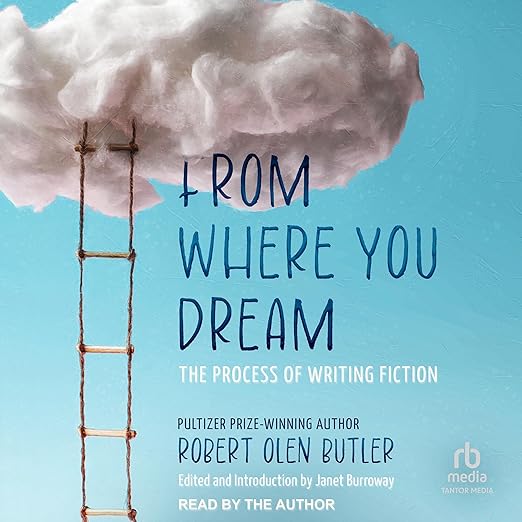
Florida State University's graduate fiction program has a reputation among writing students as something close to boot camp, and Robert Olen Butler is the reason: a Pulitzer Prize winner who teaches, in his own framing, that fiction is emotional before it's intellectual, and that the real work of writing happens somewhere close to a dream state rather than at a desk with an outline. From Where You Dream began as his own class transcripts, and this audiobook keeps that classroom energy intact because Butler narrates it himself.
Yearning as the Compass for Every Scene
Butler's central claim is that fiction explores the human condition with yearning as its compass, and he uses that idea to reinterpret nearly every traditional tool of the craft, point of view, scene construction, revision, through the lens of desire rather than plot mechanics. It's a genuinely different way of thinking about composition than most writing guides offer, less a toolbox than a philosophy.
His self-narration is close to essential here, not a nice bonus. Since the book grew directly out of his own workshop transcripts, you're hearing something close to the actual classroom experience his students describe, passion for the argument audible in a way a hired narrator, however skilled, likely couldn't fully replicate.
Butler's own background adds real weight to that argument. He served in the Vietnam War working as a linguist and translator, an experience that eventually fed directly into A Good Scent from a Strange Mountain, the Pulitzer Prize-winning story collection exploring Vietnamese-American experience that established his reputation. A writer whose own defining material came from lived, often difficult experience rather than pure invention has genuine standing to argue that craft grows out of feeling rather than formula.
'Yearning as its compass' works as more than a memorable phrase; it's a genuine navigational tool Butler returns to throughout, the idea that every scene, every line of dialogue, every choice a character makes should trace back to what that character wants badly enough to act on, even when they can't fully articulate it themselves. That single question, reapplied constantly, becomes the book's real recurring exercise even without a formal workbook structure.
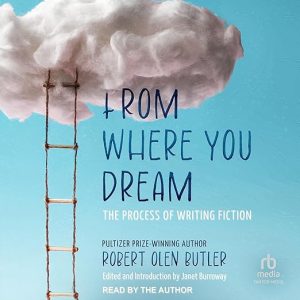
One reviewer's nickname for the book, 'the blue book of fiction writing,' after its cover, suggests something close to canonical status among a certain generation of MFA students, the kind of title that gets passed hand to hand between classmates rather than merely assigned. That word-of-mouth reputation, independent of formal curriculum placement, says something real about how directly the book's ideas seem to land for working writers.
Robin Wolfson's point that the book teaches you to make a reader see, hear, taste, smell, and almost touch the world on the page identifies exactly what separates Butler's sense-memory method from more abstract craft advice: it's fundamentally about the body's five senses standing in for a character's inner life, rather than adjectives doing that work from the outside.
Sense Memory Replaces Abstract Description
Publishers Weekly gave the book a starred review, praising Butler's total openness in sharing both his insight into and passion for the creation and experience of fiction, and that openness is the book's defining quality. This isn't a guarded, theoretical text; it reads like Butler genuinely wants you to understand something he's spent decades working out for himself.
One reviewer highlights the specific technique Butler calls sense memory: writing from what a character would see, hear, taste, smell, and touch rather than from abstract description, so a reader can enter the world rather than just observe it from outside. That's a concrete, usable tool buried inside what could otherwise read as a purely philosophical argument, and it's worth listening closely for.
The phrase 'literary boot camp' in the synopsis is worth taking seriously rather than reading as a cute exaggeration. Butler's graduate workshop reputation for intensity comes through clearly in how directly he confronts students, and by extension listeners, about avoiding the safety of purely intellectual, head-driven writing in favor of something riskier and more honest.
Booklist called Butler's tutorials 'incisive and provocative,' adding that they're a must for anyone even considering writing fiction, and that specific word, provocative, fits the book's actual approach better than a gentler synonym would: Butler isn't interested in comfortable affirmation, he wants to unsettle a writer's existing habits enough that something more honest can take their place.
Eight Hours That Reward Repeat Listening
Listeners expecting something structurally similar to Bird by Bird, with concrete daily exercises and a friendly, anecdotal tone, will be surprised. This is an emotional and unconscious theory of fiction, not a technique manual with checklists, and one reviewer's description of the book as inspiring readers to 'reach the stars' captures its register accurately: aspirational and philosophical rather than procedural.
At eight hours and one minute, built from what amounts to a full course's worth of teaching, this rewards repeat listening more than a single pass. Working writers wanting to internalize the dream-space method will likely get more value returning to specific sections over time than trying to absorb the whole argument in one sitting.
Butler's other novels, including Perfume River and A Small Hotel, all apply this same emotional-over-intellectual philosophy in practice, which gives curious listeners an obvious next step: reading or listening to his fiction after finishing this craft book shows the theory actually working rather than leaving it purely abstract.
Eight hours is relatively compact given how much classroom material the book distills, which means Butler moves through his argument efficiently rather than padding it with extended examples. Listeners wanting more worked examples applying the method to specific published passages may find themselves wishing for additional illustration beyond what the runtime allows.
Many writers' formative experience of a fiction workshop involves blunt, sometimes discouraging line-by-line critique focused on what isn't working. Butler's approach here is different in kind, not just tone: rather than critiquing finished pages, he's trying to change the internal process that produces them in the first place, which makes this feel less like a workshop and more like access to how one specific, successful writer's mind actually works.
MFA Students and Teachers Get the Most
MFA students, working novelists and short story writers stuck in overly intellectual drafting habits, and teachers of creative writing looking for a genuinely different pedagogical approach will find this valuable, particularly listeners already frustrated with purely structural writing advice.
Skip this one if you want a structural or technical craft guide built around outlining templates and concrete exercises, or if you're an absolute beginner without a draft already in progress, since the framework works best applied to something you're actively writing.
Common Questions
Does this audiobook work like Bird by Bird, with concrete technique exercises?
Not really, and that's worth knowing going in. This is an emotional and unconscious theory of fiction rather than a checklist-style technique manual, closer to a philosophy of composition than a book of exercises.
Do I need an MFA or writing background to benefit from this audiobook?
No, but it helps. The material assumes you already have a draft or serious writing practice to apply the ideas to; absolute beginners without anything in progress may find the framework more abstract than useful.
Is Robert Olen Butler's self-narration worth it compared to a professional narrator?
Yes. Since the book grew out of his own workshop transcripts, his narration carries an audible passion for the argument that a hired narrator, however skilled, likely couldn't fully replicate.