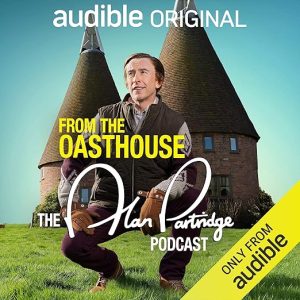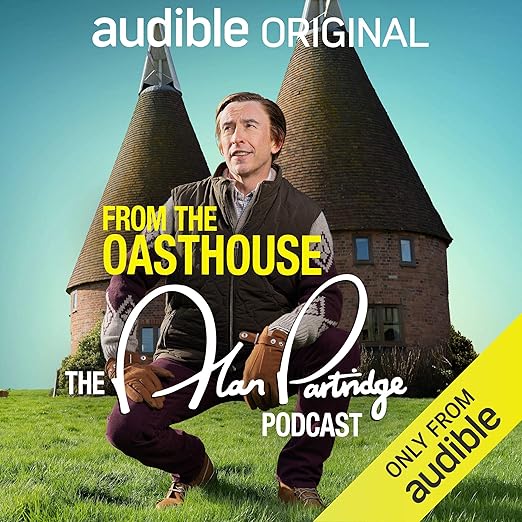
- Performance: Steve Coogan as Alan Partridge is the entire performance, and it is the kind of comic voice work that rewards close listening rather than background play.
- What it covers: British comedy of embarrassment, the gap between self-image and reality, celebrity self-mythology
- Feel: Absurd and cozy, occasionally cringe-sharp
- Our call: Essential for anyone already invested in the Partridge universe, though newcomers may find the format requires patience that the jokes eventually repay.
I have a long and specific relationship with Alan Partridge as a comedy creation, dating back to the original radio show and the early chat-show incarnations. So when I finally sat with this Audible Original on a quiet Tuesday evening, I already knew the voice, the cadences, the particular brand of provincial self-importance that Steve Coogan has sustained across three decades. The podcast format is a new container for a very old character, and it works in ways I did not entirely expect.
The premise is precisely as the synopsis describes it: Alan, broadcasting from his oasthouse, granting listeners an access-all-areas pass to his off-screen life within reason. That within reason is doing enormous comedic work. Alan's definition of reason, and his understanding of what constitutes fascinating personal revelation, is the engine that drives every episode across 18 generously durated installments. The word durated is Alan's, and it captures his relationship with language perfectly.
What Coogan and his collaborators have done here is use the podcast format as a mirror for how Alan would actually engage with media in 2020. The result is a character study as much as a comedy. Alan's genuine belief that he is insightful, that his opinions on topics ranging from hand sanitizer to the nature of friendship are worth broadcasting, produces the kind of sustained comic irony that the Partridge creation has always excelled at. He is never in on the joke, and that consistency is what keeps 18 episodes of podcast comedy from wearing thin.
The Audible format suits the material because podcasting is exactly the medium a certain kind of slightly-past-their-peak broadcaster would gravitate toward. Alan's negotiation with Audible, including his careful attention to the technical specifications laid down in the contract, is referenced with the dry specificity that fans will immediately recognize. This is someone who reads contracts extremely carefully and still somehow misses the point of everything.
What Makes From the Oasthouse: The Alan Partridge Podcast (Series 1) Worth Hearing
The audio-only format strips away the visual comedy of the television incarnations and forces the writing and performance to carry everything, and they largely do. Coogan's voice work here is precise in ways that only become apparent over multiple episodes. Alan's breathing patterns, his self-corrections, his sudden enthusiasms followed by equally sudden retreats, they build a portrait that is both comic and, in certain moments, unexpectedly melancholy. Reviewers have called it gold, and at its best that is right.
One reviewer offered the only genuine criticism worth noting: that the content lacks the relentless laugh-per-minute density of the earlier audiobooks. That is fair. This is slower, more ruminative comedy, closer to character study than sketch, and it requires a listener willing to sit with Alan's self-delusions long enough for them to compound into something genuinely funny. If you want rapid-fire jokes, this is not it. If you want to spend six-and-a-half hours inside a very specific and very British comic sensibility, this delivers.
What the format also does well is capture the texture of amateur podcasting as a cultural form. Alan's relationship with technology, his careful attention to levels and sound quality while simultaneously saying nothing of journalistic value, is a comedy of medium as much as of character. Coogan and his collaborators clearly understood that the podcast format was not just a delivery mechanism for Alan's opinions but a comedic subject in its own right.
Things to Know Before Starting From the Oasthouse: The Alan Partridge Podcast (Series 1)
The eighteen episodes vary significantly in focus and density. Some are built around a single extended premise that Partridge pursues with diminishing self-awareness; others are more digressive, circling back to fixed ideas, mild obsessions, and opinions on public life that reveal more about Alan than about the subjects he addresses. The cumulative effect matters more than any individual episode, which makes binging a more satisfying experience than sampling.
New listeners should also understand that this is not a standalone introduction to the character. The comedy is densest for people who already understand the mythology, the failed chat show, the years in Norwich, the battles with various broadcasters. The context enriches rather than restricts the jokes, but you will absorb less without it.
Who Should Pick Up From the Oasthouse: The Alan Partridge Podcast (Series 1)
Existing Partridge fans will find this essential. The format is new; the comedy is unmistakably continuous with everything Coogan has built since the early 1990s. If you are new to Alan Partridge, I would suggest starting with I, Partridge, the written autobiography that is available in audio and serves as an excellent entry point, then returning to this series once you have the character fully calibrated. Anyone skeptical of British comedy of embarrassment will not be converted here, and that is fine.
A Few Questions About From the Oasthouse: The Alan Partridge Podcast (Series 1)
How does this compare to the earlier Alan Partridge audiobooks?
One reviewer noted that the content is less joke-dense than previous Partridge audio work. This is true: the podcast format is slower and more ruminative than the written autobiography, prioritizing character accumulation over rapid comedy. Fans of the audiobooks should adjust expectations accordingly.
With 18 episodes totaling nearly 7 hours, is this best listened to in sessions or as a binge?
Binging rewards the listener more. The comedy builds through repetition and accumulation: Alan's obsessions, verbal tics, and self-deceptions compound across episodes in ways that individual-episode listening does not fully capture. Spacing them out loses some of that cumulative effect.