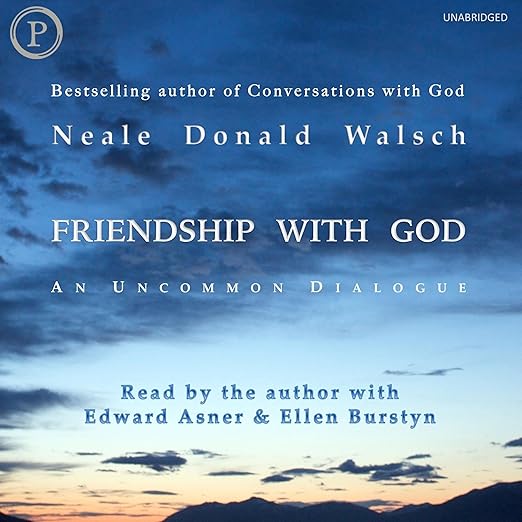
Friendship with God arrived in my listening queue at a specific moment in what I can only describe as a long season of rethinking. I had spent several months revisiting books about spirituality and religious philosophy from a critical rather than devotional standpoint, reading across traditions with the slightly detached interest of someone taking inventory. Neale Donald Walsch's Conversations with God series had been on my periphery for years, referenced by enough serious readers that I had stopped dismissing it. When a retired clergy member in a reader thread described Friendship with God as grounding speculative theology in experience from the very first page, I decided to start here rather than with the original trilogy.
Edward Asner narrates, which is worth noting immediately. Asner's voice carries a weight and particularity that suits the intimate, confessional register of Walsch's writing. This is not a polished, generic audiobook voice. It is a voice that sounds as though it has opinions, doubts, and a long personal history, which turns out to be exactly what the dialogue format of Walsch's work requires. The listening experience is substantially different from reading the text, and the difference is primarily attributable to Asner.
Where This One Lands
Walsch describes this as the next step in his journey after the Conversations with God trilogy: not the initial encounter with the divine, but the deepening of that encounter into something resembling an actual friendship. The framing is audacious and will immediately divide listeners. Those who found the Conversations series too presumptuous in its claim to represent divine speech will likely feel the same way here. Those who found it genuinely useful will recognize the mode immediately and settle in comfortably.
What the book adds beyond the earlier trilogy is a more sustained autobiographical dimension. Walsch shares personal material, the circumstances of his own life that made the original Conversations possible, and this grounding in specific human experience makes the theological reflection feel less abstract. One reviewer, the retired clergy member mentioned above, described the book as avoiding philosophically speculative theology and remaining grounded in experience throughout. That assessment feels accurate. This is not systematic theology. It is something closer to spiritual memoir with doctrinal implications woven through.
Why Listen to Friendship with God
The dialogue format, in which Walsch converses with a God who responds directly to his questions and challenges, is either the book's primary attraction or primary obstacle depending on the listener's prior orientation. For those already sympathetic to Walsch's framework, the format allows the text to develop ideas through question and answer in a way that static exposition cannot, and Asner's narration makes both voices distinct enough to follow clearly.
The book's explicit instruction, that each listener should begin their own conversation with God rather than simply reading Walsch's, has resonated strongly with readers across a wide range of religious backgrounds. One reviewer who came to the book with broad and somewhat skeptical spiritual inclinations described their initial reservations about Walsch's legitimacy gradually fading into irrelevance as the content itself proved worth engaging. That trajectory, from skepticism to genuine engagement, seems representative of how many readers experience this book.
What Gives Us Pause
Listeners who have not read the Conversations with God trilogy will encounter references and callbacks that assume familiarity with that earlier work. One reviewer recommended reading books one through three and the Companionship volume before arriving here, describing the series context as genuinely enriching the reading. Friendship with God does function independently, but some of the callbacks and extensions of earlier themes will carry less weight without the prior volumes.
The book also asks a great deal of the listener in terms of suspending the automatic skepticism that Walsch's foundational claim, that he has a direct, conversational relationship with a responsive God, naturally provokes. Whether that suspension feels worthwhile will depend largely on what the listener brings to the text. The book does not argue its case philosophically. It presents its premise and invites the reader to engage with it on its own terms.
Who Should Pick Up Friendship with God
Those already familiar with and appreciative of the Conversations with God series will find this a natural and rewarding extension. Listeners curious about spirituality that sits outside traditional organized religion, drawing on multiple traditions without being doctrinally specific, will find Walsch's approach accessible. Committed skeptics who find the core premise of divine dialogue philosophically untenable are unlikely to be convinced here. Those looking for systematic theological argument rather than experiential reflection should look elsewhere entirely.