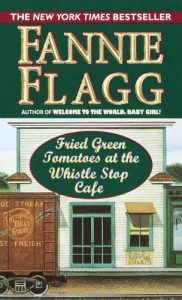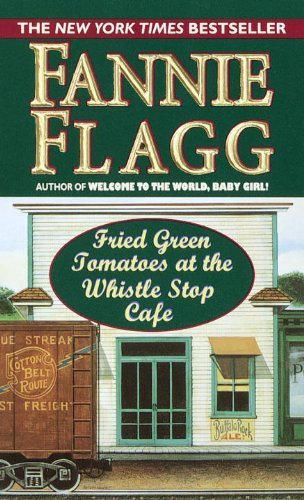
I first read Fannie Flagg's novel in a paperback borrowed from a shelf at my grandmother's house, and I remember being surprised at how much more it contained than the movie I'd already seen twice. The film, beloved as it is, distills the story into its most cinematic moments, but the book moves the way a town does: slowly, sideways, full of anecdote and digression and the accumulated detail of lives lived in close proximity over decades. When I returned to it as an audiobook years later, the experience shifted again. Hearing the voices of Whistle Stop, Alabama given breath and rhythm reminded me why Flagg's prose works the way it does: it's built for telling aloud.
Fried Green Tomatoes at the Whistle Stop Cafe is structured around two timelines. In the 1980s, Evelyn Couch, a middle-aged woman stuck in an invisible marriage and a profound spiritual emptiness, begins visiting a nursing home and befriending the elderly Ninny Threadgoode. Ninny tells her stories from the 1930s about the Whistle Stop Cafe, about the fierce Idgie Threadgoode and her beloved friend Ruth Jamison, about the cafe's famous fried green tomatoes and its community of regulars, and about a murder trial that becomes the hinge on which the whole novel turns. The alternating structure, moving between Ninny's voice and a newspaper column from the fictional Whistle Stop Tattler, gives the book a quilted texture that feels specific to Southern oral tradition.
A Closer Look at Fried Green Tomatoes at the Whistle Stop Cafe
What reviewers tend to respond to most viscerally is Flagg's comic voice, and it's real. The book is genuinely funny in the way that small-town storytelling is funny: the humor comes from character, from the gap between human aspiration and human messiness, from a narrative voice that loves its people too much to condescend to them. The scene in the nursing home parking lot alone, which appears in the film but reads differently on the page, is a set piece about female rage that's been making readers laugh and cheer for thirty years.
But what the title doesn't tell you is how much grief this novel holds alongside its comedy. The relationship between Idgie and Ruth is rendered with an emotional intensity that the book never quite names directly but never shy away from either, and the section involving the cafe's cook, Big George, and the town's racial dynamics is handled with a specificity and weight that the film touched only lightly. One reviewer who came to the book after multiple viewings of the film noted that the book gave 'greater understanding to some of the characters such as Smoky Lonesome and Big George,' and that's an accurate observation. The supporting cast of Whistle Stop has interior lives the movie couldn't accommodate.
What Makes Fried Green Tomatoes at the Whistle Stop Cafe Worth Hearing
Flagg's prose has a conversational rhythm that makes the audiobook format feel natural rather than simply convenient. The Ninny Threadgoode chapters in particular are built around a storytelling voice that expects to be heard, and the Whistle Stop Tattler segments, brief fictional newspaper columns that punctuate the main narrative, land differently when they're read aloud: they feel like found documents, like you're hearing community memory rather than a novelist's device.
The novel is long at just under twelve hours, but it doesn't feel long in the way that overwritten books do. It feels long the way a good conversation with someone who has lived a full life feels long: you don't want it to end because you're learning something with every turn. Flagg is not a minimalist, and there are sections where the narrative wanders into corners that don't connect directly to the main story. But these digressions are part of how the world of Whistle Stop is built, and cutting them would shrink the novel's sense of a real community with its own rhythms.
Things to Know Before Starting Fried Green Tomatoes at the Whistle Stop Cafe
The novel's treatment of race is one of the places where it most clearly exceeds the film adaptation. The Whistle Stop Cafe is explicitly a place where Big George and his family are part of the community's moral core, and the threat posed by the Klan is not backdrop but plot. Flagg handles this material with affection and specificity, though modern readers may notice the limits of a white Southern author writing Black characters in the 1980s. It's worth coming to with attention rather than nostalgia.
The Idgie and Ruth relationship is the emotional center of the book, and it's been read as a love story in varying registers across the decades since publication. Flagg has made statements about this over the years that have satisfied some readers and frustrated others, but the text itself is more open than any single interpretive frame, and that openness is part of what makes it worth revisiting.
Who Fannie Flagg Is Writing For
This novel rewards listeners who enjoy character-driven Southern fiction with genuine comic energy and emotional range. It's a particularly good choice for anyone who loves the film and wants to understand why devoted readers of the book feel so protective of it. New listeners who haven't seen the movie will get perhaps the richest experience, coming to Whistle Stop without a pre-formed visual vocabulary. Those looking for tight narrative plotting or a single driving storyline may find the wandering structure frustrating; this is not a propulsive book, and it doesn't intend to be.
At a Glance
- Narrator: The audiobook edition brings Fannie Flagg's rich ensemble of Southern voices to life through intimate, full-cast-style reading that suits the novel's community storytelling structure.
- Subjects: Female friendship, small-town Southern memory, resilience and reinvention across generations
- Tone: Warm and bittersweet, funny and quietly devastating by turns
- Bottom line: A novel that earns its enduring reputation, layered, funny, and more emotionally complex than either its title or its film adaptation fully conveys.
Frequently Asked Questions
Is the audiobook version of Fried Green Tomatoes significantly different from the film?
Yes. The film distills and in some cases substantially changes the novel, particularly regarding the Idgie and Ruth relationship and the extent of the racial justice storyline. Several characters who are significant in the book, including Big George and Smoky Lonesome, receive much fuller treatment in the novel.
Do you need to have seen the movie to enjoy the audiobook?
Not at all. Listeners who come to the novel fresh may actually have a richer experience because the story's reveals land as the author intended. Fans of the film will find much that is familiar alongside material they haven't encountered before.