Before You Press Play
- Narration: Harold Goodman teaches rather than reads, with two uncredited students answering alongside you throughout the lesson.
- Themes: no-memorization language learning, building-block grammar, spoken Mandarin without characters, learning by reasoning.
- Mood: Calm, patient and unhurried, closer to a small class than a lecture.
- Verdict: Still the best way in for a total beginner, so long as you accept a re-issued 2018 recording and a first hour you may already own.
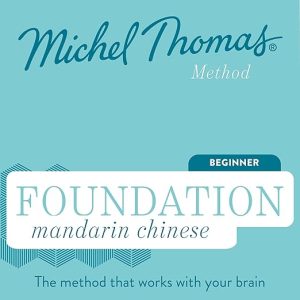
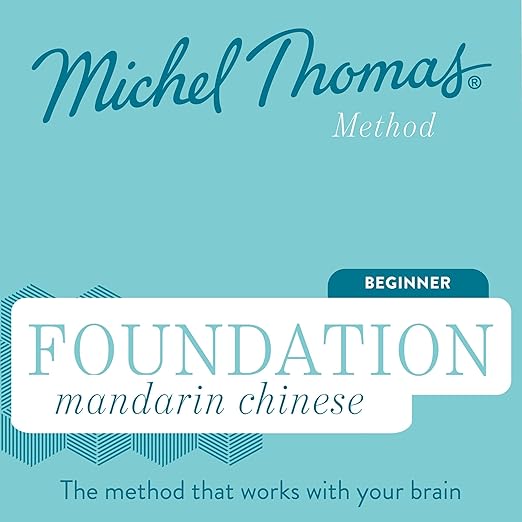
The endorsement pinned to the top of this listing praises the Michel Thomas Method for making Mandarin Chinese click, then delivers its punchline in German. Somebody recycled a quote from a different course in the range and nobody caught the mismatch. It is a fitting introduction to an audiobook that is not a book at all, but eleven hours and forty-six minutes of recorded classroom, with a teacher, two students, and a seat held open for you as the third.
Goodman's Live Lesson Requires You to Answer Aloud
The method is old enough to have outlived several generations of language software, and it works on a single principle: you are never asked to memorize anything. Michel Thomas broke languages into what he called building blocks, then arranged them in an order that lets a learner reconstruct the language from the inside, forming sentences nobody has taught you by combining pieces you already understand. What you understand, runs his line, you do not forget.
In practice that means a live lesson. Dr Harold Goodman teaches, two students sit in, and you learn from their correct answers and their wrong ones alike. The recording pauses constantly to hand you a question, and the design assumes you stop the audio, think, answer aloud, then listen to somebody else attempt the same thing. Passive listening defeats the entire mechanism. This is the rare recording where treating it as background noise produces nothing whatsoever. Nobody is graded and nothing is timed, which removes the anxiety the method treats as the principal obstacle to learning anything at all.
The claims are refreshingly modest, too. The course states plainly that it will not make you fluent, only that it will get you speaking with proper pronunciation faster than other approaches and leave you with a working foundation. Thomas described himself as the architect who builds the house and left the decorating to the learner. Anyone who has bought a language product promising conversational mastery in thirty days will recognize how unusual that restraint is.
The Real Workload Is Twenty to Thirty Hours
This is one of the few titles in any catalog that could not exist in print. The whole design depends on sequence, on silence of a measured length, on hearing a mistake corrected in real time. Reading a transcript would destroy it. If you have ever wondered what audio can do that a page cannot, a Michel Thomas course is the clearest available answer, and the format is not a convenience here but the entire pedagogy.
Budget your time accordingly. The recording is not the workload. The course tells you to expect somewhere between twenty and thirty hours, because you will be pausing to answer, repeating, and going back over sections that did not stick. That ratio is a feature. It also means anyone planning to get through this in a week of driving has misjudged what they bought. A PDF comes with the purchase for reference.
For Mandarin specifically, the no-writing rule pays off early. The course never shows you a written character and never asks you to recognize one, which removes the single largest barrier that stops English speakers in the first month. Learners who begin with characters routinely stall long before they can say anything useful out loud. You spend the whole eleven hours building spoken sentences and hearing how they should sound. Whether you eventually want the writing system is a separate decision, taken later, with speech already in place.
Muddled Credits Hide Goodman and the Two Students
Check the small print at the bottom of the description. The text copyright dates from 1999 and the recording carries a 2018 production line from a publisher named nowhere else on the page, while the listing shows a February 2026 release date. Nothing visible on the page tells a buyer that this is a catalog title being re-issued rather than a new production, and anyone assuming the material has been refreshed for a 2026 audience is assuming something the copy never claims.
Read the note about overlap as well. The first hour of this course is identical to the Start Mandarin Chinese taster, so anyone who already sampled that pays a second time for the same sixty minutes. The recommended path afterward runs Foundation, then Intermediate, then Vocabulary, which makes this the opening third of a sequence rather than a complete program, whatever the words full course in the title imply.
The credits are muddled too. Michel Thomas holds the author byline, but the voice teaching you belongs to Harold Goodman, and the two students whose mistakes form a genuine part of the teaching material appear nowhere in the metadata at all, despite being present for every hour of it. The publisher is given as a person rather than as the company named in the production line. And the page shows no rating and no written responses of any kind, so nothing here is independent of the marketing.
The Wrong Purchase for Would-Be Chinese Readers
Absolute beginners, and specifically the ones who have bounced off apps. If flashcards, streak counters and vocabulary drills have failed you repeatedly, a method built on reasoning rather than memorization is worth a genuine try, and this is the least painful eleven hours in language learning I know of. It also suits people whose available study time happens while driving or walking, provided they can stop and speak out loud without embarrassment.
It is the wrong purchase if you need to read or write Chinese, since characters never appear, or if you want breadth of vocabulary, since the method deliberately trades coverage for structure. Learners who cannot pause, cannot repeat aloud, or want to listen while doing something demanding should skip it entirely. Anyone already handling basic conversation will find the pace glacial for hours before it reaches anything new.
Taken as what it is, an opening course from a range with a long track record, this remains one of the more intelligent ways to start a language that intimidates most people who try it. The teaching design has aged well. The listing around it has aged badly, from a recycled endorsement in the wrong language to a production line nobody thought to explain, and a first-time buyer deserves to know both things before pressing play. Eleven hours in, you will be constructing sentences nobody ever taught you.
Before You Listen
How long does the audiobook actually take to complete?
The recording runs eleven hours and forty-six minutes, but the course tells you to allow roughly twenty to thirty hours in total. The difference is time spent paused, answering aloud, repeating and reviewing. Treating it as passive listening defeats the method entirely, so plan on a slower schedule than the runtime suggests.
Is this audiobook the whole Michel Thomas Mandarin program?
Only the first stage. The recommended sequence continues with Intermediate and then Vocabulary, and a separate two-hour Review course exists for practice. The description also notes that the opening hour duplicates the Start Mandarin Chinese taster, which is worth knowing if you have already tried that shorter sample.