Before You Press Play
- Voice: Gabriel Wyner narrates his own method, and his real background as a professional opera singer gives the pronunciation sections technical authority a hired narrator couldn't replicate.
- Big ideas: pronunciation-first language acquisition, spaced repetition memory science, thinking in a language rather than translating into it
- Atmosphere: Practical and motivating, geared toward self-directed learners
- Worth it?: A genuinely distinctive, well-narrated language-learning method for listeners who've stalled on traditional courses, best experienced alongside its companion website and Anki resources.
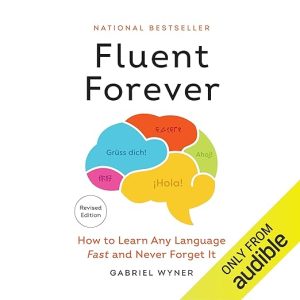
Six fluent languages by age thirty sounds like an unreachable party trick until Gabriel Wyner explains the actual mechanism behind it, and that explanation is the entire audiobook. Fluent Forever rejects classroom-style language learning in favor of a pronunciation-first method, rewiring your ear for foreign sounds before you ever try to produce them, then connecting words directly to images rather than to English translations so you start thinking in the new language instead of constantly converting into it. The spaced-repetition memorization system layered on top, designed to help listeners retain new vocabulary at real speed in just minutes a day, rounds out what Wyner calls brain hacking grounded in real neuroscience and linguistics rather than classroom tradition.
Wyner's own background matters enormously here: he's a professional opera singer, and the pronunciation techniques he teaches, borrowed from vocal training and stagecraft, carry a level of technical authority that a general-purpose language app or textbook author simply can't replicate. This is the revised edition of a book that has already built a substantial following among self-directed language learners, and the method itself is explicitly language-agnostic, built out across French, German, Italian, Russian, and Japanese examples rather than tied to one specific language.
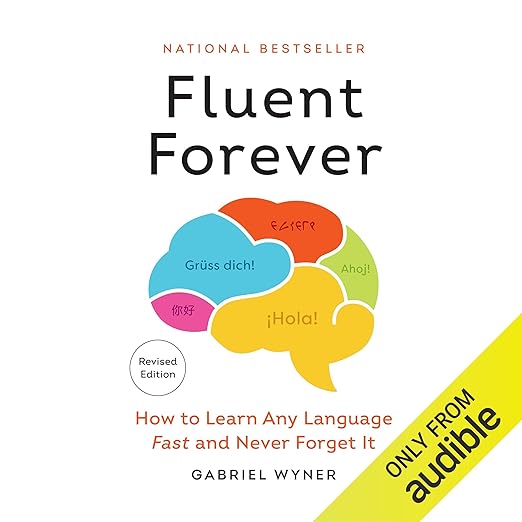
That this is explicitly labeled a revised edition matters more than it might for other nonfiction, since language-learning methodology is one of the few nonfiction categories where the underlying science and available tools genuinely shift within a few years. A revised edition typically signals updated research citations, refreshed technology recommendations, or corrected material based on reader feedback since the original release, and for a book this dependent on specific tools like Anki, keeping the guidance current is a meaningful reason to seek out this edition specifically over an older printing.
One detail from the synopsis is worth calling out specifically: Wyner developed this method using 'simple techniques and free online resources' while practicing on the subway, not through expensive private tutoring or formal classroom instruction. That accessibility angle matters for the book's actual audience, since it positions the method as something a genuinely busy, budget-conscious listener can implement using spare minutes in an ordinary day, rather than requiring the kind of time and money investment that language-learning apps and courses often assume listeners have available.
Wyner's Opera Training Powers the Pronunciation Coaching
Wyner narrates his own material, and self-narration here isn't just a nice authenticity touch, it's close to non-optional given the subject. Pronunciation coaching read by a hired narrator would be teaching sound production secondhand; Wyner actually demonstrating the vocal techniques he's describing, drawing on real opera training, gives the pronunciation sections a specific technical credibility that would be nearly impossible to fake. Reviewer Thomas Pentzer, who admits to losing steam on 'various text books, audio courses, and Anki decks' before finding this book, calls Wyner 'an Anki-Ninja,' a nod to how deeply the book integrates spaced-repetition software into its actual method rather than mentioning it as an afterthought.
The pronunciation-first architecture is genuinely the book's most distinctive structural choice, and it pays off specifically for listeners who have tried and abandoned other methods that front-load vocabulary and grammar before ever addressing how the language actually sounds. Reviewer Melody calls it 'clear, motivating, and full of practical strategies that make language learning feel achievable,' and specifically praises it as a commute companion, noting it's 'easy to follow yet packed with useful insights,' which is a meaningful endorsement for material this technical.
Anki itself deserves a moment of context for listeners unfamiliar with it: it's a widely used, free spaced-repetition flashcard application that has become something close to a standard tool within serious self-directed language-learning communities well beyond this book alone. Wyner didn't invent spaced repetition, but Fluent Forever's specific integration of it with image-based, translation-free vocabulary cards is what reviewers consistently point to as the book's most actionable contribution, the place where the underlying brain science actually turns into a daily habit a listener can maintain.
The specific 'tricks from opera singers and actors' the synopsis references aren't vague inspiration; performers in both disciplines train mouth shape, breath control, and precise sound placement as deliberate technical skills long before they ever worry about meaning or vocabulary, which is exactly the order Wyner asks language learners to work in too. Hearing those techniques explained by someone who actually trained that way professionally, rather than a narrator reading a secondhand description of them, is where the self-narration argument becomes hardest to dispute.
Schmorell Calls the Science Flawed but Useful
Not every listener found the science equally airtight. Reviewer Burkhard Schmorell, a Board Certified Behavior Analyst who has 'thought about the topic of second language acquisition extensively,' calls the book 'flawed but useful,' noting he was 'delighted by how some of his ideas lined up with ones of my own,' while also raising a real concern about where Wyner's claims are backed by settled science versus his own extrapolation from personal experience. That's a fair, worth-noting caveat for listeners who want their language-learning methodology airtight rather than persuasively argued.
This book leans heavily on a companion ecosystem beyond the audio itself, a dedicated website and detailed Anki spaced-repetition resources that extend the method significantly, plus a PDF included with the audiobook purchase covering implementation details that don't translate cleanly to audio alone. Listeners who treat this purely as a listen-through audiobook without ever engaging that online ecosystem will get the philosophy and the pronunciation coaching, real value on their own, but will miss a meaningful part of how the method is actually meant to be implemented day to day.
The book's specific promise, memorizing hundreds of new words a month in just minutes of daily practice, is a concrete, checkable claim rather than the vague improve-your-vocabulary language most language-learning marketing defaults to. That specificity is part of the book's appeal for listeners who have been burned by apps promising fluency without ever quantifying what a realistic pace of progress actually looks like week to week.
No Complete Method Without the Anki Ecosystem
Self-directed language learners who have already tried and stalled out on textbooks, apps, or generic audio courses are the clearest audience here, especially anyone drawn to a method that treats sound and memory as the foundation rather than grammar drills. The pronunciation-first approach and Wyner's own vocal training background make this a particularly strong pick for listeners who have struggled specifically with accent and listening comprehension rather than vocabulary recall.
No single, complete, self-contained course exists here without outside resources; this book's full method really does extend into a separate website and Anki deck ecosystem, and skipping that companion material means getting the philosophy without the full implementation. Anyone wanting airtight, fully settled linguistic science rather than a persuasive, experience-driven argument should also weigh Schmorell's caveat about where the book's claims outrun consensus research.
Questions Listeners Ask
Do I need to already speak another language to benefit from this audiobook?
No, the method is designed for beginners and is explicitly language-agnostic, with Gabriel Wyner demonstrating it across French, German, Italian, Russian, and Japanese examples rather than assuming prior experience with any specific language.
Does Gabriel Wyner's narration actually help with the pronunciation coaching, or is it just reading the text?
It genuinely helps. As a professional opera singer, Wyner draws on real vocal training when demonstrating the sound techniques he teaches, giving the pronunciation sections a level of technical credibility a standard narrator reading the same script wouldn't bring.
Can I use this audiobook's method without the companion website and Anki resources?
You can get real value from the philosophy and pronunciation coaching alone, but the full spaced-repetition system is built out significantly through Wyner's companion website and Anki decks, so skipping that ecosystem means missing part of the complete implementation.
Is the science behind this language-learning method considered fully settled?
Not entirely, according to at least one reviewer with relevant professional background. A Board Certified Behavior Analyst who reviewed the book found real value in it while also flagging that some of Wyner's claims extrapolate beyond fully settled research.