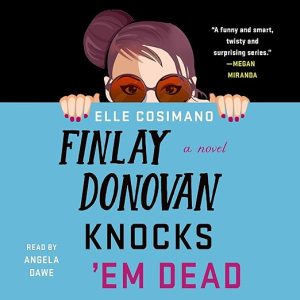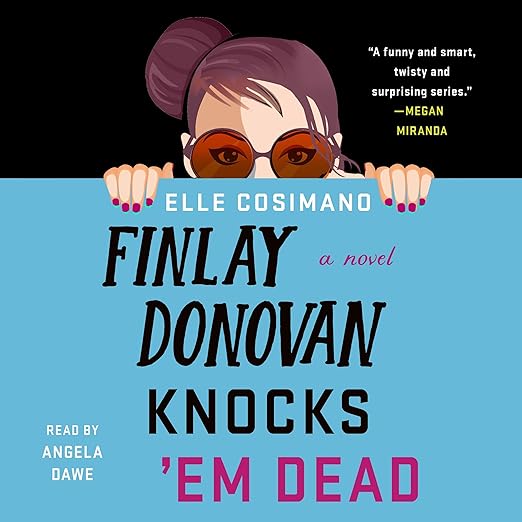
Angela Dawe's narration of Finlay Donovan Knocks 'Em Dead is one of the best arguments available for why some comedic fiction belongs specifically in audio format. From Edgar Award-nominated Elle Cosimano, this audiobook is the follow-up to Finlay Donovan Is Killing It, and it arrives with the particular challenge that all high-concept comedy sequels face: the premise that generated the original's energy is no longer a surprise, and the audience's familiarity with the setup can work against rather than for the comedy if the author doesn't find new angles to work.
Cosimano finds new angles. Soccer moms disguised as hit-women. A Russian mob entanglement that intensifies rather than resolves. Vero's secrets finally demanding examination. Detective Nick Anthony attempting a return engagement into Finlay's life and into her orbit as an informal criminal associate. The machinery of the first book gets more complicated in every direction, and reviewer Sarah's enthusiastic catalog of the series' tropes, "accidental sleuth, partners in crime, found family, slow-burn romance, amateur detective with zero chill," captures why the formula continues to generate reader investment rather than fatigue.
The core tension in this sequel is that Finlay's ex-husband Steven, whatever his faults as a spouse, is a good father, and someone wants him permanently out of the picture. Saving him will require exactly the kind of criminal-adjacent resourcefulness that Finlay has been accidentally developing across her previous entanglement with the mob. That setup neatly forces Finlay back into the chaos she would prefer to exit, and Cosimano is smart enough to make the motivation personal and parental rather than abstract. Finlay is not adventurous by nature. She is competent and exhausted and doing what she has to do.
Reviewer Linda Nuttall came directly from book one without the usual break she takes between series entries, pulled by the plot's momentum. Reviewer Amber Garabrandt noted that this sequel felt messier than its predecessor, with more slapstick and less of the charming moments that made the first book's specific register so appealing. That assessment is fair and worth carrying in as a calibrated expectation: this is a broader comedy with higher chaos levels and more moving pieces than book one. Whether that feels like escalation or sprawl will depend on what you responded to most in the original.
The Strengths
Angela Dawe earned her reputation with the first Finlay Donovan audiobook, and this sequel maintains that standard. She plays Finlay's particular variety of exhausted competence, the woman doing seventeen things simultaneously and getting most of them almost right, with a physical comedy sensibility that translates to audio through timing and tonal shifts rather than visual gags. The Finlay-Vero dynamic is the emotional center of the series, and Dawe's ability to differentiate the characters while maintaining the warmth between them is what makes the found-family element feel genuinely affecting rather than decorative.
At nine hours and twenty minutes, the pacing is deliberately comedic rather than leisurely. Cosimano keeps the plot moving with the relentlessness of someone who knows her audience is waiting for the next disaster to compound the previous one, and Dawe rides that rhythm without letting it tip into frenetic. The physical comedy of Finlay's increasingly improbable situation benefits from Dawe's dry understatement, which creates the right contrast between the absurdity of the circumstances and Finlay's persistent attempt to handle everything like a reasonable adult.
Before You Commit to Finlay Donovan Knocks 'Em Dead
Reviewer Amber Garabrandt raised a specific note about Julian, a character from book one whose relationship with Finlay shifts noticeably in this installment in ways that felt like a loss. For listeners who found that dynamic particularly compelling in book one, the change is real and worth knowing about in advance. Cosimano is setting up longer arcs that the series will develop across subsequent books, which means some threads that appeared headed toward resolution in book one are deliberately left open or redirected here.
Vero's secrets, which run as a secondary plot throughout, add texture to the central partnership without undermining it. The resolution of that thread is handled with more care than a pure comedic sequel might allocate to a supporting character's backstory, which suggests Cosimano is interested in Vero as a character in her own right rather than as functional support for Finlay's chaos. The Russian mob complications are more central here than in book one, which some readers may have hoped would diminish. They don't. They intensify, and that escalation is clearly intentional given where Cosimano is taking the series.
Who Will Get the Most From It
Listeners who completed Finlay Donovan Is Killing It and wanted more of the same chaotic energy with Dawe's narration intact will find exactly what they're looking for. Comedy-mystery fans who appreciate Edgar Award-caliber plotting delivered with genuine wit rather than cozy-genre formulas will find the series rewards the investment. The single-parent-under-impossible-pressure premise gives the comedy an emotional grounding that prevents it from becoming pure farce, and Cosimano manages that balance across both books in the series.
Those who prioritize tightly structured plotting over character and comedic texture may find the messiness reviewers noted more distracting than charming. New listeners should start with book one without question, as the accumulated relationship context between Finlay, Vero, Nick, and the extended cast is what makes the comedy in this installment carry its full weight. The audiobook is the right format for this series; Dawe's performance makes the audio version the definitive way to experience Cosimano's timing.