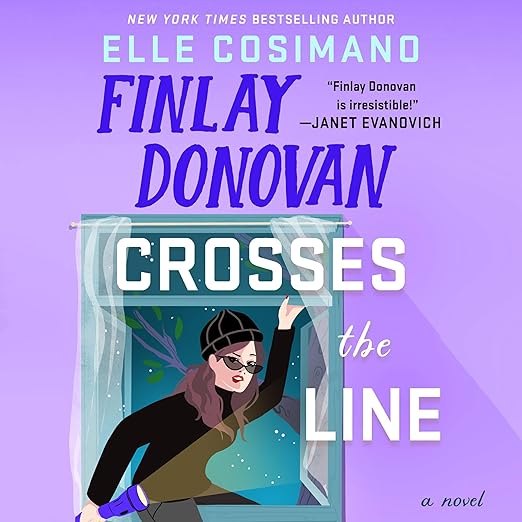
Six books into the Finlay Donovan series and Elle Cosimano is still generating new ways to put a harried single mother into situations that require criminal ingenuity, moral flexibility, and an exceptional best friend. Finlay Donovan Crosses the Line arrives as the sixth installment of this audiobook series, narrated by Angela Dawe, and the context that shapes everything from the opening is the friendship between Finlay and Vero, which has accumulated real weight across five previous shared catastrophes. This installment places Vero in Maryland, under house arrest, wearing an ankle bracelet, supervised by her overbearing mother, facing criminal charges for sorority embezzlement she swears she did not commit.
The setup is specific and the procedural structure is tighter than it might initially appear. Vero was the treasurer of her sorority when the funds went missing, one of only a handful of people with direct access to the cash, and her alibi is a date who ghosted her. The threatening messages arriving at her mother's door demanding she turn over the money build genuine pressure rather than playing simply as background comedy. Cosimano is writing a real mystery here, not just using crime as backdrop for chaos, and the plot holds up to scrutiny in ways that matter across a 10-hour listen.
Dawe's Two-Time Earphones Award Backs This Up
The audiobook format has always been the best way to experience this series, and Dawe's two-time Earphones Award track record makes that case definitively. Kirkus described her ability to create different personalities with the power of her voice as simply amazing on the previous installment, and Booklist awarded a Starred Review to the entry before that, specifically citing her character work. Those are not blurbs for decoration. The comedy in Cosimano's writing depends on timing and register, and Dawe executes both with a precision that elevates the source material. Her voice for Vero's overbearing mother alone justifies the runtime.
What is genuinely impressive about this sixth entry is how Cosimano manages the Maryland setting. The cross-state jurisdiction complexity is handled with the same light touch the series has always applied to procedural obstacles. Finlay deciding that a road trip to clear her best friend's name is simply what you do, given everything Vero has done for her, is written as both ridiculous and genuinely moving. By book six, you have watched this friendship earn that mutual commitment, and Cosimano respects the weight of that history without sentimentalizing it.
Ten Hours That Cosimano Populates Instead of Pads
The series has always been in conversation with the actual texture of women's lives: the school pickups that collide with crises, the domestic infrastructure that keeps collapsing while larger emergencies demand attention. In this installment, Cosimano layers in the interstate jurisdiction complexity with the same tone, and the result is a story about institutional incompetence, sorority loyalty gone toxic, and two women who are measurably better together than apart. At 10 hours and 12 minutes, this is one of the longer entries in the series, and the extra space is well used. Cosimano does not pad; she populates.
The Maryland characters are written with enough specificity to be genuinely funny without becoming caricature, and Dawe gives each of them a distinct voice that makes the family comedy land cleanly alongside the sorority investigation. One reviewer describes getting into this audiobook expecting a simple road trip story and finding herself neck-deep in sorority embezzlement, house arrest drama, and a mystery with more red flags than she bargained for. That mix of escalating chaos and genuine plot structure is what keeps the series feeling fresh at book six rather than formulaic.
Possibly a Preview Excerpt Ahead of March
One review describes this audiobook as a short excerpt from the novel to be published in March 2026, suggesting it may be a preview rather than the complete text. Listeners who want to confirm they are purchasing the full installment rather than a promotional excerpt should check the runtime against the publisher's listed length for the complete novel before purchasing.
New listeners who pick this up without the series background will follow the plot but miss the accumulated emotional weight of the Finlay-Vero friendship. Cosimano is generous with context, but the payoff of watching Finlay refuse to let her best friend face a prison cell alone is calibrated for readers who have been here from the beginning of that relationship. This is one series where the investment in the earlier books pays genuine dividends in the later ones.
One reviewer describes encountering this audiobook without the series context and finding herself immediately invested in the sorority embezzlement investigation and the house arrest drama, which speaks to Cosimano's skill at creating entry points even mid-series. The Finlay-Vero dynamic communicates itself quickly: two women who have been through enough together that conventional social caution no longer applies between them, and whose friendship operates as the emotional center of every plot development.
Existing Fans First, Newcomers Start at One
This audiobook is for existing fans of the Finlay Donovan series first, and for newcomers who should start at the beginning second. The right entry point is book one, not because you cannot follow this plot without it, but because the emotional investment the series has built is part of what you are purchasing when you reach book six. Listeners who enjoyed the Stephanie Plum series in its peak years will find a similar energy here, though Cosimano's plotting is tighter and her prose more reliable. Those who need their crime fiction to take itself seriously should look elsewhere entirely.
Frequently Asked Questions
Is Angela Dawe's narration in this audiobook consistent with her earlier work in the series?
Dawe is in excellent form here. She has narrated six books in this series and received Earphones Award recognition from Kirkus and a Starred Review citation from Booklist for her character differentiation. Her ability to give each character a distinct voice and maintain comedic timing across a 10-hour audiobook is the primary reason the audio version is considered the best way to experience this series.
Is this audiobook the complete novel or a preview excerpt?
One reviewer describes it as a short excerpt from the novel to be published in March 2026. Listeners who want to confirm they are purchasing the complete book rather than a promotional preview should verify the runtime against the publisher's listed length for the full novel before purchasing.
How does the mystery hold up compared to earlier installments in this audiobook series?
The sorority embezzlement plot is constructed with genuine procedural logic. Vero's position as former treasurer with access to the funds, combined with a ghosted-date alibi, gives the mystery real structural tension rather than using the crime as mere backdrop. Reviewers describe this as one of the more tightly plotted entries in the series.