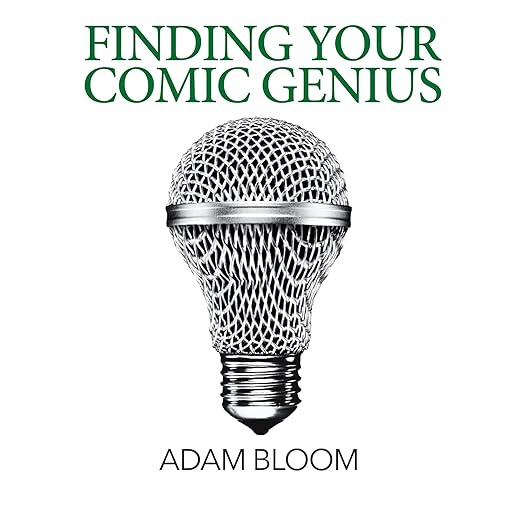
Quick Take
- Narration: Matt Lucas brings wit and warmth to Adam Bloom’s dense theoretical material, and his comic instincts help the before-and-after punchline examples land with genuine clarity.
- Themes: Punchline mechanics, comedic voice development, the psychology of stand-up performance
- Mood: Intellectually rigorous with flashes of genuine humor, demanding but rewarding
- Verdict: The most analytically serious stand-up craft book in audio, genuinely worth the ten hours for anyone committed to the work.
I spent a Tuesday evening deep into this one, considerably later than I intended, because Adam Bloom’s approach to analyzing comedy kept doing something that most craft books fail at: it made me hear jokes I already knew differently. By chapter four I was mentally re-examining punchlines I had heard dozens of times, running them through the framework Bloom builds with what reviewer Greg Daake aptly calls the precision of “a witty friend who knows all about making people laugh.”
Ten hours is a substantial commitment for a comedy craft book. Let me be direct about what you are signing up for. This is not a gentle survey of stand-up history or a collection of performing tips. Bloom has been one of the UK’s most technically precise stand-up comedians for decades, and Ricky Gervais’s endorsement in the synopsis, calling him a comedian with “meticulous, brilliant lines” and “intense and fragile honesty,” captures something real about the source material. The seventeen chapters on writing comedy reflect that same meticulous quality. These are not rules you follow, they are analytical lenses you develop.
The Before-and-After Technique That Justifies the Audio Format
The publisher’s synopsis makes a specific claim: this book truly comes to life as an audiobook, especially with before-and-after examples of punchlines. That is a meaningful distinction. In print, those comparison examples require you to hold two versions in your head simultaneously. In audio, Matt Lucas reads them sequentially, and you hear the difference. The weak version of a punchline followed by the restructured version is a demonstration rather than an explanation, and Bloom uses this technique extensively throughout the text.
Matt Lucas as narrator is a thoughtful casting decision. He is a British comedian himself, which means he does not approach the comedy examples as an outside observer trying to sound funny, he approaches them as someone who understands the internal logic. The tonal range Lucas brings prevents the more abstract theoretical passages from feeling like textbook reading. When Bloom moves from analysis into something closer to enthusiasm, Lucas matches it.
Who This Was Actually Written For
Jim Jefferies’s endorsement, calling this the only book you will ever need on stand-up comedy, is the kind of blurb that tends to oversell, but reviewer Jeffrey Shaw, himself a thirty-six-year professional comedian, qualifies it usefully. Shaw loved the book but recommends it specifically for intermediate and advanced comedians before recommending it to beginners. That is honest and important guidance. Bloom writes for people who already understand what a punchline is supposed to do and want to understand why certain configurations work and others do not. If you are new to stand-up, start with a more foundational text. If you have been doing it long enough to recognize your own patterns, Bloom is where you go next.
Reviewer weeyin describes Bloom’s stand-up as having a quality that is hard to access from the US, and that geographic observation matters slightly. The sensibility here is distinctly British in its approach to precision and restraint. American comedians trained in certain traditions may find some of the aesthetic assumptions unfamiliar. That is not a flaw, but it is worth knowing before you invest ten hours.
Seventeen Chapters and Their Cumulative Effect
The book’s structure rewards completion more than most craft texts. Bloom builds a conceptual vocabulary across the seventeen chapters that later sections depend on. Picking this up at chapter twelve without the preceding framework would be genuinely difficult. The book is accessible in vocabulary while being demanding in application. You can follow the argument without prior experience, but putting it into practice requires the stage time that only actual performance provides.
The sections on material that feels true versus material that merely seems like a good idea are particularly strong. Bloom distinguishes between jokes that sound clever in construction and jokes that actually produce laughter in rooms, and the analysis of why those two categories diverge is the core of what makes this book unusual in its genre. Most stand-up craft books work from performance outward. Bloom works from the punchline inward.
Who Should Listen / Who Should Skip
Listen if: You have at least some stand-up experience and want to understand the mechanics of why your material works or does not, you are a comedy writer in any format who wants an analytically rigorous framework, or you are a serious fan of the art form who wants to understand it from the inside. Skip if: You are approaching stand-up for the first time and want foundational guidance, or you are not prepared for ten hours of concentrated technical analysis.
Frequently Asked Questions
Does the audiobook version require any supplementary materials, or is it complete on its own?
The audiobook is self-contained. The before-and-after punchline examples that Bloom uses throughout are actually more effective in audio than in print, since you hear the comparison rather than having to hold two versions in your head simultaneously.
How does Matt Lucas’s narration handle the more technical analytical sections?
Lucas’s own background as a comedian is an advantage here. He navigates the abstract passages without losing the tone, and his delivery of the comedy examples draws on genuine comedic understanding rather than just reading them as text.
Is this specifically for stand-up performers, or would comedy writers for other formats find it useful?
The framework Bloom develops around punchline mechanics and comedic voice has applications beyond stand-up. Sketch writers and sitcom writers have found the analysis of joke structure relevant to their work, though the performance-specific chapters are less transferable.
Given the ten-hour runtime, is this best listened to straight through or in sessions?
Sessions of one to two chapters work better than marathon listens, partly because Bloom builds a cumulative vocabulary and you want to absorb each chapter before proceeding, and partly because the density rewards reflection between listens.