- Narration: Adam Naranjo's easygoing, conversational delivery matches Gabe Barrett's direct writing voice closely.
- Themes: game design craft, crowdfunding strategy, playtesting methodology
- Mood: Encouraging and practical
- Verdict: A specific, credibility-backed guide for early-career game designers ready to move past theory.
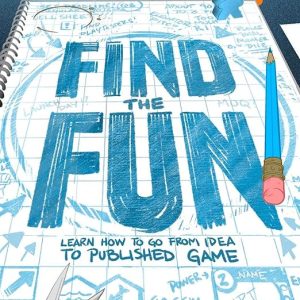
Eighteen crowdfunding campaigns and fifteen shipped games into his career, Gabe Barrett sat down to write the guide he wishes had existed when he was starting out, and Find the Fun reads exactly like that promise delivered rather than a generic how-to manual padded out to book length. I put this on expecting standard game-design theory and got something closer to a working designer's actual notebook, full of specific prototyping shortcuts and hard-won crowdfunding lessons rather than abstract principles. Adam Naranjo narrates with an easygoing, conversational warmth that matches Barrett's own direct, unpretentious writing voice closely enough that the audiobook rarely feels like a performance of someone else's material.
Naranjo's Restraint Matches Barrett's Direct Style
Naranjo's biggest asset here is restraint: he never oversells the material or reaches for false enthusiasm, which suits a book built on Barrett's own hard-earned, occasionally self-deprecating account of what actually worked and what didn't across six years of real trial and error. The tone stays closer to a mentor talking through real examples over coffee than a motivational seminar, and that register keeps seven-plus hours of process-heavy material from ever feeling like a lecture.
Barrett organizes the book around the actual arc of bringing a game to market: what makes a game fun in the first place, treating the game itself as a product with a specific audience, prototyping techniques that save real development time, playtesting methodology, and finally the business mechanics of approaching publishers or running a crowdfunding campaign. That sequence mirrors the real order a working designer moves through, rather than an academic curriculum's more theoretical arrangement, and Naranjo's steady pacing helps the more technical middle chapters land without ever losing the thread back to Barrett's original promise about transformation, not just information.
The prototyping chapter in particular earns its place as one of the standout sections by staying concrete rather than theoretical: Barrett frames prototyping as a tool for answering one specific question as cheaply and quickly as possible, rather than building a polished vertical slice too early and falling in love with work that might not even test well. That discipline, resisting the urge to over-invest before validating a concept, is a lesson transferable well beyond game design, but Barrett's specific examples keep it grounded in the actual craft rather than drifting into generic productivity advice.
Fifteen Games, Eighteen Campaigns, One Million Dollars
Barrett's credibility rests on genuinely specific numbers rather than vague expertise claims: fifteen games brought to market over six years, eighteen successful crowdfunding campaigns, more than a million dollars generated in sales, and dozens more projects in progress. The playtesting and crowdfunding chapters are where that specificity pays off most, since Barrett walks through actual tactics rather than general encouragement to test your game, and Jaidev Green's review confirms the same impression from someone actively building their first game while listening: Barrett "gives such a nuanced perspective on game design" and has clearly "grown as a designer and a person" over more than a decade of practice.
What separates this from a narrower technical manual is Barrett's stated goal of shaping "a great game designer" rather than just producing one successful game, and that broader ambition shows up throughout in how he frames setbacks and iteration as core skills rather than obstacles to route around. Roy Noyes's review captures this well, calling the book exactly what he was looking for and noting it gave him "several new specific paths to follow" for future projects, which is precisely the kind of durable, reusable value a craft book should aim for over a narrower single-project checklist.
The indie game market Barrett operates in is famously oversaturated, thousands of new titles release annually competing for a finite amount of player attention and wallet share, which is exactly the environment his crowdfunding and publisher-approach chapters are built to navigate. Advice that might sound like generic business strategy in another context carries real specificity here, because Barrett is describing tactics tested against a market where most projects, however well-designed, never find their audience at all.
Pack Your Own Notebook for This One
Not every section moves at the same pace. The Dad Guy's review is candid that the book "at times seems repetitive" despite being overall "very satisfied" with it, and that's a fair characterization of a few stretches, particularly around core design philosophy, where Barrett circles back to reinforce a point already made rather than always introducing new material. It rarely derails the book's momentum, but listeners wanting maximally efficient, no-repetition instruction should expect a few sections that reiterate rather than expand.
Unlike some business and craft audiobooks in this category, no companion workbook or PDF is mentioned alongside this release, so listeners wanting to take structured notes on Barrett's prototyping and playtesting frameworks should have their own notebook ready rather than expecting supplementary printed material. The audio format works well for the book's narrative, experience-based sections, but anyone hoping to follow along with concrete checklists in real time may want to pause and write key points down manually.
Barrett mentions having dozens more games in progress beyond the fifteen he's already shipped, and that detail signals someone still actively working rather than someone who found success once and pivoted entirely into teaching about it. The book's advice reads like it's coming from inside an ongoing practice rather than a look back at a finished career, which gives the more forward-looking chapters a currency the material wouldn't have from someone purely reflecting on past work.
Aimed at Designers Still Tinkering With Prototypes
This is a strong pick for aspiring and early-career game designers, especially anyone already tinkering with their own prototype or eyeing a first crowdfunding campaign and wanting a realistic account of what that process actually demands. Listeners who already follow Barrett's YouTube channel, per Jaidev Green's review, will find the audiobook a natural extension of that existing relationship, deepening ideas already introduced in shorter video form. Barrett's stated goal of transformation, not just information, is exactly what separates the target audience here from someone looking for a quick reference guide to skim once and shelve.
A step-by-step engine or coding tutorial this is not, and listeners wanting hands-on technical instruction in a specific game engine should look elsewhere, since Barrett's focus stays on design philosophy, process, and business strategy rather than software mechanics. Designers who have already shipped several titles and built an established crowdfunding audience may also find some of the foundational, introductory material more of a refresher than new ground.
Does this audiobook include the templates or worksheets Barrett might reference?
No companion workbook or PDF is mentioned alongside this release, so listeners wanting to follow along with structured notes should keep their own notebook handy.
Is this audiobook useful for someone who has never designed a game before?
Yes. Barrett covers foundational questions like what makes a game fun in the first place, though the book rewards listeners who are at least tinkering with an actual project alongside listening.
How long is the Find the Fun audiobook?
Seven hours and nineteen minutes.