Before You Press Play
- Voice: Author-read, on material whose vocabulary belongs to specific ground and specific relatives, from wood sorrel to the family names carried out of eastern Europe.
- Big ideas: Foraging and the boreal forest, inherited violence and alcoholism, a marriage and a wanted child, a business with no guests in 2020.
- Atmosphere: Hushed, close, and heavier than the nature-writing shelf prepares you for.
- Worth it?: One of the better literary memoirs on the food shelf, if you can take nine hours of interior weather with almost no plot.
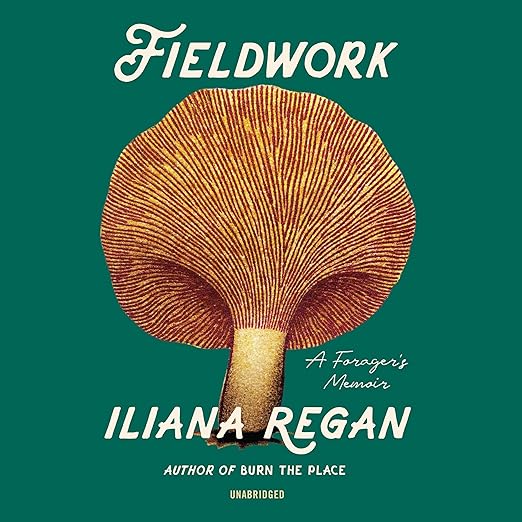
Foraging memoirs tend to flatten into lists of what the writer found and where, which is why this audiobook is worth the extra attention: Iliana Regan reads nine hours and forty-five minutes of her own book and the foraging is the least of it. Blackstone published the recording in January 2023, four years after Burn the Place became the first food-related title in four decades nominated for a National Book Award. What follows the move north is a family history, a season with no guests, and a forest being cut down while she watches.
Five Five-Star Responses Under a 4.2 Badge
Something is missing from the column here. Every one of the five written responses on display sits at five stars, and the badge above them reads 4.2 from fifty-eight ratings. Whoever pulled that average down did not explain themselves anywhere a buyer can read, so what you get is a self-selected group of admirers underneath a number carrying dissent that never surfaces. Read the enthusiasm accordingly. It is real, it is specific, and it is not representative of the fifty-eight people who actually voted.
Bias gets declared up front in the February 17, 2023 five-star, which I appreciated: that reader had already read Burn the Place and had stayed at the Milkweed Inn, and says so before praising anything. What follows is the most credible judgment in the column, that Regan has honed her craft since the debut and that this book weaves in more of her life without losing its shape. Somebody who has eaten the food and read the first book is well placed to say whether the second earns its ambition.
A Hired Reader Would Need a Pronunciation Guide
Self-narration is not automatically right for a memoir, but it is right here, and the reason is vocabulary. Nine hours and forty-five minutes of this book runs on words belonging to particular ground and particular people: wood sorrel, the mushroom species that appear at their own appointed times, Busia, the father's grandmother who carried her forest legends out of eastern Europe to Gary, Indiana, and opened a restaurant there that fed generations of steelworkers. A hired reader would need a pronunciation guide for half of it. The forager needs nothing.
A five-star from September 18, 2023 describes the opening better than any summary could: it feels like being under a tented blanket with a flashlight, talking to a friend. That reader lives close to the Upper Peninsula and recognized the place. Both halves of the response matter to an audio buyer. The confiding register carries a book with this little plot, and the specificity of the landscape keeps that confiding from sliding into vagueness. Regan is describing ground somebody else can walk on, and at least one listener has.
The braid is what makes it a book rather than a diary. Regan forages a boreal forest and runs an inn with no guests, because their first full season in Michigan was 2020; she is trying to conceive a child she and her immune-compromised wife hope to raise there; and logging crews strip the parcels around them, driving out the birds. Three clocks run at once, and the family history keeps interrupting all three, particularly the darker material on her mother's side. Nine hours and forty-five minutes gives all three threads time to develop, and the book spends it.
A Recording Won't Let You Turn Back Pages
Part of this column is grading a printed object. The April 30, 2023 five-star describes miscalculating the number of pages and arriving at the last one unprepared, and it praises stopping to reread a paragraph that landed hard. Both are print pleasures and neither transfers. A recording will not let you turn back four pages to savor a sentence, and the specific experience that reader singles out is the one an audio buyer cannot have without rewinding blind.
Structure is the second caution. The book alternates between the forest, the inn, rural Indiana in childhood, and stories told about people Regan never met, and the transitions are associative rather than signposted. In print you can see a section break coming. In nine hours of continuous audio you occasionally realize a paragraph late that the decade has changed. Listeners who need a clear chronology will find this harder work than the enthusiasm on the page suggests.
Content deserves a flag this record never supplies. The description states outright that the mother's side is riven with alcoholism and domestic strife, and names the subject directly as the harm men do to women, to families and to whole landscapes. Add a pandemic, fertility struggles and an immune-compromised spouse and the result is a heavier listen than the nature-writing framing implies. Nothing on the page warns anybody, and the categories, memoir, home and garden, LGBTQ+, all point the other way.
A Queer Marriage Rendered as Ordinary Labor
Readers of Burn the Place are the first and easiest audience; the March 2, 2023 five-star arrived that way and rates the storytelling above everything else, calling this the best written memoir that reader had encountered. Foragers and nature writers are the second group and get the most literal value: blueberry bushes, wood sorrel, where and when particular mushrooms appear. The third group is smaller and better served than it expects, readers who want a queer marriage rendered as ordinary domestic labor rather than as a topic. Blackstone published the recording in January 2023, and the five responses on this page arrived over the twenty months that followed.
Anybody after a chef memoir should know the kitchen is largely behind her here, since the Michelin star belongs to the previous life and the previous book. Readers who need momentum will struggle, because the plot is a season and the tension is weather, silence and family. Nine hours and forty-five minutes is a long time inside one interior voice. Take it slowly, a chapter at a time, and it repays that treatment better than any other approach.
Frequently Asked Questions
Do you need to have read Burn the Place before this audiobook?
No. The description supplies the background you need in a sentence: a debut that became the first food-related title in four decades nominated for a National Book Award, followed by a move from Chicago to Michigan. Two responses arrived having read it and enjoyed the continuity, but nothing here depends on that.
How much of the audiobook is actually about foraging?
Less than the packaging suggests. Foraging supplies the calendar and a good deal of the imagery, blueberries, wood sorrel, mushroom species arriving in sequence, but the bulk of the running time goes to family history, the empty inn, the logging crews and a marriage under strain. Treat the forest as the setting rather than the subject.