Quick Take
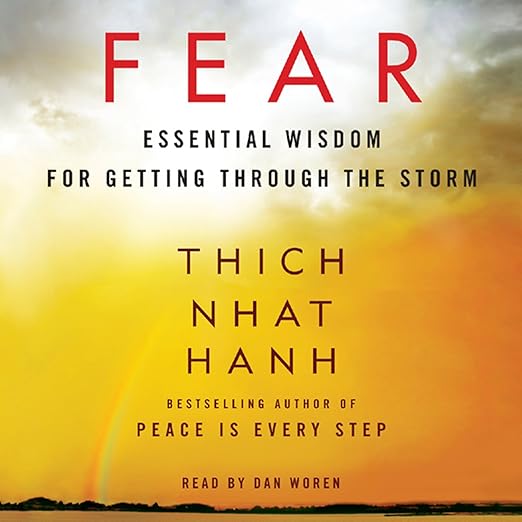
- Narration: Dan Woren’s measured, unhurried delivery is well suited to Thich Nhat Hanh’s teaching style, the pacing mirrors the breath-awareness the text itself advocates, which makes the listening experience feel unusually integrated.
- Themes: the roots of anxiety, mindfulness as practical tool, interconnectedness of difficult emotions
- Mood: Quiet and grounding, like sitting with a patient teacher
- Verdict: At just over four hours, this is one of the most replayable mindfulness audiobooks available, listeners report returning to it repeatedly, and the short runtime makes that easy.
I came to this one during a stretch when anxiety was showing up in ways I was not managing well, and a colleague who had been practicing Zen for years pressed it on me with the kind of conviction that made me take it seriously. I listened through once on a long walk and then sat down and started it again the same evening. That almost never happens with nonfiction for me.
Thich Nhat Hanh died in January 2022, and his body of work spans more than a hundred books, most of them short and deceptively simple. Fear sits among his best. It was published in 2012, but its relevance has not aged, if anything, the conditions it addresses have intensified. One reviewer, who self-described as having struggled with anxiety their entire life, called it the most helpful book they had ever read on the subject. They had read it at least seven times. I believe them.
Our Take on Fear
What Thich Nhat Hanh does here that most anxiety books do not is refuse to treat fear as a problem to be eliminated. He treats it as a signal to be understood, with roots that go deeper than the immediate trigger. The book works through the origins of fear, our fear of annihilation, of being unloved, of losing what we have, and traces each one back to something that can be met with awareness rather than resistance. It is not a quick fix. It is a reorientation.
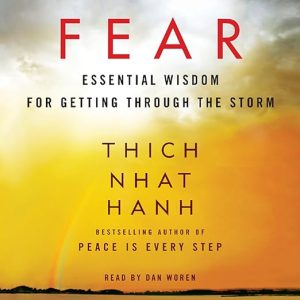
The subtitle, Essential Wisdom for Getting through the Storm, undersells the book slightly. This is not emergency management. It is more like a map of the interior terrain that fear moves through, drawn by someone who has spent decades observing it in themselves and others. The practical tools are woven into the teaching rather than delivered as a checklist, which means they require more engagement from the listener but also tend to stick better.
Why Listen to Fear
Dan Woren’s narration is a genuine asset here. He reads with a stillness that matches the material, not flat or uninflected, but unhurried in a way that prevents the listener from skimming past sentences that deserve to sit. Hanh’s prose can read almost too simply on the page; Woren gives it weight without adding drama.
The book’s short runtime, just over four hours, is worth noting. Reviewers consistently describe returning to it, treating it as a resource they revisit during difficult periods rather than a book they finish once. That is the kind of utility that most mindfulness writing promises and rarely delivers. The accessibility is real: one reviewer made the specific point that they are not Buddhist, that the book does not require Buddhist belief, and that it still became a primary guide for how they live their life. Another noted that Hanh respects Christian faith and speaks across traditions without diluting his own.
What to Watch For in Fear
If you are coming to this looking for clinical anxiety management or CBT-adjacent techniques, the approach will feel indirect. Hanh is not a therapist, and the book is not structured around symptom reduction. The wisdom is genuine and the tools are practical, but they emerge from a contemplative framework. Listeners who want something more secular and technique-focused may find the Buddhist framing unfamiliar, though the book is genuinely non-dogmatic.
The runtime also means the coverage is not exhaustive. For listeners who want a deeper structural exploration of mindfulness and the mind, Hanh’s other works, particularly The Miracle of Mindfulness and No Mud No Lotus, expand on themes introduced here. Fear works best as an entry point or as a text to return to repeatedly, not as a comprehensive manual.
Who Should Listen to Fear
Anyone going through a period of heightened anxiety or uncertainty who wants something more grounding than a self-help list will find this genuinely useful. It holds up for people with no Buddhist background. Those who prefer structured, step-by-step programs or explicitly secular approaches may find the contemplative register less intuitive, but the book rewards patience from any starting point.
Frequently Asked Questions
Do I need to have any background in Buddhism to benefit from this audiobook?
No. Multiple reviewers with no Buddhist background describe it as transformative. Thich Nhat Hanh explicitly does not require listeners to adopt his beliefs, and the book respects other faith traditions, one reviewer specifically noted he engages with Christian teaching without conflict.
Is Fear primarily about the emotion of fear, or does it cover anxiety and other difficult emotions more broadly?
It covers anxiety and a wide range of difficult emotions, not just fear as a single affect. The subtitle refers to getting through storms of various kinds, and reviewers consistently note that the book addresses all difficult emotions and provides tools for taking care of them rather than focusing narrowly on one.
At only four hours, does this audiobook feel too brief for the subject?
The short runtime is actually one of its most praised qualities. The book is deliberately concise, which is consistent with Hanh’s teaching style across his body of work. Reviewers report returning to it multiple times precisely because it is short enough to revisit easily. The density of the teaching makes the brevity feel considered rather than thin.
How does Dan Woren’s narration compare to Thich Nhat Hanh narrating his own work?
Hanh has narrated some of his own titles, and his voice carries a distinctive calm. Woren is a professional narrator whose measured delivery is a credible stand-in, and reviewers of this particular audiobook do not flag any mismatch. For listeners who specifically want to hear Hanh’s own voice, his self-narrated titles are available, but Woren serves the material well here.