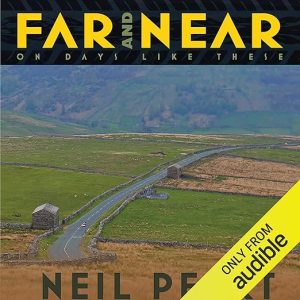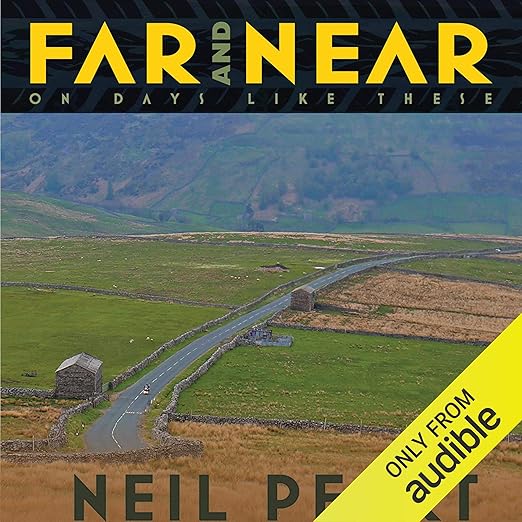
I came to Neil Peart's writing the way a lot of people do, sideways, through the music first. I'd been working my way through the Rush catalog on a long train trip through the Northeast when I started wondering about the person behind the drumming. That curiosity led me to Far and Near, the second volume in Peart's travel-writing series, which I finished over the course of three separate commutes on a rainy November week. It felt like exactly the right conditions for it.
Peart is best known as the drummer and lyricist for Rush. But his travel writing occupies a different register entirely. In Far and Near, he gathers open letters originally posted on his website, covering roughly three years of an artist's life: motorcycle trips through rural England and Quebec, hikes at Yosemite, performances on the Rush tour circuit, honors received, mountains climbed. Taken together, they build a portrait of a person deeply attentive to the texture of experience, not what happened, but what it felt like to be inside it.
What We Made of It
What strikes me most about Peart's prose is how insistently it moves outward from the personal. A hike in Yosemite doesn't stay a hike, it becomes a meditation on the pressures a national park faces from mass tourism, why certain landscapes still produce something like awe, what it means to move through a place slowly when everything around you insists on speed. One reviewer described him as one of our generation's most interesting prose stylists, and I think that's accurate. He writes about himself and his experiences in a way that gives those experiences universal context without ever becoming preachy about it.
The structure of the book, collected letters, each with its own geography and occasion, means the reading experience is more episodic than linear. That works in its favor for an audiobook format. You can drop in and out without losing the thread. But it also means there's no building arc, no narrative tension pulling you forward. If you come to this expecting a conventional memoir, you'll find something looser and more pastoral.
Why Listen to Far and Near
Brian Sutherland's narration is a thoughtful match for this material. He reads with a measured warmth that doesn't impose too much character on the prose, which is the right call, since Peart's voice is distinctive enough that a narrator who overplays it would create friction. Sutherland understands that his job is to be transparent, to let the writing come through, and he succeeds at that. The pacing feels unhurried, which suits the travel-essay form: you're not meant to race through these pages.
The 13-and-a-half-hour runtime also feels appropriate to the material. These are pieces for settling into, not sprinting through. I found the longer stretches, the motorcycle trip through Thuringia, the Quebec winter reflections, worked especially well on audio, where you have no choice but to stay with the prose at its own speed.
What Might Not Land
The strongest sections of Far and Near are the ones where Peart's literary sensibility and his musician's life intersect in unexpected ways. He's genuinely curious about why things work, why a particular trail through the Canadian bush produces a specific quality of silence, why certain concert halls change the relationship between performer and audience. He doesn't resolve these questions neatly; he stays with them, turns them over, lets them sit. That patience on the page is relatively rare in travel writing, which tends toward the episodic or the anecdotal.
It's also worth noting that Peart is refreshingly honest about the emotional complexity of fame and artistic accomplishment. The honors-received sections could easily veer into self-congratulation, but he approaches them with something closer to ambivalence, not false modesty, but genuine uncertainty about what these things mean. That honesty makes the richer passages feel earned.
There's also something to be said about the format of collected letters itself, a form that has largely fallen out of fashion in the age of the blog and the social media post, but which Peart uses with genuine skill. Each letter has a specific occasion and recipient (even if that recipient is the general reader), which gives the writing a purposeful quality that distinguishes it from the formlessness of much online personal writing. Peart isn't musing; he's composing. The difference is felt in the density of observation and the care with which he shapes each section's argument. For listeners who miss the kind of personal essay that has largely migrated to podcasts and long-form newsletters, Far and Near is a reminder of what the form can do when practiced at a high level by someone with genuine things to say.
Who Should Pick Up Far and Near
If you're a Rush fan who has never read Peart's prose, this is an accessible entry point, the music is present as context but never required as background knowledge. Listeners who enjoy travel writing with a philosophical undercurrent will likely find this rewarding. The episodic format suits commuters and people who listen in shorter sessions.
If you're looking for a conventional music memoir with chronological narrative drive and behind-the-scenes revelations, this isn't that. The focus is firmly on the inner life of a thinking traveler, not on the machinery of a rock band. And if you haven't read Far and Away, the first volume, I'd suggest starting there, not because Far and Near requires it, but because the cumulative effect of reading them in sequence is richer than either book alone.
In Brief
- Narration: Brian Sutherland reads with a measured warmth that suits Peart's reflective, essayistic prose, never showy, always present.
- Themes: Artist life on the road, meditative travel, the intersection of music and landscape
- Mood: Contemplative and road-worn, like the last hour of a long drive when you stop noticing the miles
- Verdict: If you responded to any of Peart's earlier writing, this second collection of open letters rewards the same close attention.
Good to Know
Is this audiobook suitable for listeners who aren't Rush fans?
Yes. Rush performances appear as context, but Peart's travel writing focuses on landscape, philosophy, and personal observation rather than music-industry storytelling. Non-fans report enjoying it consistently.
Is the format, collected letters rather than a continuous narrative, a problem for audiobook listening?
It's actually an advantage for some listeners. Each letter functions as a self-contained chapter, making this easy to pick up and put down. There's no plot thread to lose if you listen in short sessions.