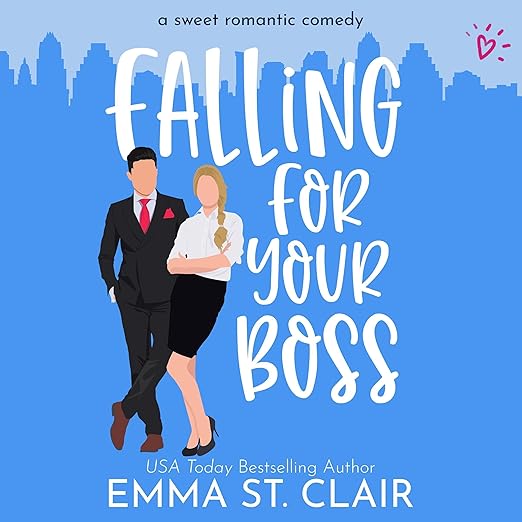
Gavin is one of Texas's richest and most desirable bachelors, so what happens when Zoey, the woman who insists she's only interested in business, falls for him anyway? Falling for Your Boss is the second entry in Emma St. Clair's Love Clichés Sweet RomCom series, and this audiobook runs eight hours and twenty-seven minutes under Danielle Card's narration. The setup is familiar romcom territory on paper, office romance, a significant age gap, an unavailable boss, but St. Clair's synopsis leans directly into that familiarity rather than pretending otherwise, openly winking at the trope even while playing it completely straight.
J. Harwood Says She Smooths It Like Butter
What keeps this from feeling like a rerun of every workplace romance that came before it is the specific voice St. Clair gives Zoey, someone who narrates her own attraction with visible embarrassment and self-aware commentary rather than earnest melodrama. Reviewer L. Wallace calls the chemistry between Zoey and Gavin 'palpable,' and credits the slow-burn pacing with keeping the story genuinely engaging rather than rushed. Danielle Card's narration is doing real work here specifically in how she voices Zoey's internal monologue, her established register makes a first-person female protagonist feel like a specific, particular person rather than a generic romcom heroine reciting familiar beats.
J. Harwood's review captures something true about St. Clair's craft here: the author takes crazy plot twists, 'which could totally throw a kink into the whole thing,' and smooths it out 'like butter.' That's a real skill in genre romance, introducing complications, Gavin's past colliding with his present, without derailing the central relationship's momentum or making the eventual resolution feel unearned. Card's comedic timing, already established as a strength for this kind of sweet romcom register, keeps those tonal pivots, from mid-scene humor to genuine emotional stakes, from feeling jarring against each other.
The series title itself, Love Clichés, is doing deliberate work worth unpacking: naming the tropes outright rather than pretending originality is a specific, self-aware marketing and craft choice increasingly common in contemporary romance, where readers often shop by trope first and author voice second. St. Clair leaning into boss romance and age gap as explicitly labeled cliches rather than hiding them signals confidence that execution, not novelty, is the actual selling point, and Card's narration matches that same confident, unbothered energy, playing the familiar beats straight rather than winking so hard at the audience that the romance itself stops mattering.
Card Handles Closed-Door Romance's Quiet Pivots
Nicole S. specifically names this her favorite entry in the series so far, ahead of the first book, Falling for Your Best Friend's Twin, which is a meaningful data point for anyone deciding whether to start with book one or jump straight to this one. Series momentum genuinely builds here rather than repeating the same beats with new names attached, and Card's narration carries that continuity, listeners already familiar with her voice from book one get a sense of returning to a consistent world rather than starting over.
This is explicitly closed-door romance, meaning the intimacy stays off-page, and Card's narration handles those emotional pivot points, the moments where restraint would otherwise read as coldness, without over-signaling them dramatically. That's a specific skill worth naming: sweet romance depends on a narrator who can convey real desire and tension without leaning on explicit content to do that work, and Card's performance keeps the slow burn feeling genuinely charged rather than chaste in a way that reads as flat.
For listeners newer to romance subgenre terminology, closed-door specifically means intimate scenes fade to black or happen off-page entirely, as opposed to open-door romance where those scenes are written in full explicit detail. That distinction matters enormously for setting expectations correctly going in, since the two formats deliver genuinely different listening experiences even when the underlying relationship beats, attraction, obstacle, resolution, look similar on paper. St. Clair's choice to keep this closed-door places the emphasis squarely on banter, emotional vulnerability, and comedic timing rather than physical description, which is exactly where Card's narration strengths are best suited to begin with.
An Age Gap Bigger Than the Grand Canyon
Book one isn't required reading first, since this functions as a reasonably self-contained story, but going in without it means missing the specific callbacks and returning-character context that Nicole S. and other series readers clearly enjoyed. The age gap central to this romance, described directly in the synopsis as bigger than the Grand Canyon, is also a deliberate genre element some readers actively seek out and others prefer to avoid, worth knowing before starting. That imbalance is acknowledged in the story rather than ignored, which softens but doesn't fully erase the discomfort for readers who track it closely.
As a sweet, closed-door romance, listeners expecting the more explicit heat level common in a lot of contemporary romance publishing right now should recalibrate expectations accordingly. The emotional and comedic beats carry this story rather than physical intimacy on the page, which is exactly the point for its intended audience but a real mismatch for readers specifically seeking a steamier read.
The unavailable-boss setup does real double duty worth flagging for readers particular about power-dynamic romance tropes: Gavin isn't just older, he's also Zoey's direct professional superior, which raises real workplace-power questions that some contemporary romance readers actively want addressed head-on and others prefer glossed over in favor of pure wish-fulfillment fantasy. St. Clair's synopsis doesn't pretend the dynamic is uncomplicated, acknowledging directly that 'we would be a terrible idea,' but how thoroughly the story interrogates that imbalance versus simply resolving it happily is worth knowing before starting, especially for readers who have grown more attentive to boss-employee power dynamics in romance generally over the past several years.
Returning Readers Get the Bigger Payoff Here
Returning Love Clichés readers get the bigger payoff here, since Nicole S. rates this ahead of book one, though the office-romance setup works fine as a standalone entry for newcomers too. Fans of sweet, closed-door contemporary romance with strong comedic voice, and anyone who enjoys a well-worn trope played with self-aware humor rather than total sincerity, will find real satisfaction here. Listeners who enjoy audiobooks that treat a familiar trope as a comfort-food formula rather than something to apologize for will find St. Clair's confidence genuinely refreshing rather than predictable, and Card's steady narration across the series makes that comfort-read quality easy to settle into from the very first chapter.
Skipping book one means losing the small continuity touches St. Clair rewards returning readers with, even though this entry works fine as a first stop. Readers specifically seeking a higher heat level than closed-door romance offers, or those who find age-gap romance tropes uncomfortable rather than charming, should look elsewhere in St. Clair's catalog or a different author entirely.
Questions Listeners Ask
Do I need to listen to the first Love Clichés book before this audiobook?
Not strictly. This audiobook works as a reasonably self-contained story, though returning readers get extra payoff from callbacks to the first book that new listeners will simply miss.
How explicit is the romance in this audiobook?
This is closed-door romance, meaning intimate scenes stay off-page. The tension and chemistry carry through emotional and comedic beats rather than explicit content.
Is the age gap between the two leads a major plot element in this audiobook?
Yes, it's addressed directly and repeatedly, described in the synopsis itself as significant, and functions as a deliberate genre element some listeners specifically seek out.