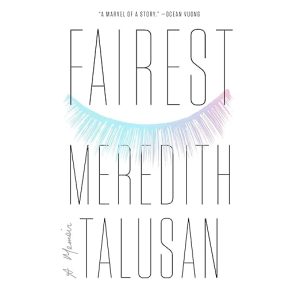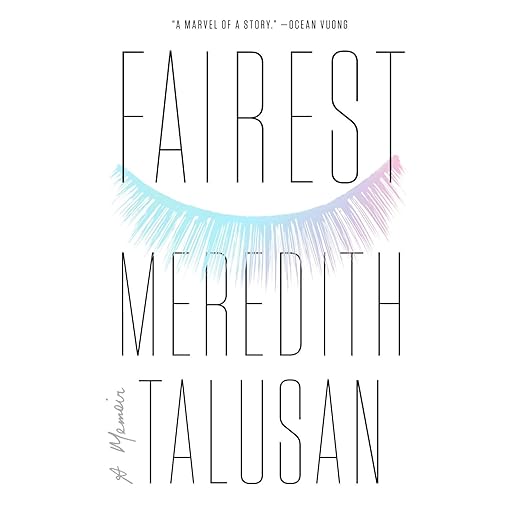
Meredith Talusan narrates her own memoir, and that decision carries significant weight in an audiobook that is fundamentally about the gap between how a person is perceived and who they actually are. Fairest traces Talusan's life from a rural Philippine village, where her albinism made her a curiosity and a kind of sun child figure, through immigration to the United States, through elite academic circles where her perceived whiteness opened doors, through the queer and trans communities of urban America, and into a womanhood she had to claim against considerable personal cost. The Lambda Literary Award finalist designation is not a marketing placeholder here. This is a memoir that has earned serious literary attention.
The craft question I found myself thinking about throughout this audiobook is how Talusan handles self-awareness. The memoir is written from a vantage point that understands, with adult clarity, what was happening during formative childhood experiences. That retrospective lucidity could feel airless, imposed. What keeps it from collapsing into an essay is Talusan's willingness to let the child she was remain genuinely other, recognizable but not colonized by the narrator's current understanding. One reviewer called this quality exquisitely written, and another described the book as jarring precisely because of that self-awareness, even in childhood. Both responses point at the same thing: Talusan is not writing a tidy coming-of-age arc.
The structural spine of Fairest is the passage of Talusan's perceived racial identity, from Filipino sun child to American near-white to something that resists clean categorization entirely. Ocean Vuong's jacket description, a ball of light hurled into the dark undertow of migration and survival, is florid but not inaccurate. The book does have an almost physical quality of light and visibility running through it, which makes sense given that albinism is literally a condition of what you reflect back to the world. Talusan works that metaphor without over-laboring it.
The more difficult passages in the memoir involve Talusan's relationship to her own perceived whiteness, the ways she benefited from being read as a white person in contexts where that reading opened doors. One reviewer described discomfort with this thread, finding the author's attention to her whiteness disturbing. That discomfort is, I think, exactly the response the memoir is designed to generate. Talusan is not writing a redemption narrative about learning better. She is writing an honest account of how privilege and vulnerability coexisted in her specific body, in ways that don't resolve into comfortable lessons.
Talusan Sails Past the Genre's Conventions
The audio format adds a layer to this memoir that print cannot fully replicate. When Talusan reads her own account of how she was perceived, an audio presence, the voice itself, complicates and enriches what the words alone could do. For a memoir so concerned with the politics of surface and appearance, hearing the author's voice carry the text feels substantively different from reading it on the page. Her narration is steady without being affectless, precise without being cold, and the physical presence of her speaking voice gives the memoir's central preoccupations a dimension that no professional narrator could manufacture.
The New York Times Book Review's observation that Talusan sails past the conventions of trans and immigrant memoirs is worth taking seriously as listening guidance. If you arrive expecting a familiar genre shape, you will be productively wrong. The book doesn't build toward a climactic transition revelation or a scene of immigrant triumph. Its structure is more associative, more willing to sit with ambiguity, and that quality comes through more fully in audio than it might on the page.
Restraint That Keeps It From Sentimentality
At 8 hours and 46 minutes, this is a compact memoir compared to many in its category, but the density of the material means it rewards slower listening rather than binge consumption. Talusan's sentences carry more weight than their length suggests, and the narrative sometimes shifts register, from lyrical to analytical to almost documentary, in ways that benefit from pausing and returning rather than listening through in one extended session.
The memoir's treatment of the man Talusan loved and risked losing through her transition is one of its most emotionally precise sections. Reviewers have noted that the book doesn't shy away from the cost of becoming who you are, and those chapters are genuinely hard without being self-pitying. Talusan's restraint in these sections is what keeps them from tipping into sentimentality. She earned her observations through living them, and the narration makes that clear without requiring her to say so explicitly.
Readers who found the Austen comparison in the synopsis overstated may be surprised. The memoir does have a romantic sensibility, a genuine investment in desire and its complications, that earns the comparison more than typical jacket-copy inflation would suggest.
Talusan's Presence as Narrator Makes It Irreplaceable
Readers who found Kiese Laymon's Heavy or Roxane Gay's Hunger rewarding will find Talusan's memoir in that same register of unsparing body-and-identity writing. Listeners interested in Philippine immigrant experience, in the specific textures of what it meant to arrive in American elite spaces during the period Talusan describes, will find material here that is rare in memoir. Anyone who appreciates memoir that refuses to make peace with its own contradictions will find this audiobook necessary.
Listeners seeking a linear, triumphant narrative of self-discovery should know the memoir doesn't offer that shape. But for those willing to follow Talusan through a more complicated accounting, this is a significant piece of work that the audio format serves especially well. The audiobook is simply one of the more important memoir listening experiences of recent years, and Talusan's presence as narrator makes it irreplaceable in that format.
At a Glance
- Read by: Talusan's self-narration is an essential dimension of this memoir, her voice carrying the accumulated weight of a story that only she can tell with full authority.
- At its heart: Albinism and race, immigration and passing, gender transition and love
- Vibe: Luminous and searching, with real emotional complexity underneath
- Short version: Talusan's memoir earns its Lambda Literary Award finalist status by refusing to resolve its contradictions neatly, and the audio format intensifies every one of them.
Does Meredith Talusan narrate this audiobook herself?
Yes, Talusan narrates her own memoir. Given that the book is fundamentally about perception, visibility, and identity, having the author's own voice carry the text adds a dimension that a professional narrator could not replicate.
Is this audiobook appropriate for listeners new to transgender memoir?
Yes, though it resists the genre conventions of trans memoir more than it follows them. Talusan is less interested in a transition arc than in the full complexity of a life shaped by albinism, immigration, race, queerness, and gender all at once.
How long is the Fairest audiobook and is it easy to follow?
At 8 hours and 46 minutes, it's a compact memoir. The prose is dense with meaning but not inaccessible. The narrative moves associatively rather than strictly chronologically, which rewards attentive listening over background listening.