In Brief
- Read by: Danny Campbell delivers Veer Sagar's entrepreneurial memoir with clean authority, keeping the tone of mentorship rather than lecture throughout the eighteen-hour runtime.
- At its heart: Corporate-to-entrepreneur transition, leadership development, building teams and nurturing talent
- Vibe: Candid and motivating without being prescriptive
- Short version: Sagar's memoir-plus-self-help hybrid has genuine specificity from a CEO who made a mid-career pivot to founding a business, and that specificity lifts it above the genre average.
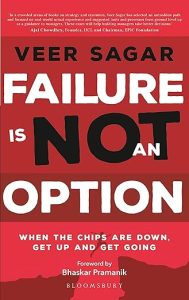
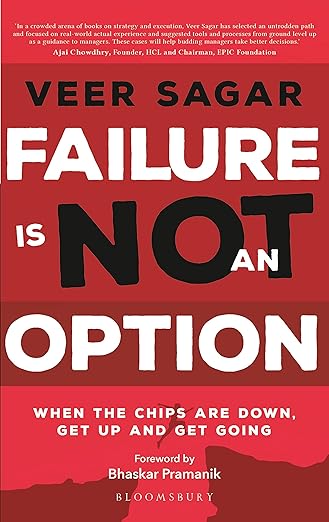
Veer Sagar was 55 when he left a CEO role to found Selectronic, a company that became a pioneer of India's back-office revolution. Failure Is Not an Option is his account of that transition, narrated by Danny Campbell across eighteen hours and fourteen minutes. The book positions itself as a blend of self-help and memoir, which is an accurate description: Sagar moves between personal anecdote and principles-based guidance, using stories from his own career to illustrate the traits and responsibilities he argues are essential to accomplished leadership. The audiobook's title shares the famous phrase associated with NASA mission control, but Sagar's application of it is entirely entrepreneurial rather than aeronautical, rooted in a specific conviction that the habits of mind enabling a 55-year-old corporate veteran to start over and build something new are learnable rather than innate.
The synopsis frames the book as a "motivational pep talk from your smartest friend," which sets expectations the content mostly meets. Sagar is not a management theorist; he is a practitioner writing about what he actually did and why it worked. The blend of self-help structure and autobiographical substance is the book's defining feature and also its main tension: readers who want systematic frameworks may find the anecdotal mode frustrating, while those who want pure memoir may find the principles sections slightly schematic. In the audiobook format, Campbell's delivery mediates this tension well, giving both registers roughly equal weight without forcing either to dominate.
The Strengths
Campbell is the right fit for Sagar's material. The tone the book requires is mentorship rather than lecture, and Campbell calibrates this correctly: Sagar's voice as constructed on the page is direct and candid without being aggressive, and Campbell's delivery reinforces the "smartest friend" positioning rather than tipping toward either the self-help infomercial register or the academic keynote register that narrators of business books sometimes fall into. The eighteen-hour runtime is substantial for a book of this type, which usually runs six to nine hours in audio. That length suggests Sagar has gone deeper than average into the anecdotal material while including more systematic content than the synopsis indicates, and the review record suggests the depth is genuine: one reviewer described it as "more than just a memoir" that shares the life of the author "right up to the point of founding his company."
The book's specific contribution is the CEO-to-entrepreneur transition, which is a less documented leadership experience than the reverse journey. Most leadership books address the climb from contributor to executive. Sagar's book addresses the moment of deliberately walking away from executive comfort to build something new at an age when most of his peers were consolidating rather than risking. That specificity is valuable precisely because it is uncommon in the genre. The section on difficult conversations, covering how to speak honestly with bosses and peers and how to accept the vulnerability necessary to do good work, addresses the real relational costs of leadership in a way that most motivational books paper over.
The Selectronic context, the specific history of building a back-office services company in India during a period of significant economic transformation, adds a layer of textured reality that distinguishes this from the abstract success-principles format. Sagar's career arc gives the book's claims about team-building and talent development a grounding in a particular industry at a particular moment, which makes the principles feel derived from experience rather than from prior self-help literature.
What to Watch For in Failure Is Not an Option
The eighteen-hour runtime requires listeners to be genuinely interested in both the personal and the principles dimensions of the book, since neither component alone would justify that length. The audiobook's success depends on Sagar making the anecdotal sections substantive enough and the principles sections specific enough to sustain engagement across the full runtime. Reviewers who have spent time with the book suggest that it manages this, with the "autobiographical style" and the principles-in-context approach holding together as a coherent whole rather than as two separate books stitched together.
The book's claim to be a "must-read for anyone looking to build a successful career" is the kind of framing that tends to flatten the content it describes. Sagar's actual argument is more specific: he is writing primarily for people facing the particular challenge of moving from senior executive roles to entrepreneurial risk, or for people in corporate environments trying to develop leadership capable of the same quality of thinking. The wider framing somewhat obscures the book's genuine specificity, and listeners who approach it as a general career guide may find the Selectronic-specific material more central than they expected.
The title's NASA resonance is not addressed directly in the content, which draws instead from Sagar's private-sector experience. Listeners who come to the audiobook via the title expecting space program content will find a corporate and entrepreneurial memoir instead, and should recalibrate accordingly. The phrase functions as a philosophical stance for Sagar rather than as a literal reference to mission control culture.
Recommended For
This audiobook rewards senior professionals and executives who are actively weighing entrepreneurial transitions, who want a peer account rather than a consultant's framework for thinking through the risks and requirements of building from scratch. Listeners in corporate environments who are developing leadership responsibilities, particularly in team-building and talent cultivation, will find Sagar's practical sections more applicable than typical leadership genre fare. The eighteen-hour length suits people who want depth over a summary, and Campbell's narration makes the runtime genuinely listenable rather than effortful.
Those looking for a tightly structured leadership framework or a systematic business strategy guide will find the memoir format less organized than they might prefer. Readers who want the inspirational rather than the analytical dimension of the topic will also find the book more substantive than expected, given that Sagar's approach involves genuine complexity rather than reassuring simplification.