Key Details
- Narrator: John Atkinson delivers a measured, non-editorializing performance that holds together radically different emotional registers - from Holocaust testimony to pleasure-philosophy advocacy.
- Subjects: Survival and pleasure as connected rather than opposed, intentional community, the construction of a philosophy from lived extremes.
- Tone: Candid and associative, with the warmth of oral storytelling and the weight of historical witness.
- Bottom line: Extended Massive Life is a deliberately disorienting memoir that rewards listeners willing to follow its unusual logic - equal parts survivor testimony, community history, and frank argument for a life built around pleasure.
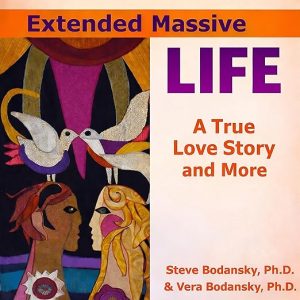
Steve Bodansky's Extended Massive Life is unlike most audiobooks shelved under memoir - it does not fit comfortably in any single category, and that deliberate unruliness is part of its identity. Narrated by John Atkinson and running nine hours and twenty-six minutes, the first volume in the Books About Vera series moves from Holocaust survival to the pleasure philosophy of Morehouse - a California community organized around what its founders called sensual consciousness - without treating either subject as a detour from the other. The book insists they are the same subject.
The synopsis is unusually blunt: this is a book about sex, drugs, and rock and roll, about a life that travels from a Nazi concentration camp to what the author describes as pleasure consciousness. The framing is confrontational by design, because Bodansky is not writing a conventional survivor's memoir or a conventional relationship guide. He is arguing that the two halves of his story are causally connected - that the question of how to build a life of genuine pleasure is inseparable from the question of what was taken from those who never got the chance.
Vera is the book's organizing presence and its emotional center. Reviewer Christina described finding "an adventure" in what she expected to be a love story, noting that "two lives that came together in the most unlikely way" produce "incredible experiences that wove their lives together." That surprise is genuine. The Morehouse sequences - the sex courses, the boxing matches, the French maids, the hustling - read as both documentary and advocacy, a close-up view of an intentional community that has survived more than four decades. Reviewer Curious George called it "a quite intimate look at the early days of one of the few long term international communities that is still thriving 40-years on," and pointed to the contextual value: understanding "a lot of the roots of ideas that are" in circulation today.
Atkinson Refuses to Tip Into Erotica or Polemic
John Atkinson brings a measured, grounded quality to material that could easily tip into either erotica or polemic in the wrong hands. He does not editorialize, which is exactly the right choice for a book whose narrator-author wants the events to speak for themselves. The nine-hour-plus runtime gives Bodansky space to develop both the historical and the autobiographical threads without rushing either, and Atkinson's consistency across very different emotional registers - concentration camp testimony, sexual philosophy, community storytelling - holds the listening experience together.
The audiobook format suits this material particularly well because the oral quality of Bodansky's storytelling translates naturally to the spoken word. Several of the Morehouse sequences have the structure of campfire stories or testimony - the kind of thing that is passed down in community, person to person. Hearing Atkinson render them that way gives the book a warmth that a page read might not fully convey. Reviewer Amazon Customer noted wanting to be like Vera after finishing, recognizing "something I want, and see the potential for having it." That aspiration is easier to feel when the story is heard rather than read.
Boxing and Bedroom as the Same Inquiry
The book does not organize itself along conventional memoir chronology. Bodansky moves associatively, circling back, building context for the Morehouse community through anecdote rather than explanation. Listeners who prefer a linear timeline should know that the structure is deliberately loose. The payoff is immersion - by the end, the community feels inhabited rather than described. Atkinson's narration is essential to holding this associative structure together, because his measured consistency becomes the thread through episodes that might otherwise feel disconnected.
The boxing sequences at Morehouse are worth particular attention. They are not incidental to the sexual and philosophical content - they are an extension of the same argument about embodied presence and the performance of physical selfhood. Bodansky treats the body as a unified site of experience: what happens in the ring and what happens in the bedroom are part of the same inquiry. That coherence of argument is one of the book's more surprising intellectual achievements, and Atkinson navigates those tonal transitions without editorially signaling which content he finds more or less comfortable.
The book is also frank about sexuality in ways that some listeners will find liberating and others will find confrontational. This is not incidental content - it is the thesis. Bodansky is arguing for a specific philosophy of pleasure as a counterweight to historical trauma, and the frankness is part of the argument. The book's title is not metaphorical. Listeners who are open to that framing will find the ideas genuinely provocative in the productive sense; those looking for a more conventional survivor memoir or relationship narrative may find the combination disorienting. The series title - Books About Vera - suggests more volumes to come, so this first entry is also an introduction to a larger project.
Skip This if Explicit Content Isn't for You
Listeners drawn to unconventional memoir that refuses easy categorization will find this rewarding. Those interested in the history of intentional communities, particularly the countercultural experiments of the 1970s and 1980s that have had long-term staying power, will find the Morehouse material unusually detailed and firsthand. Skip it if explicit content is not something you are comfortable with in audio form, or if you need a clear narrative spine rather than an associative, anecdote-driven structure. Fans of books that sit at the intersection of personal history and cultural history - think along the lines of community-based memoir with a strong philosophical argument - are the natural audience.
Do I need to know anything about Morehouse before listening to this audiobook?
No prior knowledge is necessary. Bodansky builds the context for More University and its community through anecdote and testimony across the nine-plus hours. By the end, the community feels fully inhabited rather than explained.
Is this the first audiobook in a series, and does it work as a standalone?
Extended Massive Life is the first volume in the Books About Vera series. It functions as a complete work - the story of Vera and the Morehouse community is coherent on its own terms - though the series title suggests additional volumes will deepen the portrait.