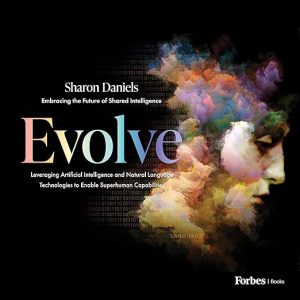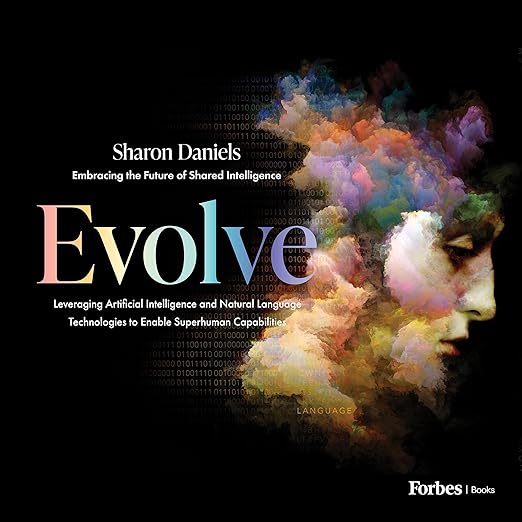
Every verb in this description points forward. EVOLVE will remove the mystery of AI, the copy says; it will document a vision; it will remove the fear of robots coming. Nothing in the short paragraph attached to this four-and-a-half-hour audiobook describes what the book holds, only what it is going to accomplish. That is the grammar of a proposal rather than of a jacket, and anyone reading it is reading a pitch written before the book existed and never revised once it did.
Every Verb in This Pitch Points Forward
Promises are all this paragraph contains, so they deserve listing exactly. The book will remove the mystery of artificial intelligence. It will bring global awareness to Arria. It will document the vision of NLG everywhere and the impact the technology will have on business and society. It will remove the fear of robots coming, and it will communicate Arria's purpose, quoted directly, of ensuring that humanity remains at the heart of artificial intelligence through natural language generation, enabling people to do more and be more. Read that list twice and notice what is missing: any chapter, any example, any argument, any person, any year. A buyer comes away knowing the objectives of the publishing project and nothing about the object on sale.
Arria is named twice across sixty-six words and never once explained. Neither is NLG, which turns up as an acronym without ever arriving as a phrase. For anybody who needs the gloss: natural language generation is the branch of software that converts structured data into readable prose, the thing that turns a table of figures into a paragraph a person can actually read. That definition costs one sentence, and the description does not spend it, which tells you exactly who the copy was written for. It was written for readers who already know what Arria is. Everybody else, meaning most of the people browsing a technology shelf, is being addressed in a language nobody handed them.
Winsome Brown Narrates Sentences Built to Be Defensible
Vendor perspective carries real value when it is labeled as such, and that is the honest case for four and a half hours here. Somebody building natural language generation systems commercially knows things no outside commentator does: which promises the technology keeps, which use cases pay for themselves, what customers actually ask for, where the demonstrations stop working. A book written from inside that position is a primary document. The length suits it too, short enough to finish across a couple of sittings and long enough to develop something past a keynote. Forbes Books is the imprint on the record, a business-media name, not a trade house, which sets a register a buyer can predict in advance.
Winsome Brown's name sits in the reader field, and the assignment is unusual in a way worth naming. A book of this kind lives at one constant altitude: no scenes, no chronology, few proper nouns beyond a company and an acronym, and sentences constructed to be defensible before they are vivid. Fiction lends a reader momentum to borrow. A memoir hands them a person. Corporate technology writing supplies neither, so everything rests on whether the reading can produce emphasis where the prose declines to, and whether four and a half hours of abstraction can be kept from flattening into one tone. That is a genuinely difficult job, and it goes unnoticed whenever it is done well.
Future Tense Gives the Copy Away
Tense is the tell, and once you notice it the paragraph reads differently. Finished books get described in the present: this one argues, that one traces, another explains. This book is described in the future, repeatedly, as a thing that will remove, will document, will communicate. Copy in that tense gets written before publication, usually to persuade somebody internally that the project deserves funding, and it should have been replaced by an account of the finished work. Then look at the stated objective itself. Bringing global awareness to a named company is a marketing goal, and placing it second in the opening sentence tells a buyer what the book is for with more candor than the publisher probably intended.
Reception is entirely absent. The release date on this record reads March 9, 2026, five months in the past, while the rating field is empty, the rating count is empty, and not one person has written a sentence beneath it. That combination deserves reading carefully, not dismissing. It does not mean the book is poor. It means no public verdict exists at all, and on a title whose description tells you nothing, the reception column was the only other place anybody could have looked. The shelving compounds the difficulty: filed under computers and technology with a Computer Science tag, the record invites an audience expecting technical substance and offers a company's account of its own mission.
Efficient Competitive Research for Arria Watchers
Professionals evaluating natural language generation for their own organizations are the obvious audience. If Arria already sits on your shortlist, four and a half hours from inside the company is efficient competitive research, and the vendor framing becomes a feature rather than a flaw because you know how to discount it. Communications and marketing leaders will recognize the shape of the argument, since humanity staying at the heart of automation is the case every enterprise now has to make in public. Business listeners who want the reassurance position on automation anxiety, stated plainly by somebody with commercial reasons for stating it, will know precisely what they are getting.
Computer science listeners should look elsewhere, and the tag on this record will mislead them into staying. Nothing on the page indicates technical depth, model architecture or implementation detail, and the publisher's own stated ambition is awareness, not instruction. General readers hoping to understand artificial intelligence broadly should also begin with a book that names its subject instead of a company. Anyone who needs to know what is inside before spending money is, on this listing, out of luck: the description promises outcomes, the reception column is empty, and the only dependable facts on offer are a runtime, a reader, an imprint and a date.
Frequently Asked Questions
Does the description explain what the Evolve audiobook contains?
No. Across sixty-six words it states what the book will accomplish rather than what it holds. No chapter, example, argument, person or date appears anywhere in it. What a purchaser receives is a statement of publishing objectives with no account of the contents at all, which is the largest single problem on this listing.
What does NLG mean in this audiobook's description?
Natural language generation, although the description never expands the acronym for you. The term covers software that writes prose out of structured data, so a table of figures comes back as a paragraph somebody can follow. The copy assumes familiarity with both the term and the company beside it, which most browsers on a technology shelf lack.
Why does this record carry no ratings or written reviews?
The release date passed in March 2026 and nothing has accumulated since. The rating field, the rating count and the written column all sit empty. No inference about quality follows from that silence. It does mean the publisher's paragraph is the only information available to work from, and on this record that paragraph is thin.
Is this a technical book about artificial intelligence?
Nothing on the page suggests it is. The stated aims are removing mystery, removing fear and building awareness of a named company, which is the vocabulary of communications, not of engineering. The Computer Science tag sets an expectation of technical depth that the publisher's copy makes no attempt at all to support.