Quick Take
- Narration: Malcolm Greyson narrates his own work; the delivery is serviceable but reflects a self-published production with limited professional polish.
- Themes: lost scriptures and apocrypha, Ethiopian Christianity, ancient church history
- Mood: Reverent and exploratory, aimed at seekers rather than scholars
- Verdict: An accessible entry point to Ethiopian biblical traditions, though listeners seeking comprehensive scholarly coverage should manage their expectations carefully.
There is a particular kind of audiobook that exists primarily because a subject is genuinely fascinating and almost completely underserved in popular formats. The Ethiopian biblical canon, which includes texts like 1 Enoch, Jubilees, and the Meqabyan Chronicles that were excluded from the Western canon centuries ago, is exactly that kind of subject. I came to this one out of genuine curiosity about what early Christianity looked like before the canonical decisions that shaped the Western tradition, and that curiosity was at least partially satisfied.
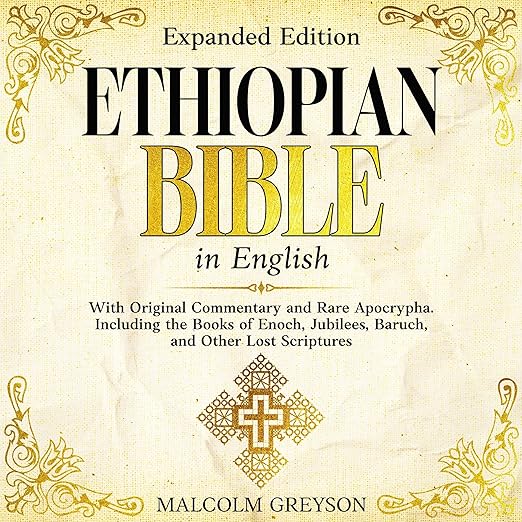
Malcolm Greyson, who both compiled and narrates this expanded edition, describes the project as bringing together a selection of these rare scriptures, carefully curated and presented with original commentary. That word, selection, is worth pausing on, because one reviewer on Audible gave the book a one-star rating specifically because it does not contain the complete Ethiopian Bible. Greyson is not presenting a full translation of the entire canon; he is presenting a curated introduction with commentary. That distinction matters enormously for setting appropriate expectations before you press play.
Our Take on Ethiopian Bible in English (Expanded Edition)
What the book does well is make several genuinely obscure texts accessible to a general listener. The Books of Enoch and Jubilees have been available in scholarly translations for decades, but they sit in academic contexts that most non-specialists never enter. Greyson brings them into a format that a curious listener can follow without a theology degree. The Meqabyan Chronicles, which tell stories of spiritual resistance and faith under persecution exclusive to the Ethiopian tradition, are less widely known still, and having them in audio form with accompanying commentary is genuinely useful.
Reviewer Twitty, whose detailed response focused on the scholarly value, noted that the Books of Enoch, Jubilees, and Baruch are presented in a fluid translation enriched with commentary that helps place them in context, and that its true value lies in making ancient writings accessible that would otherwise remain confined to specialists. That assessment matches my own. Some sections require real concentration due to the density of the content, particularly in the doctrinal portions of the Ethiopic Didascalia.
Why Listen to Ethiopian Bible in English (Expanded Edition)
Greyson’s narration of his own work is functional rather than polished. This is a self-published production, and it sounds like one. The audio quality and performance level are noticeably different from a major publisher recording. For listeners accustomed to studio-produced audiobooks, that gap will be apparent and possibly distracting. For listeners focused primarily on the content, it is workable. The material itself carries enough intrinsic interest that the production does not derail the experience, but it is worth knowing in advance.
At just over 21 hours, this is a substantial listen. The commentary sections are what distinguish this edition from simply having a plain translation read aloud, and they do add meaningful context. The framing of why the Ethiopian canon diverged from the Western tradition, and what theological and historical factors drove those differences, is covered accessibly without oversimplifying.
What to Watch For in Ethiopian Bible in English (Expanded Edition)
The one-star review noting that this is not the complete Ethiopian Bible deserves serious acknowledgment. If you are expecting a comprehensive audio edition of the full Ethiopian Orthodox biblical canon, this is not that. Greyson has assembled a curated selection with commentary, not a complete translation. The marketing language around expanded edition could lead listeners to assume greater comprehensiveness than the content delivers. Listeners with prior knowledge of the Ethiopian tradition may find the coverage frustratingly incomplete. Listeners approaching this as a first introduction will likely find it genuinely illuminating.
The commentary occasionally edges into a devotional register rather than a strictly analytical one, which reflects the author’s approach but may not suit every listener’s purposes.
Who Should Listen to Ethiopian Bible in English (Expanded Edition)
This works best for listeners with a genuine curiosity about ancient Christian traditions outside the Western canon, particularly those interested in 1 Enoch, Jubilees, or early church diversity. History enthusiasts, students of religion, and those exploring their spiritual heritage connected to Ethiopian Christianity will find real value here. Listeners expecting a comprehensive scholarly translation of the complete Ethiopian Bible, or those with a strong background in the subject already, will likely be disappointed by the scope and production quality.
Frequently Asked Questions
Does this audiobook contain the complete Ethiopian Orthodox biblical canon?
No. This is a curated selection of texts from the Ethiopian tradition, including 1 Enoch, Jubilees, the Meqabyan Chronicles, and the Ethiopic Didascalia, presented with original commentary. It is an introductory selection, not a complete canon. One reviewer flagged this explicitly as a concern.
Is prior knowledge of theology or biblical studies required to follow this audiobook?
Greyson’s commentary is designed for a general audience without specialist knowledge. The material is dense in places, particularly the doctrinal sections, but the framing aims to make it accessible to curious listeners without a theology background.
How does Malcolm Greyson’s self-narration affect the listening experience?
The production quality is noticeably below what a major publisher would deliver, and Greyson’s narration reflects self-published rather than professionally produced audio. For listeners focused on content rather than production value, it is workable but not invisible.
What makes the Ethiopian biblical canon different from the Western biblical canon?
The Ethiopian Orthodox Church preserved several texts, including 1 Enoch and Jubilees, that were excluded from the Western canon during the canon formation decisions of the early centuries of Christianity. These texts were considered authoritative in Ethiopia but were lost or marginalized elsewhere. This audiobook focuses on several of those distinctive inclusions.