Quick Take
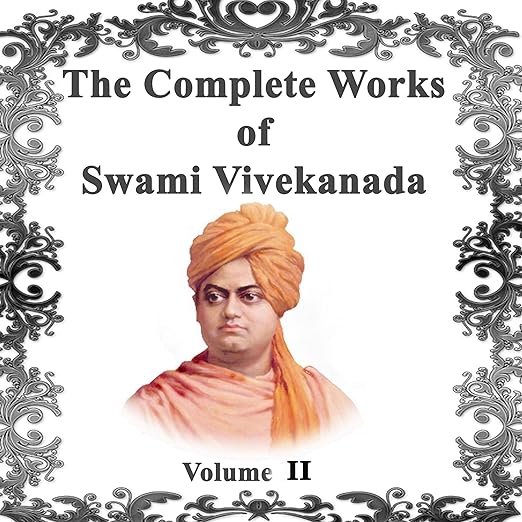
- Narration: Clay Lomakayu reads with measured gravity that suits the philosophical weight of Vivekananda’s lectures and writings, though listeners should note this is a long, dense eighteen-hour volume.
- Themes: Vedanta philosophy, the universality of Hindu thought, spiritual vigor against modern disintegration
- Mood: Expansive and intellectually demanding, like listening to a great orator across time
- Verdict: Indispensable for serious students of Vivekananda, Vedanta, or the history of Hindu thought, not a casual listen, but a profound one.
I came to Swami Vivekananda through secondary sources first: references in books about the Parliament of World’s Religions in 1893, mentions in histories of Indian independence, citations in works on comparative mysticism. By the time I finally listened to Volume 2 of his complete works, I had a framework for who he was but not yet a feel for the texture of his thought. Eighteen hours of Clay Lomakayu reading Vivekananda gave me that texture, and it is remarkable.
Vivekananda’s complete works are a monument in the history of Vedantic philosophy, and Volume 2 represents another substantial section of that monument. The prefatory note, which sets up the volume, describes what Hinduism needed in the modern era: a rock where she could lie at anchor, an authoritative utterance in which she might recognize herself. That is what the compilers believed Vivekananda provided, and listening across the full eighteen-hour span, the argument is not hard to follow. The Swami’s voice, even mediated through translation and narration across more than a century, carries the quality that made him a transformative presence at the Parliament of World’s Religions and across his lectures in the West.
Our Take on The Complete Works of Swami Vivekananda, Volume 2
This volume, like its predecessor, draws from Vivekananda’s lectures, conversations, and written works, presenting the organizing and consolidating of Hindu thought as he understood it. The preface frames this explicitly as a response to the disintegrating tendencies of modernity, the Swami’s Vedantic framework as both diagnosis and antidote. What makes the writing still vital is its intellectual confidence. Vivekananda does not hedge or qualify his core positions; he argues them with the clarity of a man who has thought through the objections and found them insufficient. For listeners coming from Western philosophical or religious backgrounds, the encounter with that confidence is itself illuminating.
Why Listen to The Complete Works of Swami Vivekananda, Volume 2
Clay Lomakayu’s narration brings a measured gravity to the material that respects its density. Vivekananda’s prose ranges from straightforward spiritual instruction to complex philosophical argument, and Lomakayu does not rush through either mode. The pacing allows the more demanding passages to land without compression. This is genuinely important at eighteen hours: a narrator who pushed the tempo to move through the material faster would undermine what makes Vivekananda worth listening to in the first place. The reviews, while sparse, are uniformly positive, one described it simply as interesting to read, which may be the most understated possible response to eighteen hours of Vivekananda, but the rating reflects genuine appreciation.
What to Watch For in The Complete Works of Swami Vivekananda, Volume 2
This is not an accessible introduction to Vivekananda’s thought. Listeners coming to the Swami for the first time would be better served starting with a single-volume selection of his most accessible lectures, something like the Raja Yoga or Jnana Yoga volumes, where a sustained argument unfolds with more narrative momentum. Volume 2 of the complete works assumes engagement across the full scope of his output, and the organizational structure reflects archival comprehensiveness rather than pedagogical accessibility. The preface also frames this very much within a devotional context: this is scholarship in service of faith, not dispassionate intellectual history. Listeners who want the latter may find a more academic biography a better entry point.
Who Should Listen to The Complete Works of Swami Vivekananda, Volume 2
Serious students of Vedanta, Hindu philosophy, and the intellectual history of Indian spirituality will find this an indispensable resource. Listeners who have already worked through Volume 1 and want to continue the complete works will find the same quality of material and narration here. Those approaching Vivekananda for the first time should start with a more accessible single-topic volume before committing to the complete works. At eighteen hours, this rewards sustained attention from listeners prepared to give it.
For those who do engage seriously, what becomes clear across eighteen hours is why Vivekananda’s synthesis of Vedantic thought was so influential beyond India. His argument that the great world religions are different paths up the same mountain was radical in 1893 and remains challenging in contexts where religious exclusivity is assumed. Listening to him make that case in his own words is an experience that secondary literature cannot fully replicate.
Frequently Asked Questions
Do I need to listen to Volume 1 before Volume 2 of the Complete Works?
Not strictly, since Vivekananda’s lectures and writings do not follow a single narrative arc. However, Volume 1 provides useful orientation to the scope and register of the complete works as a whole. Listeners new to Vivekananda are better served starting with his more focused texts, Raja Yoga or Karma Yoga, before approaching the complete works.
Is this an appropriate introduction to Vedanta and Hindu philosophy for Western listeners?
It is an authentic representation of Vivekananda’s thought, but the complete works format assumes some prior engagement with the material. For a first encounter with Vedanta, a more structured single-volume introduction would provide better scaffolding. Volume 2 is better suited as a deepening of an existing interest.
How does Clay Lomakayu handle the philosophical density of Vivekananda’s writing?
With measured gravity and appropriate pacing. Lomakayu does not rush through complex passages or flatten the tonal range between Vivekananda’s more accessible spiritual instruction and his more demanding philosophical argument. The narration respects the weight of the material.
Is this the complete unabridged text, consistent with standard print editions of the Complete Works?
The publisher, Medicine of One, presents this as the complete works, Volume 2. As with any audiobook of a multi-volume classical work, listeners who need to verify textual fidelity against scholarly editions should check the print versions. The audio has not generated any reported concerns about abridgment or alteration.