Quick Take
- Narration: Shlomo Zacks reads with measured sincerity, a voice well-suited to the contemplative, epistolary nature of the Rebbe’s letters, unhurried and respectful of the material.
- Themes: Faith and Bitachon, trust in divine providence, optimism as spiritual discipline
- Mood: Quiet and consoling, like sitting with a wise correspondent
- Verdict: A compact but genuinely nourishing listen for those already drawn to Chabad thought, and a thoughtful introduction for curious newcomers.
I came to In Good Hands on a Sunday afternoon when I had too many tabs open in my mind and not enough answers to any of them. A friend who studies Hasidic texts had recommended the Lubavitcher Rebbe’s writing for exactly those moments, and she was right. Within the first twenty minutes of Shlomo Zacks’s narration, something in me slowed down. That is not a quality I take for granted in any audiobook.
The five-star rating across 35 reviews is notably consistent for a spiritual collection, suggesting that those who find this book find it meaningful rather than merely pleasant. That kind of uniformity tends to reflect a tight fit between book and audience, and understanding that audience is key to understanding whether this title belongs in your own listening queue.
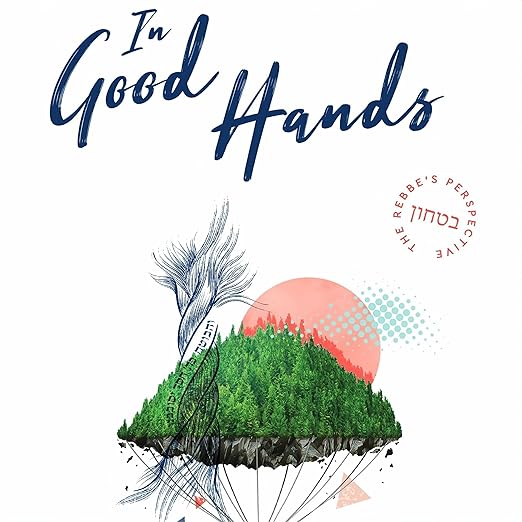
This collection, compiled by Rabbi Sholom B. Wineberg and published by Sichos in English, gathers the Rebbe’s personal letters and talks under the organizing concept of Bitachon, a Hebrew word the Rebbe himself describes as something closer to trust-laced-with-optimism than mere belief. The phrase that reviewers keep returning to is the Rebbe’s own: think positively, and things will be positive. It sounds like a bumper sticker until you hear it embedded in the context of a letter written to someone in genuine distress. Then it lands differently.
Our Take on In Good Hands
What distinguishes this collection from general inspirational fare is its epistolary intimacy. These are not theological treatises, they are letters. The Rebbe is responding to specific people in specific circumstances, which means the wisdom here is applied, not abstract. One reviewer called it a great accompaniment to Gate of Trust, referring to Shaar HaBitachon, the medieval ethical text the Rebbe references throughout. You do not need familiarity with that text to appreciate what is being said, but the connection rewards listeners who want to go deeper. Another reviewer noted that this is not a book to read from cover to cover, and that observation feels accurate in audio form too. Listening straight through is fine, but dipping in and out, the way you might return to a letter from someone you admire, may be the more natural rhythm.
Why Listen to In Good Hands
The Rebbe’s voice, as rendered through these letters and talks, has a quality that is increasingly rare in spiritual writing: he takes the person he is addressing seriously. There is no condescension, no assumption that the listener simply needs to try harder or believe more intensely. Instead, the Rebbe poses reflective questions, acknowledges difficulty, and then invites a reorientation. The talks in this collection extend those themes into more expansive territory, asking what it actually means to invite divine blessing through one’s own proactive efforts rather than waiting passively. For listeners accustomed to either purely theological or purely self-help framing, that balance is refreshing.
What to Watch For in In Good Hands
The collection is relatively short at just under six hours, and a handful of reviewers noted that its messages are beautiful but need time to breathe. If you approach this expecting narrative momentum or structured argument-building across chapters, you will be slightly wrong-footed. The format is cumulative rather than linear, each letter or talk adds a layer, but the collection does not build toward a climax in any conventional sense. Listeners who engage with devotional or contemplative material regularly will recognize and appreciate this structure. Those newer to the genre may find it helps to pause between sections and sit with what was said rather than pressing on immediately.
Who Should Listen to In Good Hands
This audiobook will resonate most strongly with listeners who already have some connection to Jewish practice or Chabad thought, or who are in a period of personal uncertainty and looking for something grounded rather than breezy. It is a genuine resource rather than a comfort read in the escapist sense. Listeners who prefer dense theological argument or biographical narrative about the Rebbe himself may want to supplement this with other material. But for anyone open to the specific kind of calm that comes from being told, with evident conviction and care, that trust is both possible and worth practicing, In Good Hands offers something quietly substantial.
Frequently Asked Questions
Do I need to be Jewish or familiar with Chabad practice to benefit from this audiobook?
Not necessarily, though some familiarity with Jewish concepts like Bitachon and references to Shaar HaBitachon will enrich the experience. The Rebbe’s letters are written to individuals in specific circumstances, and the compassion in them translates across backgrounds, but the framing is firmly within Chabad Hasidic thought.
Is this audiobook better listened to straight through or in sections?
Most listeners and reviewers suggest treating it like the letters it contains: dip in, sit with a section, return later. The format is cumulative rather than narrative, so there is no plot momentum pushing you forward. Short daily sessions work well.
How does Shlomo Zacks handle the epistolary format in his narration?
Zacks reads with measured, unhurried sincerity that respects the reflective nature of the material. He does not dramatize the letters, which is the right call, the power comes from the words themselves, and his delivery keeps the listener’s attention on the Rebbe’s thought rather than on the narrator’s performance.
Is this the same In Good Hands as a novel by another author?
No. This is a spiritual collection of the Lubavitcher Rebbe’s letters and talks on the theme of Bitachon, published by Sichos in English. It is a work of Jewish religious nonfiction, not a novel.