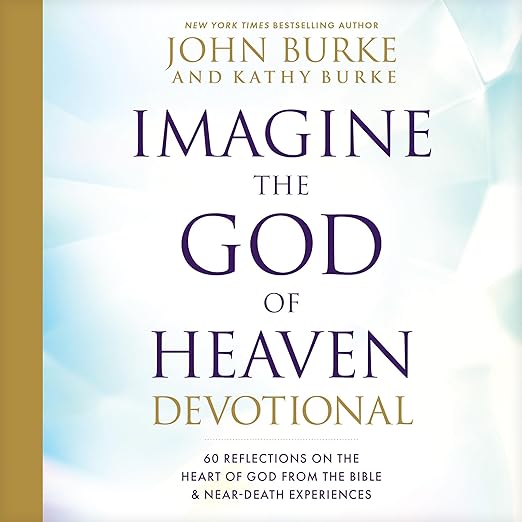
Quick Take
- Narration: John Burke reads his own devotional with pastoral warmth and unhurried pacing, making the NDE testimonies feel intimate rather than sensational.
- Themes: Near-death experiences as spiritual witness, God’s personal love, daily devotional practice
- Mood: Tender and hopeful, with emotional depth that builds across the sixty-day structure
- Verdict: A devotional that works best as a daily companion rather than a single listen, combining Scripture, testimony, and prayer in a structure that rewards sustained engagement.
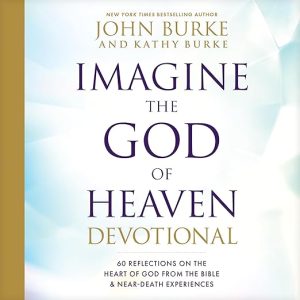
I was given this to review on a Tuesday and listened to the first three daily entries during a morning walk before I understood what it was asking of me. Imagine the God of Heaven is not meant to be consumed in one sitting. It is a sixty-day devotional designed to be read in daily portions, each one brief enough for a morning routine and substantial enough to carry thought through the day. The audiobook format makes it accessible for those who do their devotional time while driving, walking, or getting ready for work, and the author’s own narration adds a layer of pastoral intimacy that makes that use case feel intentional.
John Burke is the author of Imagine Heaven, a book that drew extensively on near-death experience accounts to build a scriptural picture of what awaits after death. This devotional is a companion to that earlier work, offering sixty structured reflections that each combine a Bible verse, an NDE testimony, teaching content, and a suggested prayer. The structure is consistent throughout, which helps establish the listening rhythm that a devotional format requires.
Our Take on Imagine the God of Heaven
The NDE accounts are the distinctive element here. Burke has spent years collecting and verifying firsthand accounts from people who describe encountering God during clinical death, and he uses these narratives to illustrate scriptural truths in ways that feel immediate and personal rather than doctrinal. One reviewer described being brought to tears by a chapter about prayers going straight into the heart of God. Another noted that from the very first pages, the devotional spoke in such a personal way that every word felt written for them. That level of emotional response is unusual for devotional content, and it suggests Burke has calibrated the personal-to-universal ratio with care.
The decision to anchor each reflection in a near-death experience testimony rather than exclusively in doctrinal exposition is what makes this devotional distinct. Burke has spent years collecting and verifying NDE accounts, and the stories chosen for each day’s reflection are carefully matched to the scriptural passage they accompany. This is not incidental: Burke’s argument across both this devotional and his earlier Imagine Heaven is that NDE testimony functions as empirical witness to what Scripture describes, and the design of each daily entry reflects that conviction with care.
Why Listen to Imagine the God of Heaven
Burke narrating his own work is a meaningful choice. The material requires a tone that is warm without being saccharine, and authoritative without being preachy. He manages that balance throughout the seven-hour runtime. Reviewers described the listening experience as giving them a quiet space to breathe, speak with God, and listen for His voice, and as providing peace for the night and encouragement for the morning. The audio format also makes it suited to shared listening: one reviewer mentioned their husband and they read it together each evening. For a devotional, that communal use case is a real advantage of the audio edition over a physical book.
What to Watch For in Imagine the God of Heaven
The format assumes a willingness to engage with the NDE framework as spiritually meaningful witness rather than medical curiosity. Readers who approach NDEs with skepticism will find the testimonies less compelling, and since each daily reflection centers on one, skeptical listeners may feel the structure undermines the scriptural teaching it accompanies. The content is explicitly Christian and evangelical in orientation, which means it speaks most directly to listeners within that tradition. The devotional’s insistence on God’s extravagant personal love for the individual reader is the theological center, and whether that resonates depends significantly on where you are coming into it from.
Who Should Listen to Imagine the God of Heaven
This is designed for Christians who want a structured daily devotional experience that integrates Scripture, personal testimony, and prayer. It is particularly suited to those going through seasons of discouragement, doubt about whether their prayers matter, or a desire to feel more personally connected to their faith. The NDE framework will be an asset for readers who have found that format meaningful in books like Burke’s own Imagine Heaven or similar titles. Those looking for theological depth or academic engagement with NDE literature should look elsewhere; this is pastoral rather than analytical in intent.
Frequently Asked Questions
Can I listen to Imagine the God of Heaven straight through, or is it designed only for daily readings?
The sixty-day structure is intentional, and Burke designs each entry to be lived with across a day rather than consumed consecutively. Listening straight through in one or a few sessions is possible but will miss the devotional rhythm the format is built around. It works best as a daily companion over two months.
Do I need to have read Burke’s earlier book Imagine Heaven to get value from this devotional?
No. While this is a companion to Imagine Heaven and builds on similar NDE material, it stands on its own as a sixty-day devotional. Familiarity with the earlier book adds context but is not required.
How does John Burke’s narration of his own devotional compare to having a professional narrator?
Reviewers respond warmly to Burke’s narration, describing it as intimate and pastoral. The material benefits from being read by its author: the NDE testimonies in particular carry more weight when the person who collected and verified them is delivering them directly.
Is this suitable for someone who is new to Christianity or at an early stage of faith?
One reviewer explicitly described it as a beautiful pathway for someone brand new to faith, noting that the writing reads like an invitation rather than heavy doctrine. The Scripture-plus-testimony structure is accessible, though the theological assumptions are consistently evangelical.