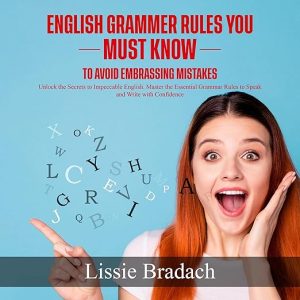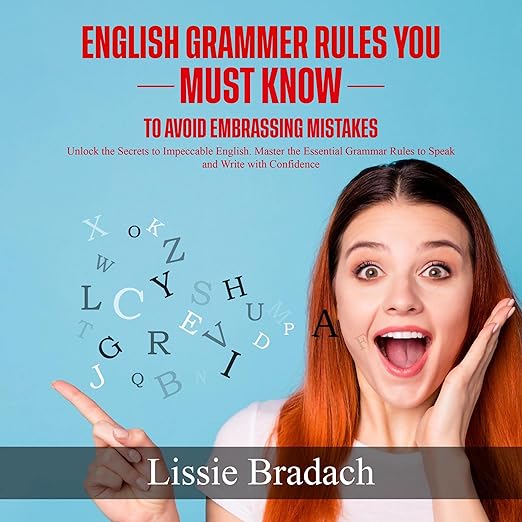
Comma placement, subject-verb agreement, and the gap between your and you're are exactly the kind of small, nagging uncertainties this audiobook sets out to fix in just under six hours. Lissie Bradach's guide, narrated by Sera Champman, is built for anyone who feels a flicker of anxiety before hitting send on an email or opening their mouth in a meeting for fear of a grammar mistake giving them away. It is explicitly not positioned as a comprehensive textbook, and that modesty of scope turns out to be one of its more honest qualities.
Champman's Unhurried Delivery Suits Reference Content
Champman narrates in a plain, unhurried instructional register that suits a grammar primer better than a more theatrical delivery would; no attempt is made to render comma splices exciting, and that restraint is the right call for reference-style content a listener may want to revisit rather than something meant to be experienced once straight through. Each chapter closes with a recap of the rules just covered, a structural choice that translates reasonably well to audio even without the visual list the print edition presumably offers, since Champman's pacing gives each recap item its own clear beat rather than rushing through it.
Bradach Admits This Is a Starting Point Only
The book covers foundational ground rather than advanced style, noun errors, verb tense and subject-verb agreement, pronoun usage, and general punctuation, which keeps the six-hour runtime realistic for the amount of material actually covered. Bradach's own framing is refreshingly candid about the book's limited ambition: this is presented as a guide rather than a textbook, designed to make the learning process easier rather than exhaustive, and the audiobook delivers exactly that rather than overreaching into territory a slim guide like this was never going to cover properly.
Bradach's own voice comes through clearly in how the book frames its own limitations; rather than positioning itself as an authoritative final word on English grammar, the guide repeatedly acknowledges it is meant as a starting point, a way to make an intimidating subject feel approachable rather than a replacement for a full academic grammar course. That modesty is unusual in a genre that often oversells its own comprehensiveness, and it sets honest expectations from the very first chapter rather than only revealing its limited scope once a listener is already partway through.
Jenni Rediscovers the En Dash and Em Dash
At 4.6 across 40 ratings, this has found a genuinely satisfied niche audience, and the reviews suggest that audience skews toward listeners returning to grammar basics after years away from formal instruction rather than absolute beginners. One reviewer, Sarah, specifically recommends it for anyone learning English as a second, third, or additional language, alongside native speakers simply needing a refresher, and calls it good for all ages in terms of how memorably the tips and tricks are presented.
Another reviewer, Jenni J, offers a genuinely charming account of her own experience: much of the material took her back to school days and she was pleasantly surprised how much she still remembered, but she specifically flags rediscovering the difference between the en dash and the em dash, punctuation marks she uses regularly but had apparently lost track of the distinction between. That kind of specific, concrete recall, not vague praise but naming the exact rule that clicked back into place, is a good sign for how digestible Bradach's explanations actually are in practice.
Plain Language Explains the 4.6 Rating
Beyond the two specific reviewer accounts already mentioned, the broader pattern across the book's ratings suggests an audience that appreciates being met at whatever level they are actually at, rather than being talked down to or overwhelmed with terminology; the book explicitly avoids leaning on formal grammatical jargon it has not first clearly defined in plain language. That accessibility is probably the single biggest reason a fairly modest, apparently self-published grammar guide has managed a 4.6 rating rather than getting lost among dozens of more heavily marketed competitors covering similar ground in the language-learning category.
Advanced Editors Already Know This Ground
This is explicitly a foundations-level guide, not a comprehensive grammar reference, and listeners with an advanced command of English or a background in editing or linguistics will likely find little here they have not already internalized years ago. The book itself is upfront about this limited scope rather than overselling itself as comprehensive, which is honest, but it does mean the audience for real value here is narrower than the confident title might initially suggest to a browsing shopper.
Because grammar instruction naturally benefits from visual reference, seeing a sentence diagrammed, seeing the specific placement of a comma, listeners should expect to occasionally want to pause and jot something down rather than absorbing every rule purely by ear during a commute. The chapter-end recaps help bridge that gap reasonably well, but audio is still a slightly awkward format for certain punctuation-specific rules no matter how clearly Champman paces the explanation.
The book's own chapter list, covering noun errors, verb tense, pronoun usage, and general punctuation rules, reads as genuinely comprehensive within its stated foundational scope, but listeners should not mistake breadth of topics covered for depth on any single one; each rule generally gets a clear, concise explanation rather than an extended deep dive with many varied examples. That brevity is a reasonable tradeoff for a runtime just under six hours, but writers wanting extensive practice material or many worked examples per rule may find themselves wanting a supplementary workbook alongside it.
Shaky Writers Get a Refresher Worth Repeating
English language learners at any level, native speakers who feel shaky on the fundamentals, and anyone who specifically wants a low-pressure refresher rather than a dense academic grammar text are the clear audience here, and the compact runtime respects that audience's time rather than padding basic content out unnecessarily. Students preparing for writing-heavy coursework or professionals anxious about email and workplace writing will likely get the most practical, everyday mileage out of the specific rules covered.
Given how many listeners specifically mention rediscovering rules they technically already knew but had stopped consciously applying, this also works well as an occasional refresher to revisit periodically rather than a single one-time listen, particularly for anyone whose writing has drifted into casual habits since their last formal grammar instruction. None of this is a knock against the book succeeding at what it actually sets out to do; a compact, foundational guide that leaves multiple reviewers specifically naming rules they had forgotten and now feel confident about again is doing exactly the job a grammar refresher is supposed to do.
Professional editors, advanced writers, or anyone who already has a confident handle on grammar fundamentals should look elsewhere for material that will actually challenge them, since nothing in these six hours goes meaningfully beyond foundational rules clearly aimed at listeners rebuilding confidence rather than expanding advanced expertise. Judged against its own stated modest goal, though, rather than against a more ambitious reference it never claimed to be, it holds up as a solid, honest choice.
Before You Press Play
- Read by: Sera Champman reads in a plain, unhurried instructional register well suited to a grammar refresher.
- At its heart: Grammar fundamentals, writing confidence, everyday communication
- Vibe: Low-key and reassuring rather than academic
- Short version: A solid, honest refresher for shaky grammar basics, not a match for advanced writers.
Is this audiobook useful for English as a second language listeners?
Yes, one reviewer specifically recommends it for listeners learning English as a second, third, or additional language, alongside native speakers wanting a refresher.
Does this audiobook work without the book's printed practice exercises?
Mostly. The chapter-end recaps translate reasonably well to audio, though a few punctuation-specific rules benefit from pausing to jot something down rather than listening straight through.
Is this audiobook aimed at beginners or advanced writers?
Beginners and anyone rebuilding shaky fundamentals; it does not go beyond foundational grammar into advanced style or editing territory.