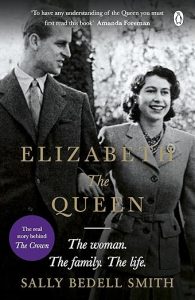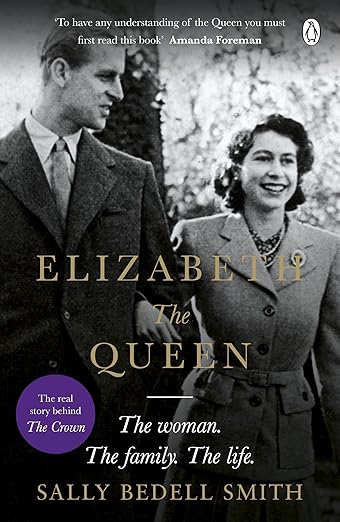
I listened to Elizabeth the Queen during a period when I was also reading some of the more critical accounts of the British monarchy, which gave the experience an interesting double exposure. Sally Bedell Smith is not a hostile biographer, and this book does not attempt to be. But it is thoroughly researched and genuinely revealing in ways that more reverent royal accounts are not, which makes it more complex than its warmth might initially suggest.
The access Bedell Smith secured for this biography is documented in the subtitle's implications: personal letters, close friends, and associates. The result is a portrait that moves between the public Queen, the strategic diplomat who navigated decades of political relationships with prime ministers from Churchill to Blair, and the private woman who apparently washed up after barbecues at Balmoral in yellow rubber gloves. That juxtaposition is what Bedell Smith is consistently reaching for, and she finds it more often than biographical subjects of similar stature usually allow.
First, the Big Picture
The book was published in 2012, when Elizabeth was still a decade away from her death at 96 in 2022, which means it functions now as both biography and historical document. Readers coming to it in the years since her passing will find a portrait that gains additional resonance in retrospect. The portrait of a woman who treated service as her essential identity, not as performance but as genuine orientation, reads differently once that life is complete rather than ongoing.
Reviewer Timothy E. Deeter makes a specific observation that captures why this book works: it includes comments and observations from household members and extended family that hadn't appeared in print before, which gives the book texture beyond the well-documented public record. These moments, the off-duty Queen rather than the official one, are where Bedell Smith's access pays off most directly. They don't destabilize the portrait but they make it three-dimensional.
Why Elizabeth the Queen Works as an Audiobook
Rosalyn Landor is English, which is not a trivial detail for this particular biography. Her narration carries natural authority on the British cultural register that American-voiced narrators sometimes approximate but rarely achieve natively. The class inflections, the institutional vocabulary, the specific tonal relationship between formal and informal address in English social life, all of this comes through in Landor's reading as a matter of background rather than performance. For a 21-hour biography of the British monarch, that authenticity makes a real difference across the listening experience.
The length is justified by the subject's scope. A reign spanning decades of postwar British and global history, from the end of empire through the Diana crisis and its aftermath, requires substantial space to treat adequately. Bedell Smith moves chronologically but threads thematic concerns across the timeline effectively, so the structure doesn't feel like a march through dates.
A Few Reservations
Reviewer Felicity Schutte raises the Diana question, which the book addresses with some nuance. Bedell Smith gives space to the relationship between the Queen and Princess Diana and to the institutional responses to Diana's death that became a significant moment of public criticism for the monarchy. The book doesn't whitewash these episodes, but it does frame them from a position of underlying sympathy toward its subject, which means readers looking for a more adversarial account of the institutional failures involved should supplement this with other sources.
Reviewer Jolichayn's minor complaint about an American idiom in a quoted passage, "math" instead of "maths," is a small editorial slip that doesn't affect the book's substance but does reflect the American author's perspective embedded in an ostensibly British context. It's a pedantic note but not an entirely unfair one about the book's outsider position.
Who Should Pick Up Elizabeth the Queen
This is for readers who want a thorough, humanizing, and carefully researched portrait of Elizabeth II as a complete person rather than a symbol. Fans of other Bedell Smith biographical work, or of royal biography in the tradition of Ben Pimlott's Queen Elizabeth II, will find this congenial and complementary.
Listeners who want a critical examination of the monarchy as an institution or a more interrogative look at the political and social function of the Crown will find Bedell Smith's sympathetic framing limiting. This is biography as intimate portrait rather than structural critique, and it should be read in that spirit.
Was Elizabeth the Queen written before or after Elizabeth II's death, and how does that affect it?
It was published in 2012, a decade before Elizabeth's death in September 2022. Listeners now read it as a complete life rather than an ongoing one, which gives the portrait additional retrospective weight. The book ends with the Queen in her mid-eighties, still reigning.
Does Rosalyn Landor's narration affect how British cultural references and titles land for American listeners?
Significantly. Landor's English background means the cultural register, institutional vocabulary, and social tone all come through naturally rather than as approximations. For a 21-hour biography this grounded in British institutional life, that authenticity makes a genuine difference.