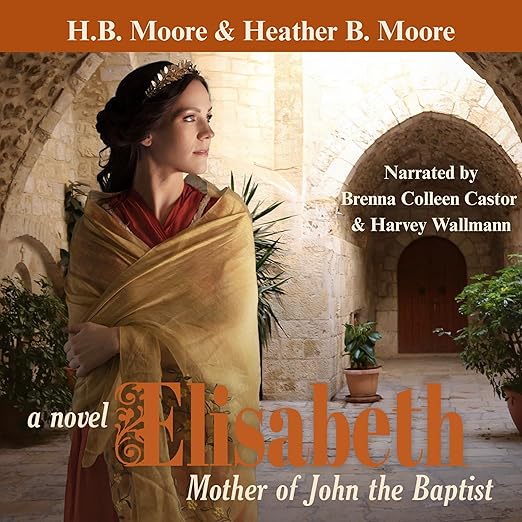
H.B. Moore approaches the biblical figures of Elisabeth and Zacharias with the tools of the literary novelist rather than the hagiographer: specific domestic detail, psychological interiority, and the kind of imagined daily texture that the scriptural record cannot supply. This audiobook brings the couple out of their cameo role in the Gospel of Luke and into a sustained, chronological life, set against the village near Jerusalem where they built their world together over decades. The central narrative challenge is significant: how do you sustain dramatic interest in a story whose most famous element, the miraculous late pregnancy and the birth of John the Baptist, is known to virtually every reader before the first page? Moore's answer is to spend the earlier chapters earning the miracle by making the longing for it feel genuinely human and unbearable.
Castor Rendered the Quiet Decades of Waiting
Brenna Colleen Castor's narration is one of the quietly significant decisions that shapes this audiobook. Her voice is warm and precise, suited to material that requires sustained emotional restraint without emotional distance. The story of Elisabeth and Zacharias is fundamentally one of faith tested by disappointment across years, and Castor understands that the performance must not overplay that grief. When the divine promise finally arrives for the aging couple, the moment's impact depends entirely on how fully Castor has rendered the preceding decades of quiet waiting. Her reading of the chapters after the angel's announcement to Zacharias, including his enforced silence, finds a delicate register that honors both the miraculous and the deeply human dimensions of the scene.
Moore's research creates a world that feels inhabited. Reviewers emphasize that the novel makes familiar scripture characters feel real and relatable, that the glimpse into everyday lives creates a sense of knowing the actual people rather than the theological symbols. That is a specific and difficult thing to accomplish with figures this freighted with religious meaning. Moore navigates the doctrinal dimension carefully, she is writing for readers who approach these figures with reverence while also delivering the kind of specific sensory and emotional detail that literary fiction requires. Asher, a character noted by at least one reviewer as a particular highlight, appears to provide the kind of domestic and community texture that grounds the biblical narrative in recognizable human terms.
Elisabeth Becomes the Protagonist of Her Own Story
For readers who know Elisabeth and Zacharias primarily from the single chapter in Luke devoted to them, the experience of spending seven hours inside their lives represents a genuine expansion of understanding. That is not a religious claim but a readerly one: fiction that imagines the interior life of historical figures, including biblical figures, can produce empathy and specificity that historical record alone cannot. Moore has done this work carefully, and the consistently five-star reviews from readers who approach the material from a faith tradition suggest that the novel succeeds at the delicate task of honoring the story's sacred dimensions while fictionalizing its human ones.
The novel also fits into a specific and underserved tradition of literary biblical fiction that centers women's experience. Elisabeth is not peripheral to her own story; she is its protagonist, and the novel's attention to her inner life, her friendship with Zacharias, her grief over childlessness, and eventually her role in events that exceed any ordinary understanding of personal fate, gives her a presence that the scriptural account cannot develop at length. That centering is itself a significant creative choice.
Moore Is Building a World Before Any Resolution
The novel's structure follows the couple's life chronologically, which means the pacing is deliberately measured rather than plot-driven in the conventional sense. Readers accustomed to contemporary fiction's emphasis on conflict and event may find the early chapters meditative to the point of slowness. Moore is building a world and a relationship, not racing toward a resolution, and the payoff depends on accepting that pace. Reviewers who describe the novel as hard to put down are responding to a different kind of engagement than plot-driven urgency: the emotional investment in the couple's longing generates its own forward momentum, but it requires patience from the listener.
The novel assumes familiarity with the broader biblical context in which Elisabeth and Zacharias operate. Mary's relationship to Elisabeth, the larger significance of John the Baptist's birth, and the political and religious landscape of Judea under Roman occupation all appear as background. Listeners who bring that context will find more resonance in the later chapters, but Moore provides enough narrative context that the story remains followable for readers with minimal prior knowledge of the period.
Moore's novel also belongs to a productive strand of historical biblical fiction that has grown significantly in recent decades, as writers from various faith traditions have applied novelistic discipline to stories that scriptural texts leave largely underdeveloped. The challenge with Elisabeth and Zacharias in particular is their scriptural brevity: Luke provides the outline and the miracle but almost no texture of lived life. Moore fills that texture with the care of someone who has clearly thought hard about what daily existence, friendship, disappointment, and faith would actually have looked like in that village near Jerusalem in the years before the Gospel narrative begins.
LDS Audiences Will Recognize Moore's Name and Approach
This audiobook is a natural fit for readers who enjoy faith-based literary fiction that takes its characters' inner lives seriously, and for anyone interested in narrative explorations of women in the ancient world who have been reduced to minor roles in canonical texts. LDS (Latter-day Saint) audiences will recognize H.B. Moore's name and approach. Readers from other faith traditions who appreciate careful, reverent, and emotionally honest biblical storytelling will find much to appreciate here as well. Listeners who prefer fast-paced narratives driven by external conflict will find the novel's meditative pace challenging. The narration and the prose both reward attentive, unhurried listening.