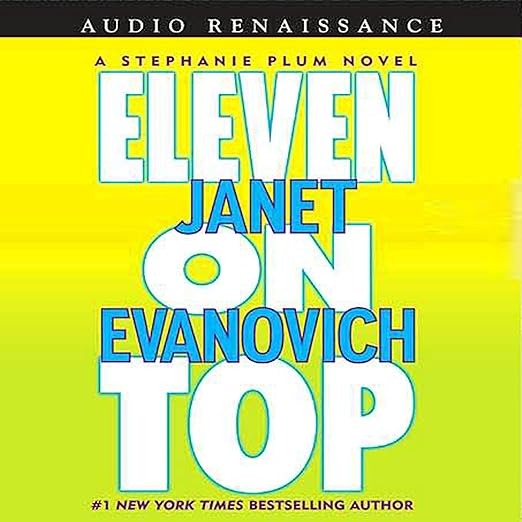
By the eleventh Stephanie Plum audiobook, Evanovich has established her formula so completely that any deviation from it becomes significant. Eleven on Top is notable precisely because it introduces a deviation: Stephanie actually quits. Not temporarily, not as a narrative bluff, but genuinely. She clears out her desk, hands in her notice, and goes looking for something her mother could describe to the neighbors without making the sign of the cross. What Evanovich does with that premise distinguishes this entry from the pure comedic formula of some of the surrounding books in the series.
First, the Big Picture
The setup requires Evanovich to find a way to keep Stephanie inside the plot's chaos without the bail bonds office providing her entry point. The solution is a stalker who followed Stephanie out of her previous life: a killer who has returned from what should have been death, intent on putting her into a grave. This threat persists across the novel at a consistent level of genuine menace, which gives Eleven on Top a different structural texture from entries where the danger is more episodic. Stephanie's circuit through the button factory, Kan Klean Dry Cleaners, and Cluck-in-a-Bucket is played for comedy, but the killer's presence underneath each scene keeps the humor from being weightless.
Reviewer responses specifically noted that this book felt different from the standard series formula. One reviewer wrote that "it actually felt to me like the character was growing somewhat," and attributed this to Stephanie's genuine reflection on what she wants from her life rather than simply lurching from crisis to crisis. Another described the Lula and Tank romance subplot as particularly funny, which tracks with how Evanovich uses her ensemble in this entry: the secondary characters are doing more emotional labor than usual, which frees Stephanie's storyline to be more substantive. A third reviewer described the book as "one enjoyable doughnut," capturing both the lightness and the satisfying completeness of the experience.
The job-hopping sequence, button factory to dry cleaners to fried chicken, is some of Evanovich's funniest situational writing in the series. Each workplace arrives with its own specific indignities, and the comedy of watching Stephanie attempt normalcy against the backdrop of a genuine threat to her life creates a tonal collision that Evanovich handles deftly. The seven hours and forty-three minutes goes quickly; this is not a book that drags between its set pieces.
Lorelei King's narration has settled by this point in the series into something genuinely remarkable. She is not performing Stephanie Plum; she appears to have become her. The Jersey inflection, the exasperated self-awareness, the specific register of attraction and irritation that characterizes both the Morelli and Ranger relationships, all of it is present in King's voice without effort visible. When Stephanie takes a job as Ranger's office assistant and the temperature between them rises, King handles the comedic tension without breaking the underlying seriousness of the situation. The competition between Morelli and Ranger hits a particular pitch in this entry, and King plays it with the precision that only comes from having lived in these characters across ten previous books.
Evanovich's five back-to-back bestseller list credits on this title are listed in the synopsis for a reason. Eleven on Top hit number one on the New York Times, Wall Street Journal, Los Angeles Times, Entertainment Weekly, and Publishers Weekly charts simultaneously. That commercial fact matters for a different reason than it might appear: it confirms that the reading audience specifically wanted what this entry delivered. The formula was working, but this variation on it worked harder.
Before You Commit to Eleven on Top
Series veterans will notice that the novel's stalker subplot is resolved, but the Morelli-Ranger triangle is not. Evanovich has been managing that dynamic since book one, and Eleven on Top does not advance it toward resolution any more definitively than its predecessors did. The character growth that the reviewer noticed is real but bounded: Stephanie gains self-knowledge without the situation fundamentally changing. This is either exactly right or deeply frustrating depending on your relationship with the series. Listeners who have been waiting across ten books for Stephanie to make a definitive choice will not get that here.
The novel also presupposes significant familiarity with the established characters. The Lula and Tank subplot, for instance, carries full weight only for readers who know these characters well. Grandma Mazur's contributions to the chaos are funnier if you have history with her particular brand of elderly disregard for social norms. Eleven on Top is not the right entry point for someone new to Evanovich; it is the right entry point for someone eleven books in who is wondering whether the series still has interesting moves left to make.
King's performance in the Ranger scenes deserves specific mention. Ranger is a character whose appeal in the novels depends almost entirely on tone: he speaks rarely, moves quietly, and communicates intensity through economy rather than volume. King has developed a particular register for him across the series that manages both the sexiness and the slight unease he generates in Stephanie, and Eleven on Top puts that register under more sustained pressure than most earlier entries because Stephanie is now working in his building every day.
Is This One for You?
Existing Stephanie Plum listeners who want a mid-series entry that does something slightly different from pure formula will find Eleven on Top genuinely rewarding. The addition of a persistent, serious threat alongside the comedic job-hopping sequence creates a book that is both funnier and more tense than some of its neighbors in the series. Those new to Evanovich should start from the beginning. Listeners who have become frustrated with the romantic triangle's lack of resolution should be aware that this book will not resolve it, but may find the stalker plot a satisfying reason to stay.
Common Questions
Does this audiobook feel different from other Stephanie Plum entries, or is it standard formula?
Reviewers have specifically noted that Eleven on Top feels different. The device of Stephanie quitting her job and the persistent stalker threat give the novel a more serious underlying structure than some of its neighbors in the series, while maintaining the comedy. One reviewer described the character as 'growing somewhat' compared to other entries.
How does Lorelei King's narration performance hold up by the eleventh audiobook in a long series?
Exceptionally. King has narrated the series from the beginning, and by book eleven her command of the ensemble is total. The interplay between the characters, particularly the Morelli-Ranger dynamic and the secondary cast, benefits enormously from a narrator who has spent hundreds of hours in these voices.
Is the romantic triangle between Stephanie, Morelli, and Ranger resolved in this audiobook?
No. The triangle reaches an interesting pitch in this entry because Stephanie takes a job working directly for Ranger, raising the temperature considerably, but no definitive resolution is offered. Evanovich has consistently maintained this dynamic across the series without forcing closure.