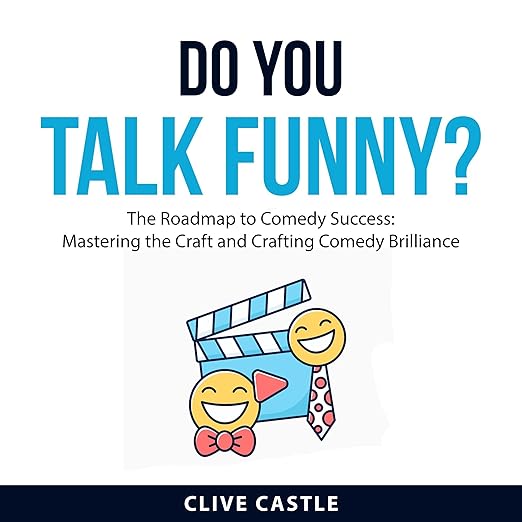
In Brief
- Performance: Steven Myles keeps a brisk, personable energy throughout the thirty-one minute runtime, though the brevity leaves little room to demonstrate range.
- What it covers: Stand-up comedy technique applied to professional speaking, humor as audience connection, stage presence
- Feel: Punchy and instructional, with motivational overtones that occasionally overtake the practical content
- Our call: A thirty-minute primer with genuinely useful observations for speakers who want to add humor to presentations, though serious practitioners will need substantially more than this introduction.
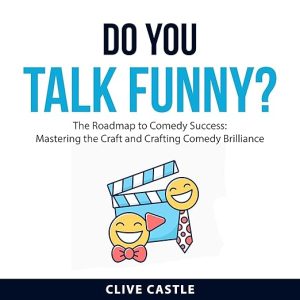
Thirty-one minutes is a strange duration for an audiobook. It sits in an ambiguous territory between a podcast episode and an actual book, and the first thing I thought when I pressed play on Do You Talk Funny? was that David Nihill would need to be extremely efficient to deliver anything beyond a list of bullet points in that time. What actually arrives is more useful than I expected, though the brevity is a genuine constraint that shapes everything about what the book can and cannot accomplish.
What this audio delivers is a clear argument that humor in professional speaking is not about being naturally funny but about applying craft principles that can be studied, practiced, and refined. That argument is correct, and Nihill makes it accessibly. The framing draws from stand-up comedy methodology, which is a sensible source: stand-up comedians are professional students of what makes audiences laugh and when and why, and their discipline is far more systematic than most people assume. The claim that comedy is learnable rather than innate is itself the most valuable single thing this book communicates, because it is the premise that makes all subsequent instruction meaningful rather than discouraging.
What We Made of It
The honest answer is: not much technically, but potentially quite a lot conceptually. If you listen to this free audiobook expecting a comprehensive guide to comedic technique, the brevity will frustrate. But if you approach it as a reframing exercise, an argument for why humor belongs in your professional repertoire and what the basic principles of applying it look like, then the half-hour is well-spent.
Nihill covers timing, the use of self-deprecation, the relationship between humor and vulnerability, and the mechanics of callbacks and misdirection. None of these are developed with the depth that a longer treatment would allow, but each is clear enough to point a motivated practitioner toward more deliberate study and experimentation. One reviewer connected it usefully to Michael Port's Steal the Show as a companion text, which is a fair comparison: this is a shorter, narrower treatment of overlapping terrain, and pairing the two would give a speaker more complete practical grounding than either provides alone.
The central intellectual move the book makes is treating stand-up comedy as a craft discipline whose lessons transfer directly to the professional presentation context. This is both the book's strongest idea and its most underdeveloped one. Stand-up and keynote speaking share structural principles around setup and payoff, around reading an audience, around the rhythm of attention management. But the differences in context are also significant: a speaker delivering industry content to a conference audience operates with very different stakes and constraints than a comedian in a club.
Reviewers from different professional contexts, a wedding MC with twenty years of experience, a Toastmasters veteran working toward a double DTM, ESL teachers and translators, all found the principles applicable in their specific work. That range of applicability suggests the underlying framework is genuine even if the specific translation to non-stand-up contexts is left mostly to the listener to complete. A more thorough treatment would have spent more time on that translation work. This one gestures at it efficiently and trusts the listener's own professional context to do the bridging. For some listeners that is the right balance; for others it will feel incomplete.
Before You Commit to Do You Talk Funny?
Myles keeps the narration moving at a pace that suits the instructional content. He does not add comedic performance to the delivery, which would have been the obvious but likely wrong choice for material about humor technique. The tone is collegial rather than performative, which respects the listener's intelligence. At thirty-one minutes the narration does not have space to develop texture, but it is clean and consistent and serves the material without drawing attention to itself. The delivery demonstrates the principle Nihill advocates, being engaging without performing, rather than accidentally undermining it.
One reviewer from Italy noted that the content, while interesting, was repetitive and could have been condensed further, a criticism that reads as more applicable to the original book's text than to this audio version, which is already very compressed. The audio format here functions as something closer to an extended essay or long article than a conventional audiobook, and expectations calibrated accordingly will match what is actually delivered.
Best Suited For
This audio is well-suited for someone who has never thought systematically about how humor functions in communication and wants a quick orientation to the field. The Titanic-lobster observation referenced by one reviewer, that the sinking was a miracle for the kitchen's lobsters, captures the book's core method: reframing familiar situations through perspective shifts. That method is demonstrated through example rather than just described, which is the appropriate approach for material about comedy craft. Showing works better than telling when the subject is how to be funny.
Experienced public speakers, professional performers, or anyone with a background in comedic performance will find this too introductory to add much. The principles are familiar and the treatment does not go deep enough to generate new insight for someone who has already spent time thinking carefully about audience connection and timing. For that audience, the longer published book version or dedicated stand-up craft resources would be more productive. As a free audiobook primer for those at the beginning of this thinking, it serves its specific and limited purpose capably.
A Few Questions About Do You Talk Funny?
Is this audiobook the same content as David Nihill's published book Do You Talk Funny?
This audio version appears to be a condensed or adapted version running at thirty-one minutes. The published book is substantially longer and more developed. If you want the full treatment of the material, the book is the better resource. This audio functions more as an introduction to the key ideas than a complete treatment of the subject.
Does Steven Myles's narration add anything to the listening experience versus reading the text?
Myles delivers clean, collegial narration that does not try to perform humor on top of content about humor, which is the right call. The audio does not add significant value over the text version, but it does not subtract from it either. Choose the format based on how you prefer to consume instructional content.