- Performance: Not a reading at all by the author's own account, but a session recorded podcast-style with company in the room.
- What it covers: A comedian's mother, addiction and hoarding, comedy as inheritance
- Feel: Obscene, tender and deliberately unruly
- Our call: Buy it for the interruptions, the guests and the arguments, and only if obscenity reads to you as a register rather than an event.
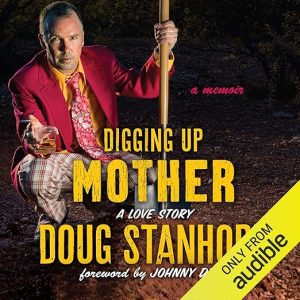
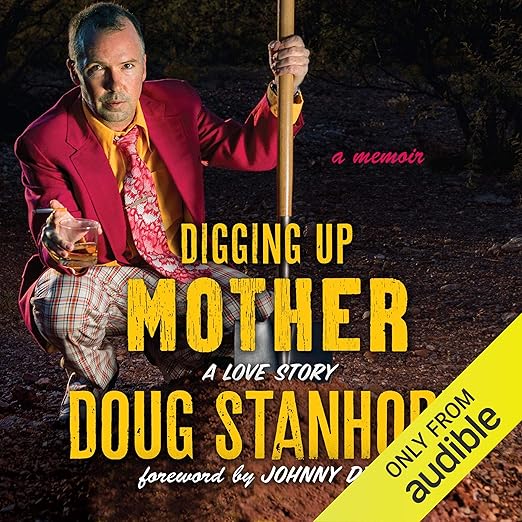
Bonnie Stanhope's death opens the book, and on this audiobook it opens something a good deal stranger than a memoir. Doug Stanhope did not go into a booth and read his pages. He assembled what the description calls a "director's cut commentary", went off script to riff through the sections, and brought in childhood friends, his podcast co-host and assorted comedians and musicians to voice letters from teachers and guidance counselors, diary entries from his mother, even old homework assignments. Several of the people who appear in the book turn up to give their own version of events, "often remembered quite differently".
The Verdict, Briefly
That decision changes what you are buying, and it is the single most important fact on this page. Every written response here is about the printed book. Three were filed before the recording came out in August 2016, and one of those describes pre-ordering the thing the moment it went on sale. The most enthusiastic of them offers a list, "vulnerable, honest, vulgar, hilarious, sad", and says the book has everything a memoir and a comedy book both need. None of that testimony has heard the version being sold.
My verdict has to be about the object rather than about the prose, then, and the object is unusual enough to justify the risk. A comedian riffing over his own memoir with the people who were there sits closer to a long podcast episode than to a straight reading, and Stanhope's material, built out of AA meetings, Hustler cartoons and Monty Python sketches recited with his mother, is exactly the sort of writing that gains from being spoken by the man who lived it. You lose the tidiness of a finished text. You gain the corrections.
The Best Parts of Digging Up Mother
Start with the sharpest accident on this listing. One of the five responses is headed "The Turd In The Pool or It's Only Funny If You Read It", a headline written about a printed book that now sits above an audio edition in which the author reads and interrupts himself. That reviewer's argument is that Stanhope says what the rest of us feel and dare not express. Hearing him say it, in his own timing, is the version of that argument I would rather have.
The guest structure is the real draw. School letters about a difficult boy, read aloud by somebody other than the boy himself, land differently from the same paragraphs on a page. So do Bonnie's diary entries in another voice. And the promise that people mentioned in the book arrive to remember the same events differently turns a memoir into something closer to an argument, which is a rare shape for this format and a genuinely funny one.
Stanhope's comic register survives the transfer intact as well. One response quotes his stage material at length, a bit about reminding an audience of its problems and then adding problems nobody knew they had, and calls him "a master at what he does". Another calls him "the greatest social commentator alive today". Whatever you make of those verdicts, both describe a performer rather than a writer, and performers are better heard than read. Comedy that works on a stage and comedy that works on a page are different crafts, and this edition quietly bets on the first of them.
Bonnie's own life is the last reason. She moved from bartending to truck driving to massage therapy to stand-up comedy and acting, and she died an alcoholic hoarder in rural Arizona. A son who owes his humor to the woman who took him along to her meetings, recited Monty Python with him and introduced him to Richard Pryor at nine has a subject nobody else can claim. The description does not oversell it, which I appreciated more than I expected to.
Points to Consider
Doug Stanhope and Friends is a phrase, not a cast list, and it is all the listing gives you. The description names Chad Shank as co-reader and then lists Chris O'Conner, Greg Chaille, Bingo, Mat Becker and Sarah Hyland among the guests. No map of who reads what has been published, so if one particular voice is your reason for buying, nothing here will point you to the twelve and three quarter hours it might be hiding in.
Two smaller oddities deserve naming. The byline on this listing reads Johnny Depp, credited for the foreword, which means the author of the book is not the name printed at the top of the page. And the description slips "elder abuse" into the list of Bonnie's occupations, between massage therapy and stand-up, with no explanation of what is meant by it. Neither changes the recording. Both tell you how much care went into the page around it.
Content is the real caveat, and I will be direct. This is vulgar by design and dark by temperament, and the reviewers who love it say so in the same breath: "too vulgar and honest" in one headline, "unflinching, unabashed" in another. Alcoholism, hoarding and a mother's death are worked as comic material, because that is the relationship the book is about. If the combination sounds unbearable rather than brave, believe the instinct.
Should You Listen to Digging Up Mother?
Existing Stanhope listeners should buy the audio rather than the book. The riffing, the guests and the contradictions are the entire point of this edition, and the printed version by definition contains none of them. The shortest response on the page says only that it is a great book if you are a fan of stand-up comedy, which is a small verdict and, on the evidence, the right one.
Memoir readers who have never heard of him are the interesting case. This is about a mother and a son and it really is about them, so the subject travels. But the delivery assumes obscenity is a register rather than an event. Newcomers who want to test that should sample the passages where he goes off script instead of the straight narrative, because the departures are where this edition actually differs from the book.
Avoid it if what you want is a clean linear reading, since that is precisely what the audio has been built not to be. Avoid it too if you are buying on the strength of the star rating, which shows 4.7 on the back of a single counted rating while five written responses sit beside it, and a single rating can only ever land on a whole star. Ignore the number on this page and judge the edition underneath it, which is the only part anybody built on purpose.
A Few Questions About Digging Up Mother
Is this audiobook the same text as the printed Digging Up Mother?
No, and the gap is larger than the word commentary suggests. The publisher advertises unscripted asides, guest performers voicing documents, and contradictions from people who were present at the events being described. None of that exists between the covers of the printed book, so the two editions are genuinely different works sold under one title.
Who else reads besides Doug Stanhope?
Six further names appear in the publisher's copy: one co-reader plus five guests drawn from the comedian's friends and colleagues. The credit compresses all of them into a single collective phrase, and nothing anywhere maps a voice to a section, so a listener who wants one particular performer has no way to find where they turn up.
Why does Johnny Depp appear as the author of this audiobook?
He wrote the foreword, and the byline on this listing credits him instead of Doug Stanhope, who wrote the book. It reads as a cataloguing slip rather than anything meaningful, but it does mean a search by author name will not turn up the man whose memoir this actually is.
How much weight should the 4.7 rating carry here?
Very little. The counter records one rating, and one rating cannot produce a decimal at all, so 4.7 has to have come from somewhere else. Five written responses sit beside that number, and three of them predate the recording entirely. Read the responses and treat the average as noise.