- Performance: Virtual Voice AI narration handles Miller's personal narrative with reasonable clarity; the absence of a human voice occasionally flattens the humor that makes the writing distinctive, but the core story survives the format.
- What it covers: Medical diagnosis and its aftermath, dark humor as a coping mechanism, recovery and the long arc of adaptation
- Feel: Unexpectedly funny, then deeply human, then quietly hopeful
- Our call: C. Michael Miller's acoustic neuroma memoir is distinguished by a comedy-writer's instinct for specificity and a survivor's hard-won honesty about what the experience actually costs.
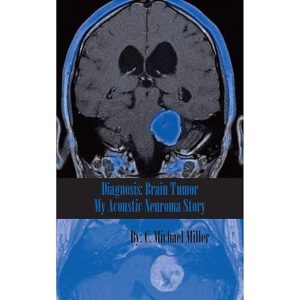
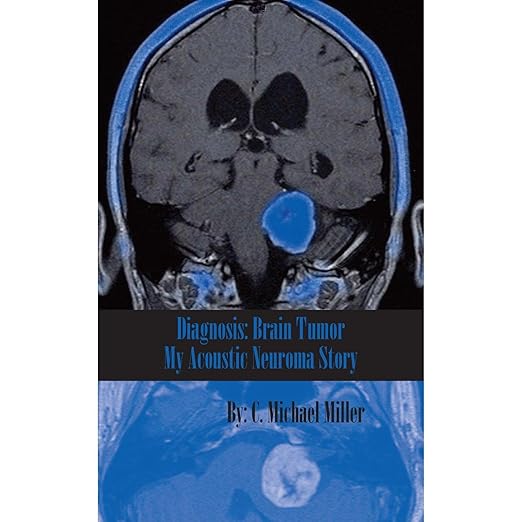
The opening image of Diagnosis: Brain Tumor - My Acoustic Neuroma Story is already fully formed in the book's own introduction: C. Michael Miller lying inside an MRI scanner, watching his toes wiggle to a Sesame Street song in his head, noticing the silhouettes gathering behind the control room window, and thinking with the particular clarity of someone whose body is about to deliver unwelcome news, "This can't be good." That opening encapsulates the voice of this audiobook: precise, self-aware, funny in the way that people are funny when they have learned to narrate their own disasters as a survival mechanism.
The audiobook, narrated by Virtual Voice across four hours and forty-four minutes, documents Miller's journey from that MRI moment through diagnosis, surgery, and the long recovery from an acoustic neuroma, a benign tumor on the nerve connecting the inner ear to the brain. Acoustic neuromas are not widely known outside the community of people who have had them or loved someone who has. The surgery to remove a significant one is a serious cranial procedure with real potential complications, and Miller does not minimize what he faced while maintaining the comic register that makes his account readable rather than simply courageous.
Funny at First, Honest About What Followed
The framing of this memoir is deceptive. The humor in the early sections, which is real and well executed, creates an expectation that the book will remain at the level of entertaining medical mishap narrative. It does not. Miller's account of the surgery and the recovery that followed is honest about the fear, the physical difficulty, and the ways in which a serious illness disrupts not just the patient's life but the lives of everyone around them. A reviewer who describes the book as "raw and honest" and notes that it addresses aspects of the experience that people "without such a diagnosis would even consider" is describing the book's second register, which is substantially less comedic than the first but is prepared for by everything that precedes it.
That tonal range is the memoir's distinguishing quality. It earns the harder sections through the goodwill generated by the lighter ones, and it earns the humor through the seriousness that eventually surrounds it. This is not a book that uses comedy to avoid the emotional weight of serious illness; it is a book that uses comedy to approach that weight from an angle that makes it more bearable. A reviewer who had brain surgery for their own acoustic neuroma describes the book as "lighthearted and full of real life experiences," which confirms that the memoir's tonal calibration reads as respectful rather than dismissive to people who have been through similar experiences.
The recovery sections are the most detailed and the most useful for listeners who come to the audiobook seeking practical understanding of what acoustic neuroma treatment involves. Miller covers the surgical options, the decision-making process, and the post-operative period with a specificity that is informed by his own lived experience and supplemented by research he did as an informed patient navigating an unfamiliar medical landscape. This is not clinical information, but it is the kind of patient-eye view that clinical literature does not provide and that the acoustic neuroma community specifically values.
AI Narration Can't Land the Understated Jokes
The Virtual Voice narration presents a genuine limitation for this particular book. Miller's prose is comic in the structural sense; the humor depends on timing, on the placement of the unexpected detail or the understatement, and AI narration delivers those moments with the same prosody as every other sentence. A human narrator with Miller's own timing would significantly enhance the early chapters. For listeners who prioritize the information and the emotional arc over the comedic performance, the narration serves adequately; for those who come primarily for the writing's humor, the flat delivery will occasionally mute the effect.
The book's value for people in the acoustic neuroma community is substantial regardless of narration format. A reviewer who used it to understand their spouse's recovery process describes it as providing "support during the early stages of recovery," and another who had the same surgery calls it an accurate representation of the lived experience. This community-specific utility is rare; most illness memoirs describe conditions with large existing popular literature, and acoustic neuroma does not have that. Miller's account fills a genuine gap that both patients and their families have reason to appreciate.
Silhouettes at the Window Become an Anchor
Pay close attention to how Miller handles the relationships in his life during and after the diagnosis. The peripheral characters, the medical professionals, the family members, the friends who showed up and those who did not, are rendered with the same observational precision as Miller himself. These portraits are brief but accurate in the way that sustained attention to other people during crisis tends to produce. The reviewer who describes the book as helpful for understanding "what my husband is going through" is identifying a feature rather than a byproduct; Miller's account is structured to be useful for the people around a patient as well as the patient themselves.
The passage where Miller describes watching the silhouettes gather in the MRI control room recurs in memory throughout the audiobook as a kind of anchoring image. Hearing it in the spoken introduction and then carrying it through the subsequent hours of medical and personal narrative gives the audiobook an unusual coherence; the scene that opens the story becomes a reference point for everything that follows it.
Sustained and First-Person, Without Having to Sit Still
This audiobook has a clearly defined primary audience: people who have been diagnosed with an acoustic neuroma, are supporting someone who has, or are in the research phase of understanding their options. For this audience, the book is unusually valuable because it provides a sustained first-person account of the full arc of the experience in a format that does not require sitting still to read. Beyond this community, the memoir will interest readers who respond to illness narratives that balance humor and honesty rather than resolving to either pure comedy or pure ordeal literature. The Virtual Voice narration means that listeners sensitive to AI narration should be prepared for occasional flatness, particularly in the comedic passages.
Frequently Asked Questions
Is this audiobook useful for someone who has just been diagnosed with an acoustic neuroma?
Yes, particularly for the recovery and decision-making sections. Miller writes from the patient perspective about the surgical options, the post-operative period, and the longer-term adaptation process. Several reviewers who have had the same diagnosis or supported family members through it describe the book as genuinely useful rather than merely relatable.
How does Virtual Voice AI narration affect this audiobook's delivery of the humorous writing?
The flat prosody of AI narration occasionally mutes the comedic timing in Miller's prose, which depends on sentence-level pacing. The information and emotional arc survive the format intact, but listeners who are drawn primarily to Miller's comedy-writing style may find the narration a significant limitation.