The Short Version
- Narrator: Sean Runnette handles the tonal range of Moynihan's letters with appropriate restraint, differentiating registers across decades and recipients without theatrics.
- Subjects: Political intelligence across partisan lines, the self-construction of a public figure, American history through private correspondence
- Tone: Dense and absorbing, the kind of listen that rewards patience and prior knowledge
- Bottom line: An essential audiobook for American political history listeners who want to think alongside one of the twentieth century's most particular and complicated public minds.
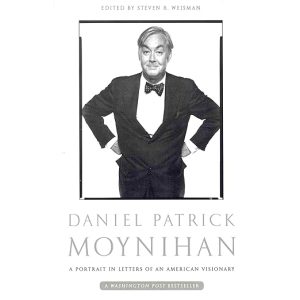
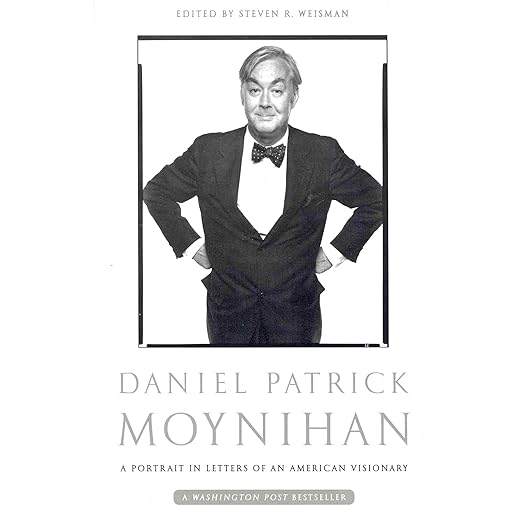
Can a politician's letters constitute a portrait? The question is worth asking before pressing play on this audiobook because the answer determines whether the Portrait in Letters format serves or frustrates. Daniel Patrick Moynihan never wrote an autobiography, and editor Steven Weisman has assembled this collection from Moynihan's correspondence over decades of public life, giving us a figure who shaped history through Kennedy, Johnson, Nixon, Ford, and Clinton administrations, never through summarizing his own life but through writing letters to the people in the middle of it with him. At 26 hours and 15 minutes, this is a long form immersion into one of the twentieth century's most particular minds.
A Figure Among the Founding Fathers
Moynihan's letters are not the studied performance of a man positioning himself for historical judgment. They are working documents, emotional responses, analytical corrections, and occasionally furious objections, written to interlocutors ranging from presidents to constituents to academics to friends. The Economist description of him as a figure who 'two centuries earlier would not have been out of place among the Founding Fathers' appears in the synopsis, and while the comparison is not without its complications, it points at something real: Moynihan wrote letters the way people wrote letters in the eighteenth century, as thinking-in-progress rather than press releases.
Weisman's editorial work is significant. The selection of letters across decades of public service requires judgment about which documents reveal rather than merely confirm, and Weisman appears to have prioritized range over hagiography. The letter describing his feelings after JFK's assassination is raw in a way that is historically valuable precisely because it was never written for publication. His letters to Nixon about Vietnam, urging the president not to make the war a Nixon war, are both shrewd and painfully retrospective. His frustrations during the Clinton era over healthcare and welfare reform arrive as the letters of a man who has watched cycles repeat.
Runnette Navigates a Diamond in the Rough
Sean Runnette's narration is well suited to the epistolary format. Reading letters aloud is a specific performance challenge: the register of a letter to the President differs from the register of a letter to an old friend, and the register of a letter written in grief differs from the register of a letter written in irritation. Runnette navigates these distinctions with consistency rather than theatricality, which is the right choice for material that must not compete with what is on the page. His pacing gives the longer analytical letters the space they need without losing momentum.
One reviewer described this book as 'a diamond in the rough' and noted that Moynihan was 'insightful and well respected on both sides of the aisle' in a way that seems almost inconceivable from the vantage of contemporary politics. This framing is both accurate and worth examining: Moynihan's ability to work across ideological lines was not simple centrism but a genuine engagement with ideas regardless of which partisan team they arrived from, which also meant he frustrated everyone at some point. The letters capture this quality, including the friction, the self-justifications, and the occasional self-aggrandizement that one reviewer identified as a defining limitation alongside the genuine brilliance.
An Ultimately Flawed and Tragic Character
A third reviewer called Moynihan 'an ultimately flawed and tragic character,' noting that Weisman's introduction alone is worth the price of the book. The tragedy the reviewer identifies has to do with how much Moynihan crafted and shaped his own image and ambition, and how the arc of that self-construction ends. The epistolary format captures this dynamic in a way that traditional biography cannot quite replicate: you watch Moynihan making rhetorical decisions in real time, choosing certain framings over others, sometimes catching himself and adjusting, occasionally not catching himself at all.
This is not an audiobook for listeners unfamiliar with the political and intellectual landscape of post-war American public life. The letters assume familiarity with the institutions, debates, and figures Moynihan is writing to and about. Listeners without background in American legislative history will find some sections dense, though Weisman's editorial apparatus provides context. The audiobook rewards prior familiarity with the period.
Urging Nixon Not to Make It a Nixon War
The letters spanning the Nixon years are arguably the collection's most revealing section, not because of anything scandalous but because of how Moynihan's voice changes register when writing to an administration whose intellectual culture was so different from the Kennedy circle where his public life had begun. His tone in these letters is simultaneously deferential and pedagogical, which is a combination that says a great deal about how he navigated power. His letter urging Nixon not to make Vietnam a Nixon war has a prophetic quality that is painful in retrospect, not because Moynihan was uniquely prescient but because the argument was sound and made no difference.
The selection process that Weisman employed in assembling this collection is itself worth considering as an editorial achievement. Moynihan wrote copiously across six decades of public life, and the decision about which letters to include and which to leave out shapes the portrait as decisively as any single document within it. Weisman's introduction, praised by one reviewer as worth the listen on its own, explains something of these choices, and listening to it before the letter collection proper gives the subsequent material a frame that enriches rather than limits how the letters read. For listeners who want to understand how the picture was constructed as well as what it shows, the introduction is not optional.
Proximity to a Historical Mind
American political history listeners, particularly those interested in the mid-twentieth century intellectual tradition in public life, will find this audiobook deeply rewarding. It is also recommended for listeners who have engaged with Moynihan's published work and want the private register alongside the public arguments. Listeners looking for a conventional political biography with narrative arc and third-person framing should note that this is a collection of letters, not a structured life narrative. The immersive quality is a feature of the format for those who want proximity to a historical mind.