In Brief
- Read by: Tim Wise reads his own work with the measured intensity of a longtime lecturer, authoritative and direct, though occasionally dense.
- At its heart: The ideology of colorblindness as racial denial, post-racial mythology versus structural inequality, the politics of racial progress narratives
- Vibe: Pointed and politically engaged
- Short version: For listeners willing to sit with an uncomfortable argument made by a writer who does not soften his conclusions, this is a focused and well-organized critique of one of the most persistent myths in American racial discourse.
I came to Tim Wise's work through his earlier writing on white privilege, and Colorblind arrived on my list as part of a larger project of understanding how race is talked about, and deliberately not talked about, in contemporary American life. I was about twenty minutes in when I realized this was going to require my full attention. Wise is not a writer who makes it easy to listen passively. He is making an argument, and he expects you to follow it.
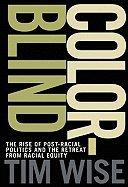
The title refers to the ideology of colorblindness, the idea, dominant in post-civil rights American political discourse, that the way to achieve racial equality is to stop seeing race altogether. Wise's argument is that colorblindness functions not as liberation but as denial: a way of refusing to acknowledge the structural inequalities that race still produces while claiming the moral high ground of impartiality. This is not a new argument in academic literature, but Wise is a popularizer rather than an academic, and Colorblind is designed to make that argument accessible to a general audience that may not have encountered it in more scholarly form.
Published in 2010, Before Ferguson and Black Lives Matter
The book is organized with the clarity of a debate argument rather than an essay, Wise states his thesis early, addresses counterarguments directly, and builds his case through a combination of historical examples, statistical evidence, and logical analysis. For listeners who engage critically with racial politics, much of the argumentative ground will be familiar, but Wise assembles it in a way that is easy to follow and hard to dismiss. The specific target of colorblindness ideology, the notion that naming race is itself racist, is one that pervades American political discourse from left to right, and Wise is precise about what he finds problematic and why.
Published in 2010, the book predates several major events that have reshaped the national conversation on race: the Ferguson protests, the broader Black Lives Matter movement, and the surge of explicit white nationalism that followed in subsequent years. In some passages, this dating shows, the examples feel like they belong to a slightly earlier moment. But the core argument about colorblindness has not aged out of relevance. If anything, it has become more pertinent.
Tim Wise's Relentless, Self-Narrated Argument
Tim Wise narrating his own work is both an asset and a mild challenge. He has spent decades lecturing on these topics and his delivery reflects that experience, clear, organized, and confident. He knows exactly where each argument is going before the listener does, and he does not second-guess himself. The challenge is that he can be relentless. This is a five-hour, forty-nine-minute book making a focused argument, and the pacing does not offer many pauses for digestion. Listeners who want to think through each point before the next one arrives may find it useful to pause deliberately throughout.
No synopsis was provided in the metadata for this edition, which made preparation harder, but the listening experience itself is self-contained and does not require prior reading of Wise's work. Colorblind stands alone as a readable entry point to his broader project.
Confrontational Rhetoric Instead of a Balanced Survey
Wise writes from a clear political perspective and does not hide it. He is not attempting balanced presentation of competing views on race policy, he is making a case, and listeners who approach the text hoping for a survey of multiple perspectives will be frustrated. His rhetorical mode can also feel confrontational at times; he is addressing people who hold the views he is critiquing as much as those who already agree with him, and some passages read as point-by-point rebuttals to specific arguments that only part of the audience will have encountered in their own thinking.
The absence of detailed reviews for this audiobook edition makes it difficult to gauge listener experience more specifically, but Wise's reputation as a public intellectual is extensive and his other work has a strong track record with audiences interested in systemic analysis of American racism.
Best for a Concentrated Critique of Post-Racial Ideology
This audiobook works well for readers who want a concentrated critical examination of post-racial ideology in American politics, educators and facilitators working in diversity and inclusion contexts, and listeners who are new to structural race analysis and want a single-author argument as an entry point. Those who are uncomfortable with direct political argument, who want academic citation density, or who are looking for a more journalistic or narrative approach to race in America will want to look alongside this. But as a focused, well-organized critique of a specific ideological position, it does the job it sets out to do.
Does Colorblind address specific policies or is it primarily a philosophical argument?
Both, Wise grounds the ideological argument in specific policy debates around affirmative action, school integration, and anti-discrimination law, using these as concrete examples of how colorblindness ideology operates in practice.
Is this audiobook self-narrated, and how does that affect the listening experience?
Yes, Tim Wise reads his own work. He is an experienced lecturer and his delivery is clear and authoritative, though the style leans academic-lecture rather than casual storytelling, which some listeners may find demanding over an extended session.
How dated does Colorblind feel given that it was published in 2010?
The core argument about colorblindness ideology remains highly relevant, though specific examples reference pre-2010 political events. The framework Wise builds applies directly to more recent debates, even when the examples have aged.