In Brief
- Voice: Brian Arens keeps the tone clear and encouraging without ever slipping into a lecture register.
- Big ideas: college admissions writing, brainstorming frameworks, personal narrative craft
- Atmosphere: Practical and reassuring
- Worth it?: A genuinely useful structural guide for admission essays, best paired with its companion PDF.
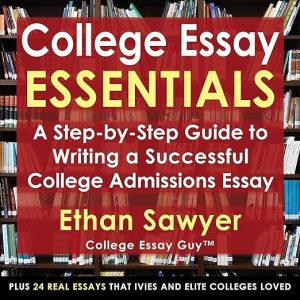
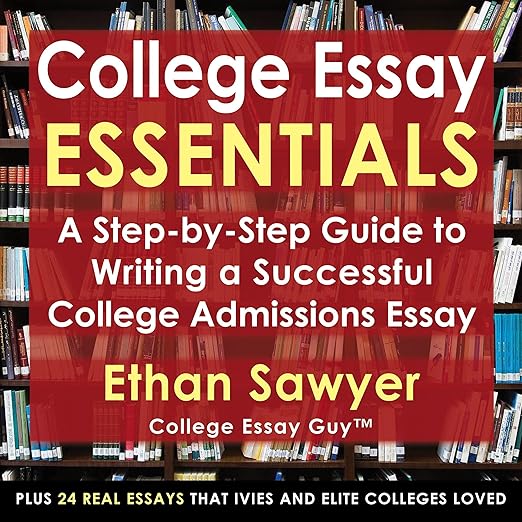
Cursor blinking on an empty document is the image every high school senior knows too well, and College Essay Essentials is built to end that particular kind of paralysis. I put this audiobook on for a niece who had spent three weeks staring down her Common App prompt without writing a single sentence, and by the end of the first hour she had, unprompted, opened a blank page and started listing out the 'significant challenges' Ethan Sawyer asks his readers to identify first.
That is, more or less, the whole pitch of this book working exactly as designed: turn an overwhelming, high-stakes writing task into a short sequence of answerable questions.
Sawyer has built College Essay Guy into a genuine institution among college counselors, with a track record that predates this specific audiobook by years of workshops, webinars, and one-on-one coaching sessions. That accumulated experience shows in how specifically he anticipates where a given student will get stuck, rather than offering generic encouragement dressed up as instruction.
Arens Narrates a Four-Type Essay Diagnostic
Sawyer, known to generations of applicants as the College Essay Guy, organizes the entire book around a genuinely useful diagnostic: have you faced significant challenges, and do you know what you want to do or become? Those two yes-or-no questions sort every applicant into one of four essay types, and from there Sawyer walks through brainstorming, structure, and revision with the calm specificity of someone who has read several thousand of these essays and knows exactly where students get stuck.
Brian Arens narrates with clear, unhurried delivery that never talks down to a teenage audience, which matters more than it sounds like it should. A college counseling book pitched at seventeen-year-olds could easily curdle into a lecture; Arens keeps it closer to a trusted advisor's office hours, calibrated for listeners who are anxious enough about this essay already.
The book's insistence that essays don't require a traumatic backstory to succeed is worth underlining, since that's the single most common misconception Sawyer seems to be writing against. A student without a dramatic 'significant challenge' to point to isn't locked out of a strong essay; the second diagnostic question opens an entirely separate and equally valid essay path built around ambition and direction instead.
The book also treats the college essay as a genre worth taking seriously on its own terms, distinct from academic writing or creative fiction, with its own conventions around voice, scope, and what admissions readers are actually screening for after their two-thousandth essay of the season. That genre-specific framing is more useful than generic 'good writing' advice would be.
That specific tension, describing an achievement honestly without either false modesty or overreach, extends well past the college essay itself; it is arguably the same skill a job cover letter or a scholarship application demands later on. Sawyer doesn't make that connection explicit, but a sharp listener will notice the technique transfers the moment they hit their first post-college application of any kind.
Real Sample Essays Replace Vague Encouragement
The book directly tackles the two questions that keep students stuck at 2 a.m.: how do I describe an accomplishment without sounding like I'm bragging, and how do I make an essay feel 'deep' without forcing false profundity onto an ordinary experience? Sawyer's answers are concrete rather than inspirational, built around structural choices rather than vague encouragement to 'just be yourself.'
Real sample essays from students who got into their target schools give the abstract advice something to point at. Rather than describing what a strong 'challenges' essay should theoretically do, the book lets you hear how one actually sounds, which is a genuinely different kind of teaching than most essay-writing guides attempt, especially in audio form where the model essays double as a kind of read-aloud workshop.
The revision guidance in particular stands out among admissions-essay resources, since most guides spend the bulk of their attention on getting a first draft down and treat editing as an afterthought. Sawyer walks through what to cut, what to sharpen, and how to tell when an essay has said enough, which is exactly the stage where students left alone tend to either over-polish or give up too early.
An inherent tension is worth naming in an audiobook about writing craft specifically: the medium asks students to absorb structural and stylistic advice by ear, in a genre where the final product is entirely visual, read silently by an admissions officer. Sawyer's clear signposting throughout, with explicit transitions between concepts and spoken-aloud examples, helps bridge that gap better than a straight lecture format would.
Zippert's Classroom Test and the Companion PDF
This is an exercise-based guide at its core, full of brainstorming prompts meant to be written down, not just listened to and nodded along with. The audiobook includes a companion PDF, and it is genuinely necessary here rather than a nice bonus; the worksheets and structured brainstorming activities cannot be fully completed by ear alone.
Reviewer Mathias Zippert, who used the book with a full class of seniors, offered a specific and useful caveat: the brainstorming activities translate well to group settings, but students need more hands-on support during revision than the audiobook alone provides. Treat this as a strong starting engine for a first draft rather than a complete substitute for a human editor.
The synopsis notes this audiobook comes from Echo Point Books and Media, an independent publisher based in Brattleboro, Vermont, rather than one of the major education publishing houses. That smaller-press origin doesn't show up as a production shortfall in the audio itself, but it's worth knowing this arrived through a different pipeline than the big-name test-prep brands most applicants have already encountered.
Start This the Summer Before Senior Year
High schoolers heading into application season are the obvious audience, but this book earns a second one too: school counselors and teachers looking for a structured curriculum they can run with an entire class, exactly as Mathias Zippert did. The four-type framework scales from individual use to classroom instruction without much friction.
Timing matters too: starting this audiobook the summer before senior year, rather than during the fall application crunch itself, gives the brainstorming exercises room to breathe rather than compressing everything into a stressful few weeks.
Skip this if you're looking for a ghostwriting shortcut or a single template essay to fill in; Sawyer's whole method depends on genuine self-reflection, and a student unwilling to do that work won't get much from even the clearest possible narration of the process.
Before You Listen
Does the College Essay Essentials audiobook work for a student listening alone, or is it better with a teacher or counselor?
It works well either way. The book is designed for individual use, but one reviewer, a teacher, successfully ran its brainstorming activities with an entire class of seniors, noting only that revision benefits from more direct support than the audiobook alone provides.
Do I need the companion PDF to get full value from the College Essay Essentials audiobook?
Yes, for the brainstorming exercises specifically. The book is built around worksheets and structured prompts meant to be written down, and the audiobook purchase includes the PDF in your library alongside the audio for exactly that reason.
What are the four essay types College Essay Essentials teaches?
Ethan Sawyer sorts every applicant into one of four types based on two questions: whether you've faced significant life challenges, and whether you know what you want to do or become. The book doesn't spell out all four labels in the synopsis, but the diagnostic framework itself is the core teaching tool.
Is this audiobook only useful for the Common App personal statement, or does it help with supplemental essays too?
The core focus is the personal statement, but the structural and brainstorming skills Sawyer teaches, particularly around avoiding empty bragging and manufactured depth, transfer directly to supplemental essays as well.