The Short Version
- Performance: No human is credited anywhere on a twenty-two hour study guide, which is unusual at this scale.
- What it covers: Exam judgment over recall, the eight CISSP domains, risk and governance thinking, question-stem analysis
- Feel: Methodical, plain-spoken, built for repetition
- Our call: A serious conceptual companion for CISSP candidates, as long as you read the title as chunked rather than short.
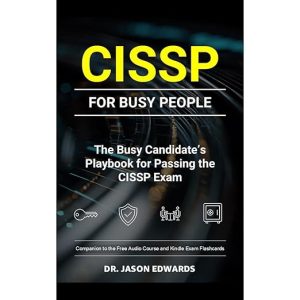
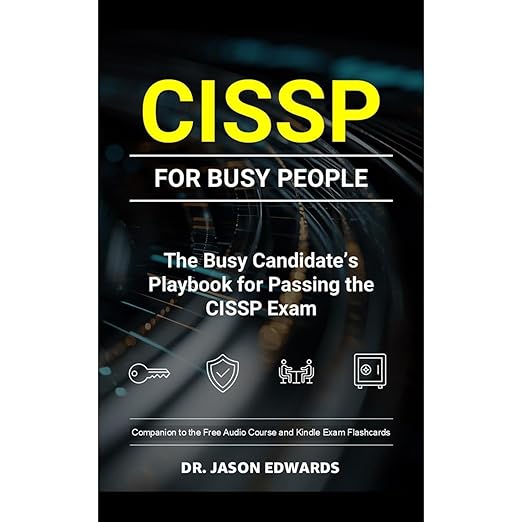
How long should a shortcut be? This audiobook runs twenty-two hours and twenty-one minutes, and its title promises to respect a crowded schedule. Both facts are on the same product page, and reconciling them is the first job any buyer has. Jason Edwards is the author, the release is dated February 2026, it is independently published, and it sits inside a set called Bare Metal Cyber Study Guides. Where a performer's name would sit, the listing prints Virtual Voice, meaning a synthetic reading.
What the book promises is a change of posture rather than a pile of facts. The description argues that the exam rewards "judgment, priorities, and risk-based decision-making", and that the guide teaches you to think the way the exam expects "across all eight domains". That framing matters, because a candidate can easily arrive treating certification as vocabulary acquisition, and this one says the vocabulary is the least of it.
Spotting What a Question Is Really Asking
Pedagogy is specific enough here to judge. Four of the listed promises do real work: plain-English explanations of core concepts, mental models that connect the domains "so the material stops feeling random", the manager mindset of risk, policy, governance and business impact, and instruction in "How to spot what the question is really asking". The last of those is the one worth paying for. The description implies an exam where more than one answer can be defended and the test is which one a responsible manager picks first. A book that teaches the reading of the stem is teaching the actual skill under test.
The fifth promise, "Common traps and why smart people miss them", is the other honest one, because it concedes something study guides usually will not: that failure here is rarely ignorance. The one written notice on this page agrees, describing a book that focuses on "the mindset behind the CISSP exam: risk, priorities, and thinking like a security manager" and saying the connection between the eight domains made everything "feel less scattered and more like a system". That reviewer's account confirms the description's promise rather than testing it, which is all a sample of one can do.
Synthetic Reading Struggles Most With Quoted Stems
Treat the runtime as a feature, not fine print. Certification study is one of the few reading tasks where sheer repetition beats comprehension speed, and a long recording is a repetition machine: the same domain heard three times on three commutes will lodge in a way one careful read-through will not. Candidates who already own a doorstop reference and cannot face opening it again have a genuine use for a version they can run while doing something else. That is the strongest case for this format, and it is a real one. The set it belongs to, Bare Metal Cyber Study Guides, signals the same intent: a shelf of companions rather than a single definitive volume, aimed at people fitting study around work.
Against that sits the synthetic reading. Exam-prep prose is built from acronym strings, domain titles and quoted question stems, and those are precisely the places where a machine reading has least to give: no lift into a question, no drop into the analysis of it, no pause where a human reader would hold the beat that separates a trap from its answer. The description's own selling point is learning to hear what a question is really asking. Sample the passages where a stem gets taken apart, because that is where this production either helps or gets in the way.
Context helps here too. The description places this inside a wider system: a companion audio course through the Bare Metal Cyber Audio Academy, plus a separate exam e-book of practice questions for final review. That is worth knowing before you buy. This recording is the conceptual half of a three-part kit, and the drilling half lives elsewhere. Nobody should expect practice questions here, and nobody should expect this alone to carry them to a pass. Whether the other two components are worth buying is a separate decision the description does not help you make, since it names them without describing what either contains.
Twenty-Two Hours Is Not a Short Book
The title and the running time pull against each other, and buyers should decide that argument for themselves. Twenty-two hours is the better part of a full day of audio, and the description's own line about "a structure designed for busy schedules" is about chunking rather than brevity. I take the promise to be honest and easily misheard: this is a book organized so a busy person can make progress in fragments, not a short book. If you were hoping for a four-hour condensation before an exam next week, this is not that product.
The evidence base is thin, and the page says so plainly. One rating stands behind the 5.0 average and one written response sits beside it, filed about five weeks after release. Nothing about that is suspicious; the title is simply new. It does mean the aggregate carries no information yet. Beyond that, an audio-only study aid gives you no index, no search and no diagrams, which for eight domains of security material is a genuine handicap. Anyone serious about the exam should pair this with a text they can look things up in.
Governance Vocabulary Matters Before You Sit the Exam
Working security professionals preparing for certification while holding down the job are the readers this is built for, and the design fits them. Candidates on a second attempt, who already have the facts and keep losing points on judgment calls, are served just as well, since this book is concerned with how the exam thinks. Managers who need the vocabulary of governance and risk without sitting the exam at all will also get value, because the manager mindset the description keeps returning to is a workplace skill before it is an exam technique. Team leads briefing engineers on why a control exists, rather than which control it is, are close to the ideal reader.
A beginner in information security will not get what is needed here, since the book assumes you know what the domains contain and teaches you how to weigh them. And listeners who need a narrated experience with emphasis and pacing should sample carefully, because a synthetic reading of technical prose at this length is a specific taste. What remains is a serious, well-structured companion to a hard exam, offered on the clear understanding that the practice questions live in another product entirely.
Good to Know
How long is the CISSP For Busy People audiobook?
Just over twenty-two hours, close to a full day of listening end to end. The busy-people framing refers to a structure you can take in fragments across a commute or a gym session, not to a condensed running time. Plan the schedule accordingly.
Does this audiobook include practice questions?
No. The description places it inside a learning system alongside a companion audio course and a separate exam e-book that holds the practice questions and final review material. This one carries the concepts; the drilling is sold as its own product elsewhere.