Quick Take
- Performance: Nicole Fikes anchors the book's absurdist-meets-genuine doubleness, keeping Batya's dark humor rooted and the two sisters clearly differentiated.
- What it covers: Estranged sisters, found chaos in a lawless city, comedy shading into real emotional stakes.
- Feel: Manic, inventive, unexpectedly tender underneath.
- Our call: A newsletter serial turned genuinely complete novel, best for readers who want maximalist fantasy comedy with a real sibling relationship at its core.
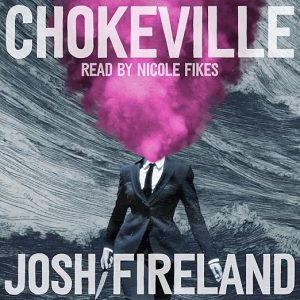
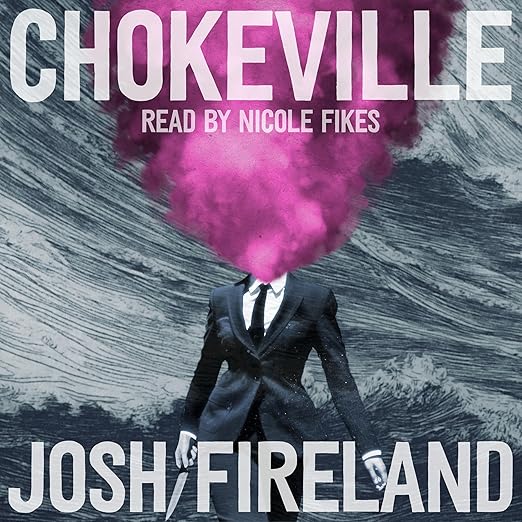
Newsletter serials rarely survive the jump to a polished, standalone novel, but Chokeville makes a strong case that Josh Fireland's version of Fort Hook was built for exactly this transition. The synopsis sets the tone immediately, welcoming listeners to 'a lawless port city teeming with gangsters and smugglers and dipshits,' and Batya, muscle-for-hire since childhood, is the perfect guide through it after her attempt to go straight running 'a very mediocre food truck' collapses spectacularly. At nine hours and fifty-seven minutes, narrated by Nicole Fikes, this audiobook version of Chokeville turns what began as a serialized story in Fireland's newsletter into a genuinely complete novel, according to readers who followed both.
Batya and Mina's Uneasy Alliance Anchors the Chaos
Reviewer Shawn M. Ritchie, who read the earlier in-progress newsletter version, confirmed the transformation directly, calling this 'polished-up take' a story where 'the relationship between Batya and her sister is ludicrous but also somehow rings very true.' That tension between absurdity and genuine emotional stakes is really the engine of the whole book: Batya, broke and on the run from local enforcers known as 'kneecappers,' is forced to team up with her estranged and 'rude' sister Mina for a week of escalating courier jobs, and the obstacles stacked against them, a pirate queen, a talking severed hand, a lonesome deer demon, keep the plot moving through pure comic momentum even as the sister relationship carries real weight underneath it.
Reviewer Timothy F. Canny made the pitch directly to anyone 'sick and tired of the publishing industry's constant diet of pablum and schlock'; reviewer Bill Barol, who also followed the newsletter version, called the finished book 'bonkers' in the most complimentary sense while noting it is fundamentally 'a story about sisters' underneath all the invented-world chaos. That combination, wildly inventive plotting wrapped around a genuinely felt family relationship, is the book's clearest achievement, and it's rare enough in comic fantasy that it is worth naming directly rather than assuming it from the genre alone.
The talking severed hand and the lonesome deer demon are not just gag props inserted for shock value; each gets enough characterization within its brief appearances to function as a real, if absurd, supporting character rather than a one-note joke, consistent with Ritchie's praise for 'the weird little world' Fireland has built. Fort Hook itself operates by its own internally consistent, if lawless, logic, gangs, smugglers, and a system of 'kneecappers' enforcing debts, that gives the comedy a grounded structure to bounce off of rather than existing in pure random chaos.
Fikes Keeps Batya and Mina Distinct and Real
Nicole Fikes anchors the novel's central doubleness, absurdist on the surface and emotionally genuine underneath, in a way that keeps both registers legible without either one undercutting the other. Batya's exhaustion and dark humor feel rooted rather than performed, which matters enormously in a book stuffed with deliberately ridiculous set pieces (a talking severed hand demands a specific kind of vocal restraint to land as funny rather than merely silly), and Fikes clearly understands that the comedy works best when the exhaustion underneath it sounds real rather than exaggerated for effect.
The differentiation between Batya and Mina is where the performance earns the most credit: keeping two estranged, prickly sisters distinct and legible across a full novel's worth of dialogue, while their relationship shifts from mutual irritation toward something closer to reluctant trust, requires a narrator who resists flattening either character into a single note. Fikes handles the book's tonal shift into genuine stakes during its final act particularly well, letting the comedy recede just enough for the emotional payoff to land without abandoning the wit that carried the first two-thirds of the story.
Chokeville's Densely Packed Plot Demands Audio Attention
This is a maximalist fantasy comedy, and listeners who prefer restraint or a tightly contained cast should know upfront that Fireland piles on invented threats, the pirate queen, the sword, the deer demon, the severed hand, at a pace that rewards a listener willing to go along with escalating absurdity rather than one looking for a lean, minimal plot. The synopsis's own closing aside, 'But I'm sure it'll work out fine,' is a fair preview of the book's wry, self-aware tone throughout, and listeners who don't enjoy that kind of narratorial wink should recalibrate expectations before settling in for the full nine-plus hours.
Because this began life as a serialized newsletter story, some structural looseness in the early chapters is worth watching for, episodic rhythms that occasionally show their seams even in the 'polished-up' version Ritchie describes. It settles into a more conventional novel shape as Batya and Mina's courier jobs escalate, but listeners expecting a tightly plotted structure from the opening minutes should know the serial origins are still faintly visible in how the first act accumulates incident before fully committing to its central throughline.
A book this densely packed with invented factions, threats, and running jokes places real demands on a listener's attention in audio specifically, since no page exists to flip back to when a minor character or earlier grudge resurfaces three hours later. Fikes's narration helps here by giving recurring characters and factions distinct enough vocal signatures to stay legible across the runtime, but listeners who tend to half-listen to audiobooks during other tasks may want to give Chokeville more focused attention than a simpler, single-throughline story would require.
Best for Newsletter-Serial Fans Who Want a Sibling Bond
Readers who want fantasy that treats world-building as an excuse for invention rather than exhaustive lore, gangster port cities, demons, talking body parts, all thrown in without excessive explanation, will find Chokeville's anything-goes energy genuinely refreshing rather than undisciplined. Timothy F. Canny's frustration with mainstream publishing's safer instincts is a useful signal here: this is a book for listeners actively looking for something weirder than what usually gets a wide release.
It is equally strong for listeners who want a real sibling relationship at the center of their fantasy comedy rather than pure spectacle; Batya and Mina's dynamic, ludicrous on its surface per Ritchie's own description, carries enough genuine feeling that the book works as family drama wearing a fantasy-comedy costume, not just the reverse.
Readers who enjoyed other newsletter-to-novel or web-serial success stories, where an author builds a devoted following one installment at a time before consolidating into a finished book, will find Chokeville's origin story part of its appeal, evidence of a world compelling enough to sustain readers through years of irregular serialized updates before it ever became this finished audiobook.
Anyone allergic to maximalist, everything-and-the-kitchen-sink fantasy plotting, or who wants a story that explains its own rules methodically before breaking them, may find Chokeville's rapid-fire invention exhausting rather than exhilarating; this is a book that trusts its listener to keep pace rather than pausing to catch anyone up.
Do I need to have read Josh Fireland's newsletter serial before listening to the Chokeville audiobook?
No. The audiobook is the polished, complete novel version, and reviewers who followed the original serialized newsletter version confirm this reads as a finished story on its own, not a collection of loosely connected episodes.
Is the Chokeville audiobook a standalone story or part of a series?
Nothing in the synopsis or reviews indicates a sequel or series positioning; it reads as a complete, standalone novel centered on one week of escalating courier jobs.