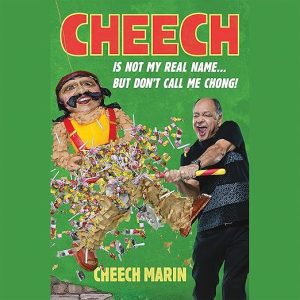
Cheech Marin's memoir makes an immediate, specific argument from its title: the man most people think they know by a nickname earned in childhood, a name that has nothing to do with the counterculture legend he became, is more interesting than the caricature. Cheech Is Not My Real Name, narrated by Marin himself, delivers on that argument across 7 hours and 29 minutes with the confidence of someone who has been performing his own material long enough to know exactly which pauses work and which stories need room to breathe. This audiobook is the correct format for this book. The printed version would lose the thing that makes the memoir most alive.
Richard Anthony Marin grew up in East Los Angeles during a period when the specific pressures of being a first-generation Mexican-American in mid-century California shaped both the humor and the ambition that would eventually produce Cheech and Chong. The memoir moves through the draft evasion years, the formation of the duo with Tommy Chong in Vancouver, the commercial breakthrough of Up in Smoke, and the subsequent solo career that included voice work in The Lion King and recurring roles in Jane the Virgin. But the book is organized less around a career timeline than around a set of interconnected arguments about what Marin has cared about across his life, and the Chicano art collection emerges as perhaps the most unexpected thread.
The Verdict, Briefly
The self-narration is the review's central fact. Reviewer Moo Shu noted that Marin narrates and tells his stories well, giving perspective on historical times like the Vietnam War era, and that observation understates what the audio format actually delivers. Marin's comedy has always been rooted in voice, in the specific cadence of a persona that draws from East LA vernacular, stoner timing, and the particular confidence of someone who knows the audience is on his side. In print, that cadence is approximated. In audio, it is present, and it changes what the anecdotes do. The draft evasion section, which in summary sounds like a series of lucky accidents, plays in Marin's narration as something between a hustle and a philosophy, carried by timing that the prose alone cannot convey.
The Chicano art collection sections are where the memoir most surprises. Reviewer Mike noted gaining new insight on the man and a new appreciation of Cheech and Chong's humble beginnings through to the reunions, but the collection story specifically is the book's most genuinely illuminating thread. Marin became one of the most significant collectors of Chicano art in the world, and the memoir traces how that commitment developed alongside the comedy career as a different form of the same cultural project. Hearing Marin discuss artists and artworks in his own voice, with the reverence and specificity of a collector who has spent decades building something, creates a different register than the comedy sections and demonstrates the memoir's tonal range.
The audiobook's 7-hour-and-29-minute runtime suits the material without overstaying. Marin writes and narrates in episodes rather than in a continuous narrative, and the episodic structure rewards audio listening because each section arrives as a set piece with its own internal rhythm. The formation of Cheech and Chong in Vancouver, told by the man who lived it with the timing of someone who has refined the story across decades of interviews, is substantially funnier and more textured in audio than any summary can suggest.
Reviewer PapaPhil called out the interesting anecdotes and one-liners kept amidst a well-written structure, and that balance, the ability to deliver comedy without sacrificing substance, is what distinguishes the memoir from a collection of road stories. The sections on the Lion King recording and on the specific experience of being the most visible Chicano face in mainstream entertainment during certain decades carry genuine cultural weight. Marin is self-aware about his position in American cultural history without being portentous about it, and his narration delivers that self-awareness with exactly the right amount of ironic distance.
Things to Know Before Starting Cheech Is Not My Real Name
Listeners expecting the memoir to be primarily a Cheech and Chong retrospective will need to recalibrate. Marin is thorough about the partnership, but the memoir consistently positions the duo as one chapter in a longer story rather than as the defining frame for his life. The break from Chong, the subsequent solo work, and particularly the Chicano art project receive extended attention that a pure comedy memoir would not grant them. This is not a weakness, but it does shift the center of gravity away from Up in Smoke and toward a more complicated portrait of a man who built an identity out of refusing to be only the person the audience expected.
The memoir is also more reflective than the brand might suggest. Marin discusses the draft evasion of the Vietnam War years with honesty about what it cost and what it enabled. The sections on family, including the anecdotes mentioned in the synopsis about serious illness and crisis that appear early in the book, are handled with more emotional directness than the comedy register would lead you to anticipate. Marin's narration handles those tonal shifts without strain, which is itself a performance skill worth noting.
Who Will Get the Most From It
Cheech and Chong fans are the obvious audience, but this audiobook rewards listeners who approach it with no prior devotion to the comedy duo and simply want a memoir narrated with genuine performance skill. The Chicano cultural history embedded in Marin's story, the East Los Angeles of his youth, the specific political climate of the counterculture years, the mainstream breakthrough of Chicano art, gives the memoir substance beyond nostalgia. Listeners who prefer their celebrity memoirs straightforward and chronological may find the organizational looseness frustrating; listeners who respond to the rhythm of a natural storyteller performing their own material will find the 7 hours and 29 minutes consistently alive.
Quick Take
- Read by: Cheech Marin narrating his own memoir is the only version of this audiobook that makes sense. His comic timing is intact, his self-deprecation lands cleanly, and the specific rhythms of Chicano East LA vernacular that shaped his comedy come through in ways no outside narrator could replicate.
- At its heart: Counterculture identity, the making of a comedy legend, Chicano culture and artistic legacy
- Vibe: Warm, funny, and more reflective than the Cheech and Chong brand would lead you to expect
- Short version: Cheech Marin's memoir earns its audio format through a self-narration that turns anecdote into performance.