Before You Press Play
- At its heart: Titanic rescue, leadership under pressure, survivor trauma
- Vibe: Intimate and emotionally weighted, with one reviewer calling it a little dull
- Short version: A worthwhile rescue-focused angle on the Titanic story, undercut by AI narration and at least one clearly mismatched review on its page.
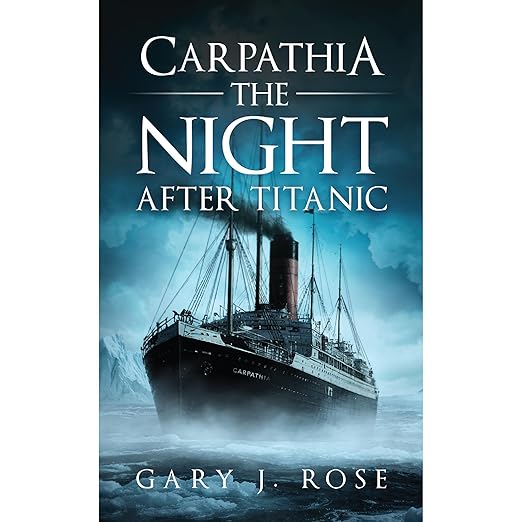
The most notable thing about this audiobook happens before a single word of the story starts: Carpathia is narrated by Virtual Voice, Amazon's AI narration tool, rather than a credited human reader, which is worth knowing going in for a book built around real rescue and real trauma. Gary J Rose's account runs four hours and forty-five minutes, short enough to finish in a single sitting, and it was independently published in February 2026, which likely explains why the credit shows an AI voice rather than a studio-cast human narrator.
A Five-Star Review About an Entirely Different Book
On the night of April 14, 1912, the synopsis explains, the RMS Carpathia was an unremarkable passenger ship under Captain Arthur Rostron, far from the scale of the Titanic and carrying no expectation beyond a routine crossing until a distress signal changed everything, and the story carries real weight from that moment forward. Rostron ordered the ship turned into ice-choked waters, pushed the boilers beyond safety limits, and diverted heat and hot water from passenger cabins to reach the wreck faster. Rodolfo Costa's review captures why that framing works: rather than another retelling of the sinking itself, the book shifts the spotlight to what happened after, centering the Carpathia and the emotional weight carried by its crew and the survivors they pulled aboard. Costa's review adds that the perspective shift alone makes the narrative feel fresh, since most Titanic-adjacent media keeps its focus fixed on the sinking ship rather than the vessel that came to help.
Bruce Diamond's review frames the book as a tribute to the unsung heroes of the disaster, crediting the author with describing acts of sacrifice around Rostron's decision to plow through treacherous ice fields toward the distress calls. Not every reader came away as convinced. Ulrich's review is blunt, calling the book a little dull and noting it is a dramatic rendition of historical events rather than a straight factual account, adding that it is passably well written with decent editing and easy to follow, but stopping short of recommending it to anyone. Ulrich does concede the book has some good parts, which keeps the review from reading as a total dismissal even while landing well below Costa and Diamond's five- and four-star reactions. That split between Costa and Diamond's enthusiasm and Ulrich's lukewarm take is worth knowing before you commit.
One review on this page deserves a direct flag: a five-star review credited to YF and titled simply Carpathia describes a region layered with history, culture, and shifting identities, discussing political change, migration, and resilience with no mention of the Titanic, Rostron, or a rescue at sea anywhere in it. That content reads as though it belongs to an entirely different book and should not be treated as a genuine comment on this one.
Crew Turned Nurses, Doctors, and Counselors
The core event is genuinely dramatic on its own terms. Rostron's decision to risk the Carpathia itself, at maximum speed through dangerous water, to reach a ship he could not save in time but arrived close enough to pull more than seven hundred survivors from the freezing Atlantic, is the kind of leadership-under-pressure story that does not need embellishment. Alohaworld's review specifically credits the book with covering aspects of the rescue not widely known, including both the captain's perspective and the perspective of survivors, and singles out the difficult recovery and trauma that followed as material most Titanic-focused accounts skip past entirely. Bruce Diamond's review lands on the same three words to describe the book's throughline: compassion, urgency, and leadership, which suggests the reviewers largely agree on what the book is trying to accomplish even where they differ on how dull or engaging the execution is.
The aftermath sequence described in the synopsis is where the book's angle pays off most: crew members becoming nurses, doctors, and counselors on the fly, ordinary spaces turned into infirmaries and shelters, leadership shifting from speed to mercy once the rescue itself was underway. That is the part of the story Costa's review singles out as making the narrative feel intimate and deeply human rather than another procedural account of a famous disaster.
A Synthetic Voice for a Real Crisis
Virtual Voice narration is the biggest practical consideration here. A synthetic voice reading a story about real people in crisis is a different listening experience than a human narrator interpreting that same material, and none of the visible reviews weigh in on how that choice lands, since none discuss narration or performance at all. Listeners sensitive to AI narration on emotionally weighted nonfiction should know that going in rather than discovering it mid-listen.
Ulrich's assessment that the book suffers from being a little dull is also worth taking seriously alongside the more enthusiastic reviews, particularly since Ulrich frames the book explicitly as a dramatic rendition rather than a rigorously sourced history, which lines up with Alohaworld's description of it as an interesting historical novel. If you want tightly footnoted nonfiction, temper expectations accordingly. This is also listed as the second entry in an After Titanic series, so it may assume some familiarity with a first installment not covered here. Independently published titles like this one also tend to skip the layered editorial and production process a major publisher would apply, and Ulrich's mention of decent editing alongside a dull overall impression is consistent with a book that is competently assembled without being especially polished.
Approach That Five-Star Review With Skepticism
Listeners drawn to the Titanic story who want the rescue angle rather than another account of the sinking itself will get the most from this pick, especially anyone curious about Rostron's leadership and the human cost the survivors and crew carried afterward. Alohaworld and Bruce Diamond both point to details about the aftermath that are genuinely underexplored territory in most Titanic media, which makes the book's narrow four-hour-plus runtime feel purposeful rather than thin.
Skip it if AI narration is a dealbreaker for you, since Virtual Voice reads the entire book rather than a credited human performer, or if Ulrich's dull, dramatized-rendition critique sounds like a bigger problem than Costa and Diamond's praise can outweigh. Approach the five-star review credited to YF with skepticism, since its content does not appear to describe this book at all.
Questions Listeners Ask
Is this audiobook narrated by a human reader or an AI voice?
It is narrated by Virtual Voice, Amazon's AI narration tool, rather than a credited human performer. None of the visible reviews comment on how that choice affects the listening experience, so there is no reader feedback available on the narration itself.
Does this audiobook focus on the Titanic's sinking or on the Carpathia's rescue?
It focuses on the rescue. Rodolfo Costa's review specifically notes the book shifts away from the ship itself to center the Carpathia, Captain Arthur Rostron, and the crew who pulled survivors from the water, along with the emotional aftermath that followed.
Is this audiobook straight nonfiction or a dramatized retelling?
It leans dramatized. Ulrich's review describes it as a dramatic rendition of historical events rather than a strict factual account, and Alohaworld's review calls it an interesting historical novel, both suggesting some narrative embellishment layered around the real historical events being depicted.
Are all the reviews shown for this audiobook actually about the Carpathia rescue?
Not all of them. One five-star review credited to YF discusses a region's history, culture, and migration with no mention of the Titanic or a rescue at sea, and appears to describe a different book entirely rather than this one.