Shaw-Parker Sustains Alice's Indecision for Thirty-Four Hours
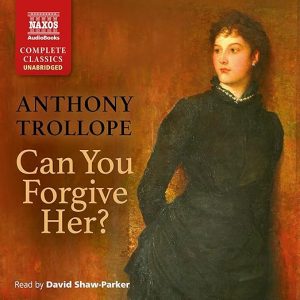
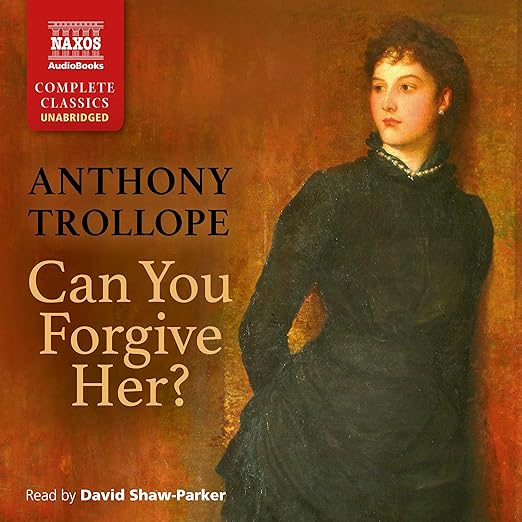
Can Alice Vavasor be forgiven for changing her mind about the rest of her life, not once but twice? Anthony Trollope built an entire eight hundred page Victorian novel around that question in 1864, and this audiobook, the opening volume of his six book Palliser series, still finds real tension in Alice's inability to choose between the kind, dull Mr. Grey and her dangerous, magnetic cousin George. David Shaw-Parker narrates, and across nearly thirty four hours he has to sustain a novel that first reached readers in monthly serialized installments, meaning Trollope wrote it, deliberately, to be lived with slowly rather than consumed in a single sitting.
Alice Vavasor is young, attractive, and financially secure, three things Trollope makes clear should theoretically make her decision easy, which is exactly the point. Torn between security with Grey and the dangerous excitement George represents, she keeps reversing her own engagements, to the genuine detriment of the men who love her and to her own reputation among Trollope's wider cast. One listener review calls the book crisp and engaging despite its serialized origins, brimming with romance, humor, and pathos in roughly equal measure, a fair summary of how Trollope balances Alice's indecision against a much broader social comedy playing out around her.
The title itself is unusual for Victorian fiction specifically because it addresses the reader directly, as a question rather than a description, essentially asking the audience to sit in judgment alongside the narrator on Alice's repeated changes of heart. Trollope uses that same direct-address device sparingly across his wider body of work, which makes its appearance here a deliberate signal that Alice's indecision is meant to provoke real debate among readers rather than simple sympathy or condemnation.
Running This Marathon at an Even Pace
Shaw-Parker's task across this runtime is less about big dramatic swings than sustained control: Trollope's prose moves through drawing rooms, political maneuvering, and interior second guessing in long, patient sentences that reward a narrator who does not rush toward the next plot beat. One reviewer, clearly a serious Trollope reader working through the wider Barsetshire and Palliser universe, notes that the London parliamentary politics and romantic complications held their interest as much as Trollope's rural settings elsewhere, crediting the reintroduction of Plantagenet and Lady Glencora Palliser specifically as a highlight.
As the opening entry in a six book series, this audiobook also functions as a genuine introduction to characters Trollope clearly planned to develop across an entire multi novel arc. Lady Glencora Palliser, mentioned only briefly here relative to her later prominence, gives long haul listeners a reason to continue past this first volume specifically, since Trollope was building political and marital storylines meant to pay off much later in the series.
Trollope wrote at an almost unbelievable pace across his career, reportedly holding himself to a strict daily word quota before his day job at the British Post Office even began, a job in which he is credited with introducing the pillar box, the now-familiar British street mailbox, to the country. That disciplined, workmanlike relationship to writing shows up in the prose itself: patient, evenly paced, more interested in getting the social observation right than in showing off, which is exactly the register Shaw-Parker's steady narration serves well across this long runtime.
Trollope's reputation among his Victorian contemporaries was famously workmanlike rather than romantic, a writer more interested in psychological accuracy than the sweeping moral certainties Dickens sometimes reached for, and Can You Forgive Her? shows that instinct clearly. Alice is neither punished narratively for her indecision nor simply rewarded for eventually choosing correctly; Trollope stays far more interested in tracing exactly why a rational, intelligent woman would reverse a decision twice than in delivering a tidy moral verdict on her choices.
Sustaining a single listener's attention across nearly thirty four hours of that kind of patient psychological tracing is a genuine narration challenge, closer to running a marathon at an even pace than sprinting through dramatic peaks. A narrator prone to over-dramatizing minor scenes would exhaust a listener long before volume two of the Palliser series even becomes a consideration, which makes Shaw-Parker's steadier, less theatrical choices the right ones for a novel built this way. Even the novel's occasional comic subplot, threaded through the more serious main romance, benefits from that same restraint rather than a broader shift in vocal register.
Filler Sections Are the Serial's Legacy
This is genuinely long, and it is worth being honest about what that means for pacing: a novel originally released in monthly serialized parts carries some of that structure into the finished book, meaning certain sections function almost as recaps or scene setting before a new development arrives, what one reviewer diplomatically calls some filler alongside very subtle writing. Listeners expecting a tightly plotted single arc rather than a wide social panorama should adjust expectations before committing to nearly thirty four hours.
One reviewer's complaint about a specific edition's missing real page numbers and table of contents issues applies to a print or ebook release rather than this audio production, worth noting only so listeners do not mistake a print edition complaint for a warning about the audiobook itself.
This is the first of six Palliser novels, and listeners should understand the commitment implied by starting here: Trollope planned the series across decades of his characters' lives, meaning plotlines introduced in this opening volume, particularly anything involving Plantagenet and Glencora Palliser, are built to pay off books later rather than within this single novel's runtime. That is a very different structure from a standalone Victorian novel, closer to committing to a long-running series than a single self-contained classic.
Choose Safety or Choose Passion, Trollope Asks
Recommended for listeners already comfortable with Victorian serialized fiction's patient pacing, and especially for anyone who has enjoyed Trollope's Barsetshire novels and wants to begin his equally celebrated Palliser series from its true starting point. Readers drawn to nineteenth century social comedy that takes women's limited life choices seriously as dramatic material, rather than as a simple romantic obstacle, will find real substance in Alice's dilemma.
This is also a strong choice for listeners specifically interested in how Victorian fiction handled women's constrained life choices as serious dramatic material rather than melodrama, since Alice's dilemma, choose safety or choose passion, gets treated with genuine moral complexity rather than a simple correct answer Trollope hands the reader.
Skip this one if you want a brisk, plot forward listen or have not yet built up patience for nineteenth century pacing, since nearly thirty four hours of Trollope's unhurried social observation is a serious commitment even by classic literature standards.
Before You Press Play
- Narrator: David Shaw-Parker sustains nearly thirty four hours of Trollope's patient, socially observant prose with the control long Victorian serialized fiction demands.
- Subjects: a woman's limited life choices, indecision and reputation, Victorian political and marital maneuvering
- Tone: Patient, socially observant, wry rather than melodramatic
- Bottom line: A substantial but rewarding entry point into Trollope's Palliser series for listeners who enjoy Victorian fiction's slower, socially attentive pace.
Good to Know
How long is this audiobook, and is that typical for Trollope's writing?
It runs nearly thirty four hours, which is long even by Trollope's standards, reflecting the novel's original monthly serialized publication format.
Do I need to have read Trollope's Barsetshire novels before starting this audiobook?
No prior reading is required, though listeners already familiar with the Barsetshire novels will recognize the reintroduction of Plantagenet Palliser from that earlier series.
Is this the right entry point for the Palliser series, or should I start elsewhere?
This is the true starting point. Can You Forgive Her? is the first of six Palliser novels, so beginning here sets up the political and marital storylines that develop across later books.
Does the audiobook narration handle Trollope's long Victorian sentences well?
Yes. David Shaw-Parker's pacing favors sustained control over dramatic flourish, which suits Trollope's long, patient sentence structures better than a more theatrical reading would.