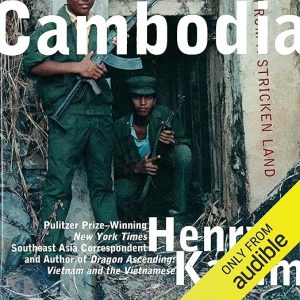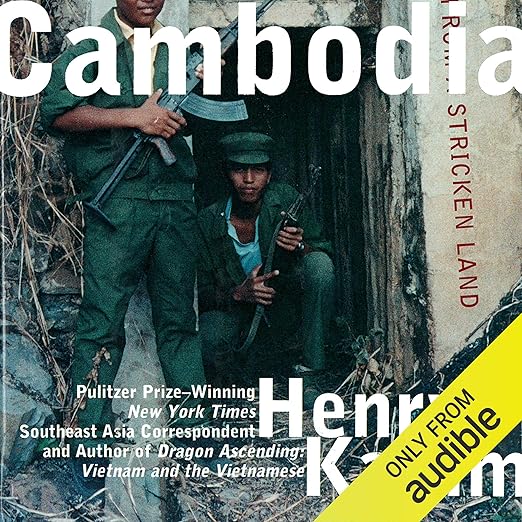
Henry Kamm spent three decades covering Southeast Asia for the New York Times, and this audiobook is what a career like that leaves behind. The description calls it a factual and personal account, which is the honest label: a Pulitzer winner who was in the room for much of it, writing down what he saw and what the people responsible told him. Audible Studios recorded it in February 2013, Walter Dixon is credited as reader, and it runs eight hours and thirty-eight minutes.
Three Decades of Reportage, Maybe Closer to Forty
Reportage and history are different instruments, and it helps to know which one you are picking up. Kamm is not building a scholarly chronology with a bibliography behind every claim. He is telling you what he observed across decades of visits, who he interviewed, what they said, and how the pieces looked to somebody standing inside the story rather than reading about it afterward. That proximity is the whole value proposition, and it explains both the strengths and the shortcomings that readers keep identifying. A correspondent's memory is organized by encounter rather than by decade, which produces vivid scenes and an argument that wanders. You gain access nobody else had and lose the tidy structure a historian would have imposed.
A five-star from October 2015 calls it the work of a lifetime and means it structurally rather than sentimentally, citing depth of experience with the central players and a sweep that runs from the 1950s to the late 1990s. That response also gives you the emotional weather: intensely sad, with little reason for hope offered by the time the 2011 afterword arrives. Worth noting a small discrepancy while you are there. The publisher copy credits Kamm with three decades of observation; that reader counts more than forty years of engagement with the country. Neither figure appears anywhere else on the record to settle the question.
Explaining Why, Through Encounters Suited to Listening
Causation is what this book does better than the alternatives. A four-star from September 2003 describes the effect precisely: a well-written if somewhat basic account of the events that led to the near-total destruction of a nation which, before 1970, was among the most unspoiled places in the world, producing a repeated reaction of understanding at last why things went the way they did. Plenty of books tell you what happened in Cambodia. Fewer of them leave you feeling that the sequence makes sense. Getting a reader from atrocity to explanation without excusing anybody is difficult work, and the fact that a four-star response singles it out as the book's central achievement says more than the marketing copy manages in its three sentences.
The access is the other reason. Kamm met the key figures, and a correspondent's account carries details a document-based history cannot reach: how someone behaved in an interview, what a capital city felt like in a particular month, which official explanations collapsed on contact. That material suits listening. Anecdote and encounter are exactly what the ear holds on to, and the eight and a half hours move through a sequence of them rather than through an apparatus of dates.
Cluttered by Some Accounts, Dated by Others
Substantive criticism arrives in a three-star posted in February 2013, which grants the value of an outsider's personal perspective and then names the structural problem: the overall story reads as cluttered and uncoordinated. That response recommends it as a second or third book on the subject, after you have studied the history elsewhere, rather than as an introduction. For an audio edition, that warning carries extra weight. A cluttered chronology is far harder to hold together by ear than on a page you can turn back through.
Time has only sharpened the other limitation, raised by a two-star from January 2013. The history is strong through the 1990s, that reader says, but the country has changed dramatically since and has moved past many of the problems the book treats as permanent. The recording itself now dates from more than a decade ago. Read it as a closed historical account rather than as a portrait of a place you might visit. None of that damages the reporting; it simply changes what the book is for. The chapters covering the collapse have not aged at all, while every sentence written in the present tense has quietly become past tense since.
No Stated Years, a Tourism-Brochure Phrase
The listing does the book no favors either. A single-word title with no subtitle tells a browser nothing, and the description never states which years the account covers or where it stops. Everything anybody knows about the scope of this book has been supplied by readers rather than by the publisher. The copy also reaches for a phrase about this magic land's past and present, which belongs to a tourism brochure and sits oddly on material this bleak.
Readers Who Already Have the Outline Fit Best
The best fit is a reader who already has the outline and wants the texture: someone who knows roughly how the region came apart and would like to hear it from a journalist who kept going back. Travelers preparing for a visit will get context that no guide supplies, and anyone interested in how foreign correspondents actually work will find the method as interesting as the subject. The Asia tag and the history shelf are both accurate, if unhelpfully broad. Students of journalism have a particular reason to pick it up, since the book doubles as a record of how a beat reporter builds understanding across decades rather than across a single assignment.
Readers wanting a clean chronological education should start somewhere more organized and come back to this. Its story stops in the late 1990s, with an afterword from 2011 and a recording from 2013, so plan your expectations around a country that has kept moving since the last page.
In Brief
- Narration: Walter Dixon is credited across eight and a half hours of first-hand reporting, where the names, factions and shifting alliances arrive faster than a listener can write them down.
- Themes: a correspondent's decades in Southeast Asia, national collapse and its causes, memory and aftermath
- Mood: Sober, unsparing, occasionally exhausted
- Verdict: Valuable as a witness account for readers who already know the outline, and a poor place to begin.
Frequently Asked Questions
How much of the audiobook deals with the years around year zero?
A great deal. A five-star from September 2012 rates it among the best overviews of the pre and post year zero paradox in the country's history, which is the pivot the whole account turns on. Kamm treats the period as the consequence of everything that preceded it rather than as an isolated horror.
Who reads the audiobook and how long is it?
Walter Dixon takes the reading credit on the Audible Studios edition from February 2013, a little under nine hours in total. That is a moderate length for a book covering roughly half a century of a nation's history through one journalist's repeated visits and interviews.
Is this a memoir or a history?
Both, deliberately. Publisher copy calls it factual and personal, and Kamm builds the book from his own observations rather than from archives. Expect the reporter to be present in the narrative, describing who he met and what he made of them, alongside the wider political story.
Why is it filed under Asia rather than a country category?
The record carries a broad regional tag, which undersells it. A book this specific about one country, written by a correspondent whose beat covered the whole of Southeast Asia, deserves better shelving, and the wide tag is one more reason this title is harder to find than it should be.