The counter on this audiobook has recorded exactly one rating, and the badge above it reads 4.6. A single voter can only produce a whole number, so the displays available at that population are one star, two, three, four or five, and 4.6 sits nowhere among them. Five separate people have nonetheless written full responses further down the page. Whatever is pooling ratings behind this listing is not counting what it pools, and the first useful thing to know about Patrick Hutchison's cabin book is that the numbers stapled to it mean nothing at all.
A Subtitle Dropped, and Discoverability With It
Wit's End is the address, and the name does double duty. A gravel road in the mossy woods of the Cascade Mountains in Washington state, and at the end of it a hundred and twenty shabby square feet of off-grid fixer-upper, bought on a whim by a man leaving an office job with, in the copy's own assessment, nearly zero carpentry skills. Six years of renovations follow. The book grew out of a piece Hutchison wrote for Outside Magazine, and the expansion from article to memoir shows in the best possible way, since the incident is still the engine but six years give it somewhere to travel.
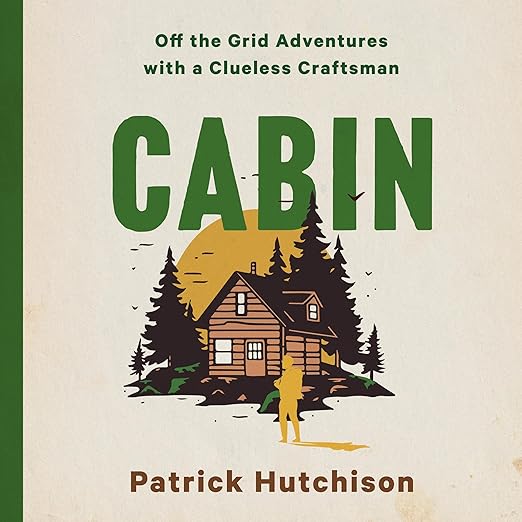
CABIN is the whole of the title this listing prints. A written response names the book as CABIN: Off the Grid Adventures with a Clueless Craftsman, which is the full title and a considerably better one, because it tells a browser what the thing is and admits the joke it runs on. The listing keeps none of it. Against every other cabin memoir on the shelf, dropping a subtitle costs discoverability, and on a page where the rating badge is already meaningless it also costs the one line of copy that would tell somebody scrolling past whether this is a manual or a comedy.
Read by the Author, a Defensible Decision
Macmillan Audio put a trade quote at the very top of the description, from AudioFile, calling this a great audiobook for nature lovers, carpenters, and people who dream of their hobby becoming their day job. That third group is who the book is really for. What makes it work is that Hutchison keeps the incompetence honest. He is not a craftsman discovering a hidden gift; he is a person with no skills making the decisions a person with no skills makes, and finding out what six years of that teaches somebody. The copy calls it a love story of a place, of possibilities, and of seeing what could be instead of what is, and for once the jacket language is exact.
A narration disclosure opens the description ahead of everything else: this program is read by the author. That placement is a decision, and on this book a defensible one, because the whole appeal lives in the distance between the person telling the story and the competence the story keeps demanding. A hired reader would smooth that distance out. Hutchison across eight hours and thirty-one minutes will not. The trade line quoted on the same page is at least an assessment of a recording rather than of a manuscript, which is more than most listings on this shelf manage to offer anybody.
A Trade Carpenter Nearly Bailed, Then Stayed
Most instructive on this page is a response from a trade carpenter who nearly bailed out because the work described came across as too amateurish, then stayed for the writing and for the widening scope of skills, recommended it to everyone, and finished by wishing it ran longer and hoping for a sequel. That single entry holds the fault line and the compliment together. If you build things for a living, the early hours will test your patience, because the book is not written for you. It is written for the person who has never held a circular saw and is quietly wondering whether that disqualifies them from owning a hundred and twenty square feet of trouble.
Nothing here is a how-to, and the Architecture tag on this listing will mislead somebody. The description mentions no plans, no material lists and no cost breakdown for six years of weekend work, and no supporting file arrives with the download. Renovation is the setting rather than the syllabus. What the book actually tracks is what the copy calls a love story of a place and of possibilities, plus the specific pleasure the description names outright, which is biting off more than you can chew. Come for the sequence of repairs and you will find yourself listening to a memoir instead.
Unreliable Listing, Genuinely Good Eight Hours
This one is for the person with a browser tab open on a listing for something cheap and derelict. The book is the closest thing to an honest preview of what that purchase turns into: not a montage, but six years, plenty of them spent doing a job wrong and then doing it again. Nature listeners get the mountains and the moss. Anyone who has fantasized about a hobby quietly becoming the day job will find the description pointing squarely at that, and will recognize themselves in the audience the page names.
Leave it alone if you want the practical version, because a carpentry manual this is not, and the tag suggesting otherwise belongs to the listing rather than to the author. The second warning is tonal. The stakes stay low by design, so anybody who needs a memoir to escalate will find this one contentedly refusing to. Everything surrounding the book is unreliable, from a badge that could not have been produced by one voter to a title missing its second half. The eight and a half hours underneath all of that are genuinely good. Pick it up the next time you catch yourself standing in front of something you have no business buying.
Before You Listen
Is this audiobook self-narrated?
Yes, and the description says so in its opening line, ahead of any account of the book itself. A trade publication quote further down assesses the recording rather than the manuscript, which is unusual on a listing like this one and deserves rather more weight than a star count nobody can reconstruct.
Does the audiobook include plans or photographs of the cabin?
Nothing of the kind is listed. No supporting file comes with the download, and the description never mentions images, drawings or a materials list anywhere. For a book about turning a tiny derelict building into somebody's retreat, that is the main thing a printed edition might have added.
How much carpentry knowledge does a listener need?
None, and the book assumes none. The copy is blunt that the author began with nearly zero skills, so technical vocabulary arrives as it is learned rather than as a prerequisite. Anyone already working in the trades is likelier to be impatient with the early going than lost anywhere in it.