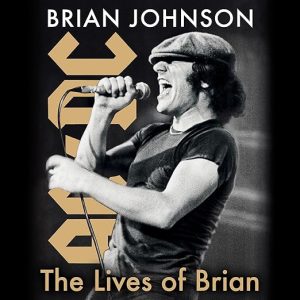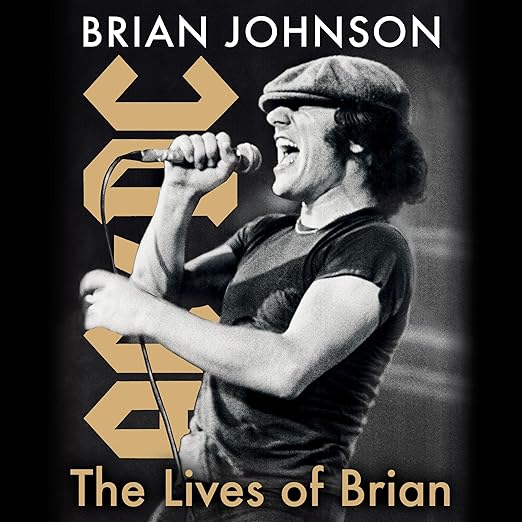
Rock memoirs have a tendency toward inflation. The bigger the career, the more the story has to work to remind you it was actually extraordinary. Brian Johnson's audiobook The Lives of Brian does the opposite: it is consistently self-deflating, grounded in the specific texture of growing up in Newcastle Upon Tyne, failing at things, trying other things, and then quite improbably ending up behind the microphone for what would become the best-selling hard rock album ever made. This audiobook benefits enormously from Johnson reading his own material, and the result is nearly ten hours of someone telling you something true in a voice that makes you believe it without working to do so.
The Review
Johnson structures the book around the multiplicity of lives implied by the title. He was a choirboy before he was a glam rocker. He was a glazier working a blue-collar trade before he was ever in a recording studio. He was the singer of a mid-tier band called Geordie who had a couple of hits and then fell apart, before he was the man who replaced Bon Scott. Each of those lives is treated as complete in itself rather than as a preamble to the famous chapter, which is what gives the memoir its unusual shape and its unusual honesty. Johnson is not writing backward from his most famous moment to arrange everything else into a preordained ascent.
The section on his father deserves particular mention. Born to a steelworker and WWII veteran with an Italian mother, Johnson's portrait of his Newcastle childhood is rendered with the kind of detail that only comes from someone who lived it and retained the texture of it: the cold, the hierarchy of the town, the church choir, the particular flavor of English working-class ambition in the postwar decades. One reviewer noted that reading about Johnson's upbringing made their own Detroit childhood feel "a freaking cakewalk" by comparison. That contrast is not about misery tourism; it is about a formative environment that produced a very specific set of values around work, loyalty, and authentic performance that Johnson carried into every version of his career.
The Geordie years are also given room that a lesser memoir would not have spent on a chapter most readers would consider the prologue. Johnson was proud of what Geordie built and honest about why it ended, and the treatment of that period as genuinely significant rather than just context for what came later is characteristic of the book's refusal to organize everything around the AC/DC moment.
The Best Parts of The Lives of Brian
Johnson's self-narration is the primary reason this audiobook works as well as it does. One reviewer wrote that he "sounds like a great guy," and the reading confirms that impression without the book ever making a case for it directly. He is funny about his father, self-deprecating about the Geordie years in a way that never turns into false modesty, and reverent about Bon Scott not in a mournful way but in the way of someone who understood what that loss meant to the other people in the room and respected it accordingly.
The Bon Scott replacement narrative is handled with particular care. Johnson does not dramatize his audition or manufacture a story of destined arrival. He received a call. He went to London. He sang. Within days he was in a studio with Angus and Malcolm Young, Cliff Williams, Phil Rudd, and producer Mutt Lange, working on what would become Back in Black. The speed of it, the casualness of it from Johnson's perspective, is more compelling than a heroic version would be. He was the right person at the right moment, and he knew it only in retrospect.
The Caveats
The book ends before the full span of Johnson's AC/DC career. The worldwide tour supporting Back in Black is covered, but the decades that followed, the continued albums, the hearing loss that eventually forced Johnson off the road, the departure and return, are not part of this volume. Listeners who want the full arc of his time with AC/DC will find this memoir covers the origin and the early years rather than the complete story. That gap is a genuine limitation for anyone expecting a comprehensive career retrospective.
The memoir is also more anecdotal than analytical. Johnson does not examine the music industry with a critical eye or provide insider accounts of the business dimensions of rock at that scale. He is telling personal stories, not writing industry critique, which means the book's pleasures are in the texture of specific memories rather than in structural insight into how careers at that level actually work behind the scenes.
The chapter on Johnson's time in the church choir is also worth noting for what it reveals about the origins of his vocal approach. His voice, distinctive and wide-ranging in a way that made it right for the material he would eventually record, was shaped by choral training before it was shaped by anything rock had to offer. That early musical formation connects the choirboy and the rock vocalist in ways that Johnson traces without overstating, letting the reader draw the line between the two.
Who Should Listen to The Lives of Brian
This audiobook is an obvious choice for AC/DC fans who want to understand the man behind the cap rather than the mythology around the band. It will also work well for readers of rock biography who prefer the unvarnished, anecdote-driven approach to the ghost-written polished version. Listeners who are not already invested in AC/DC or classic rock history will find the pre-fame chapters charming but may feel the payoff requires more existing attachment to the music than they bring to the listen.
Before You Press Play
- Voice: Brian Johnson narrates his own memoir with the same rough-edged Newcastle warmth that defines his stage presence: self-deprecating, specific, and genuinely funny.
- Big ideas: working-class ambition and musical identity, the weight of replacing a legend, the luck and timing of rock history
- Atmosphere: Unpretentious and affectionate, with the honest texture of a man telling his own story without needing it to be more than it was.
- Worth it?: A memoir that earns its warmth through specificity rather than myth-making, and benefits enormously from Johnson reading it himself.
Good to Know
Does Brian Johnson narrate the audiobook himself and how does that affect the experience?
Johnson reads the entire memoir himself in his distinctive Newcastle accent, and it is a significant asset. The self-deprecating humor, the working-class candor, and the warmth toward specific people all land more genuinely in his own voice than they would in a third-party reading.
How does The Lives of Brian audiobook handle the story of replacing Bon Scott?
Johnson treats it with directness rather than drama. He describes the call, the audition, and the immediate studio work on Back in Black with an almost casual honesty that makes the story more interesting than a mythologized version would be. He is respectful of Scott without making himself a secondary figure in the telling.
Is this audiobook accessible for listeners who are not already AC/DC fans?
The pre-fame chapters about Johnson's Newcastle childhood and the Geordie years work well as standalone memoir. The Back in Black context benefits from some familiarity with the band's significance, though Johnson provides enough framing that complete newcomers can follow the stakes involved.