At a Glance
- Performance: Carol Burnett narrates her own book, and that is the only casting that could possibly work, her comic timing, warmth, and unmistakable voice make every anecdote feel like a front-row seat.
- What it covers: Television history, creative collaboration, the alchemy of live comedy
- Feel: Warm, funny, and genuinely celebratory
- Our call: An essential listen for fans of The Carol Burnett Show, rich with behind-the-scenes detail and genuine affection, though newcomers to the show may find some chapters more rewarding than others.
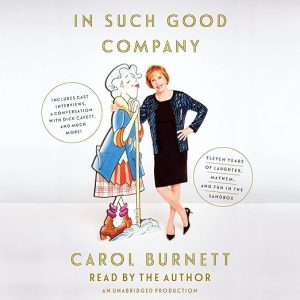
I had been listening to a stretch of fairly heavy material when I put on In Such Good Company, and the relief was immediate and complete. Carol Burnett has one of the most recognizable voices in American entertainment history, that warm, slightly gravelly, utterly unhurried voice, and hearing her narrate her own backstage memoir is the rare case where author-narrator casting becomes an essential part of the listening experience. You are not just hearing about The Carol Burnett Show. You are, in some sense, watching it.
The book won the 2017 Grammy for Best Spoken Word Album, which tells you something about how well the audio format suits this material. Burnett is not a prose writer primarily, she's a performer, and the audiobook catches her in her native medium. Her timing on the comic anecdotes is immaculate. The story of the one guest star nobody on the show liked (unnamed, a deliberate and delicious omission) lands harder in audio than it would on a page.
Our Take on In Such Good Company
Burnett organizes the book around the show's mythology rather than strict chronology: how it nearly didn't air because CBS vice presidents had misgivings, how she discovered Harvey Korman and then Tim Conway, what Bob Mackie brought to the costume culture, the specific texture of the opening Q-and-A with the audience that became a show within the show. This structure works because each chapter functions as its own complete portrait rather than a chapter in a linear biography.
What comes through most strongly is Burnett's genuine love for the people she worked with. Her portrait of Lucille Ball, a close friendship that shaped Burnett's understanding of what was possible for a woman in television, is one of the book's best sections. Her characterization of Tim Conway's improvisational chaos, which could derail sketches and destroy her composure on live television, is recounted with laughter that you can hear in her voice even reading it back cold.
Why Listen to In Such Good Company
The audiobook includes cast interviews and a conversation with Dick Cavett, which adds a layer of documentary texture that the print edition can't provide. These supplemental recordings give the memoir a fuller sound, less monologue, more variety show, which is appropriately on-brand. Hearing Harvey Korman and Vicki Lawrence in their own voices alongside Burnett deepens the sense of creative family that the book works to convey.
For listeners who grew up with the show or who have come to it through retrospectives, this audiobook functions as the definitive companion. Burnett confirms and enriches things you suspected, the incredible discipline behind the apparently spontaneous comedy, the precision of Bob Mackie's contributions, the way guest stars were integrated into the show's specific chemistry. For listeners new to the show entirely, there is enough context that the anecdotes land, though some of the richest material will resonate more if you know the source.
What to Watch For in In Such Good Company
One fair criticism from reviewers is that the book covers the show more as sketch anthology than as deep character study. Fans hoping for extended portraits of Harvey Korman or Tim Conway specifically will find Burnett tends to return to the group experience rather than following individual threads at length. The approach is that of a producer looking at the whole production rather than a biographer zeroing in on collaborators.
The book also covers eleven seasons in about eight hours, which means it moves at a brisk pace. Nothing outstays its welcome, but some chapters that could have been fuller feel like they've been edited to highlight rather than explore. That's a minor complaint about an eight-hour listen that holds its warmth throughout.
Who Should Listen to In Such Good Company
This is for anyone who grew up watching The Carol Burnett Show, for students of television history, for fans of variety entertainment who want to understand how that form worked at its peak, and for anyone who needs a few hours of genuine warmth and laughter. The Grammy it won was deserved. Skip it only if you have no particular interest in the show or its era, the material is specific enough that interest in Burnett is the minimum entry requirement.
Good to Know
Does Carol Burnett narrate the entire audiobook herself?
Yes, and she is also the author. Additionally, the audiobook includes supplemental cast interviews and a conversation with Dick Cavett, which brings in other voices. But Burnett's narration of the main text is uninterrupted.
Do you need to have seen The Carol Burnett Show to enjoy this audiobook?
The book provides enough context to follow the anecdotes, but the richest enjoyment comes with prior familiarity with the show. Many of the specific sketches and guest star dynamics will mean more if you have seen the episodes being discussed.
Why did this audiobook win a Grammy for Best Spoken Word Album?
Because the listening experience of Carol Burnett performing her own material, with her natural comic timing, her warmth, and her decades of performance craft, is qualitatively different from reading the same words on a page. The Grammy recognizes that the audio version is the definitive version.