- Themes: Biblical word study, reversal and grace, a Messianic Jewish reading of scripture
- Mood: Warm, plainspoken, pastoral
- Verdict: A sincere, tightly focused word study whose machine-generated reader is the one thing worth testing before you commit.
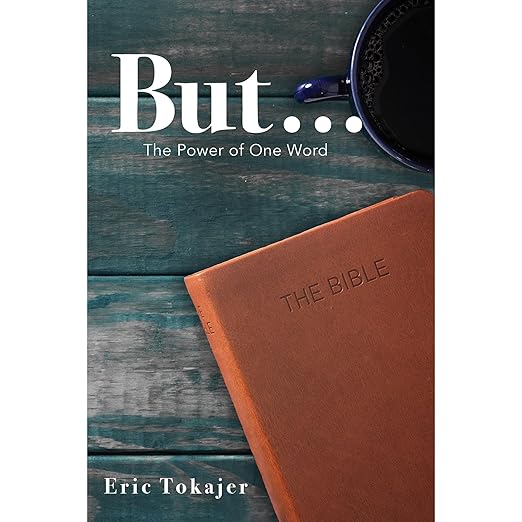
Three letters do the structural work in this audiobook, and Eric Tokajer builds every one of its twenty-six entries on them. The word is BUT, the conjunction that arrives mid-verse and turns the sentence in the opposite direction, and the description is unusually plain about the limits of the exercise: twenty-six selections out of what it calls thousands scattered through the Sacred Texts, chosen by an author who concedes up front that power in this context is subjective. It is a short book, and it makes no pretense of being a survey.
What Eric Tokajer Delivers
Twenty-six entries built on one grammatical pivot is a structure that either compounds or flattens, and which of the two happens depends almost entirely on how much you want out of a devotional. The premise gets tested inside the first few entries: a verse states a condition, the conjunction lands, the condition reverses. If that movement holds your attention, twenty-five further instances follow it. If it does not, the book has no second gear to shift into, because the repetition of the pattern is the argument being made.
Something about the timing deserves a mention before any of the five-star praise gets weighed. Every written response was posted between May 2021 and June 2024, while this recording carries a March 2026 release date, so not one of those grades could have taken the audio into account. They were left for the printed book. The reader credited on this edition is Virtual Voice, a synthetic reading rather than a hired performer, which makes the decision facing a buyer here genuinely different from the one those five people were making.
The sharpest response in the pool opens by admitting it is a standard review its writer reuses across several Tokajer titles, then makes a point worth repeating: disagreement is the payoff rather than the failure state. It closes on a question, 'Whose is correct, the reader or the Rabbi?', and awards five stars anyway. That is an accurate read of what the format offers, because twenty-six short cases built on single words hand a listener twenty-six separate places to push back, and the book seems to know it.
Grammar is the actual subject, and the response dated October 25, 2021 makes that explicit by walking through the definition of a coordinating conjunction before it goes anywhere near theology. The same entry credits the author with taking that three-letter conjunction and giving readers 'a fresh take on our faith journey', and describes his output as 'small, but mighty books'. That is the register precisely: a word study that treats a piece of syntax as a devotional instrument and expects you to find the mechanism itself interesting.
Selection is the other thing the book gets right. The description concedes immediately that thousands of comparable instances sit elsewhere in the Sacred Texts and that another writer would have ranked them differently, which is a modest opening claim for a devotional title. What you receive is a curated set rather than a concordance, and the curating is the value on offer: somebody has already decided which reversals carry the most weight, and has published the list knowing readers will quarrel with it.
Repeat readers are the engine here, and the pool shows it. Two of the five written entries come from people who already own other titles by this author, and both came back to grade this one at the top of the scale. For an independently published book with no marketing apparatus behind it, a returning audience is a more reliable signal than any average, and it is most of what the written feedback is genuinely telling you about who this material lands with.
Where Eric Tokajer Loses Some Ground
Emotional intensity is not evenly distributed across devotional books, and this one runs hotter than its length suggests. The response dated May 7, 2021 describes crying through most of it, and reads the material against physical pain, depression, anxiety, and stretches of wavering faith. That is somebody using the book as consolation rather than as study. A listener arriving for an analytical treatment of biblical syntax should know that the tonal pitch is warmer and considerably more pastoral than the premise implies.
Vocabulary is the second thing to weigh. Across the written pool the author is addressed as Rabbi, and the divine name appears written as G-d, which places the book inside a Messianic Jewish frame that the description never names. None of that stays hidden once you are listening, but the listing sells twenty-six biblical conjunctions without signaling which tradition is doing the interpreting. Anyone expecting a general-audience Christian devotional will meet Hebrew terminology and a rabbinic voice instead.
Housekeeping matters too. One hour and fifty-three minutes across twenty-six entries works out to roughly four minutes apiece, so each case is a short address rather than a developed chapter, and a listener who wants sustained exposition will feel the pieces stop early. The listing carries no series information at all, one reviewer byline arrives visibly truncated, and another entry is signed off with a different first name than the account that posted it.
Should You Listen to But... The Power of One Word?
Students of scripture are the core audience, and the entry posted on May 18, 2021 that calls this 'a Torah-rich word study' is the most precise description anybody in the pool has managed. The same entry describes hearing 'the Rabbi talking' through the text, calls the experience 'a warm, personal conversation', and mentions handing the copy straight to a friend afterward. If close linguistic attention delivered in a conversational register is what you want from a short devotional, the book was built for exactly that reader.
Skeptics of the method should think twice, and so should anyone who needs scholarly apparatus. The book argues from one grammatical hinge and never stops to defend that choice against alternatives, so listeners who want translation notes, source citations, or an account of which edition is being quoted will come away without the scaffolding. What it offers instead is a sermon-shaped close reading, and the synthetic narration means the delivery will not do any of the persuading on its behalf.
Sampling is the honest recommendation here. The credited reader is machine-generated, the writing is unmistakably warm, and those two facts pull against each other, so the opening minutes will tell you more than any average can. Anyone already reading Tokajer in print faces a simple decision, since the text is the same and the format is the only variable in play. For everyone else, the question is whether a synthetic voice can carry a book this personal, and only your own ears settle that.